Suspect in Berlin Pride attack shot and killed, RBB reports
A known Islamist suspected of driving a minivan into a crowd near a major LGBTQ Pride gathering in Berlin was shot dead during a police operation at a...
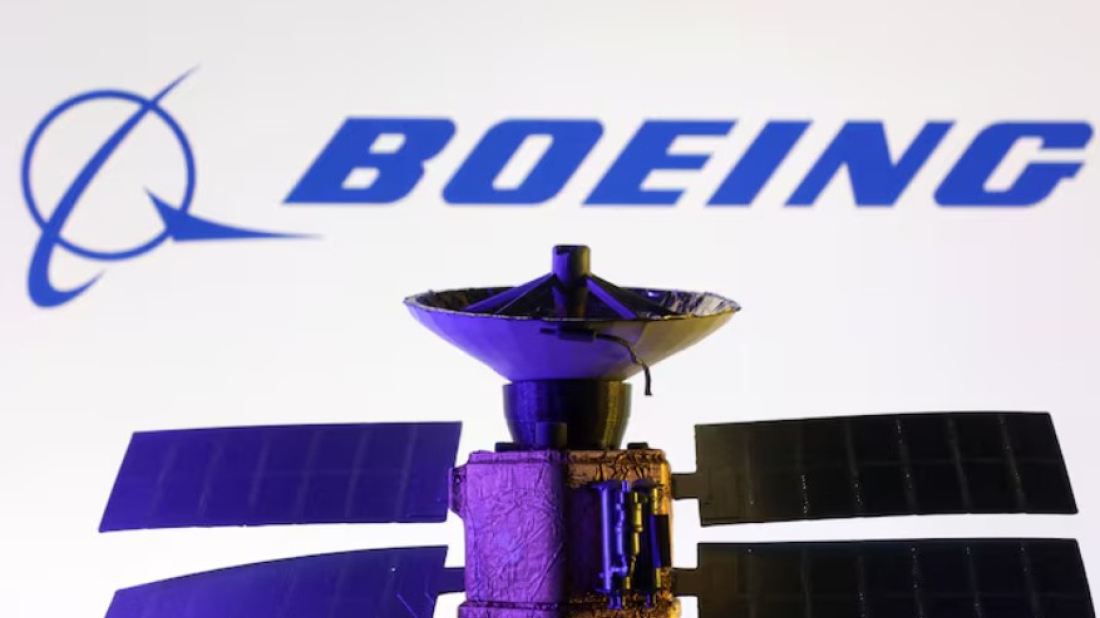
Boeing said on Thursday it had secured a $2.8 billion U.S. contract to develop and produce two satellites with options for two more.
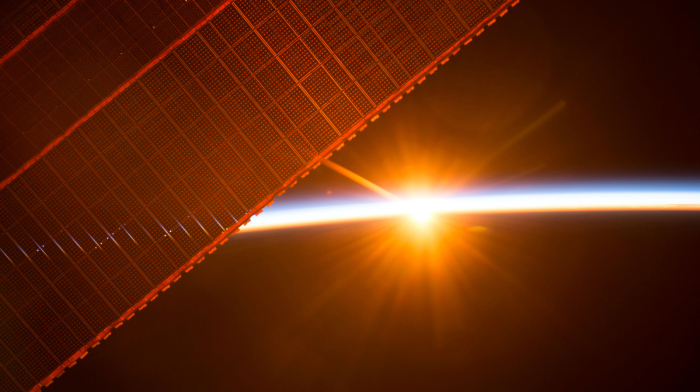
The Evolved Strategic Satellite Communications (ESS) program will deliver space-based nuclear, command, control, and communications for the U.S. president and joint strategic global forces.
Boeing is set to deliver the first of two space vehicles by 2031.
“The U.S. needs a strategic national security architecture that works without fail, with the highest level of protection and capability,” said Kay Sears, vice president and general manager of Boeing Space, Intelligence and Weapon Systems.
“We designed an innovative system to provide guaranteed communication to address an evolving threat environment in space,” added Sears.
Boeing said that its ESS solution is underpinned by technology the company has developed for the Wideband Global SATCOM (WGS)-11 and WGS-12 satellites and had already proven on-orbit aboard the commercial O3b mPOWER constellation.
Building on these developments, this strategic military communications satellite constellation will be equipped with flexible and resilient signals to protect against interruption or interception.
When deployed in geostationary orbit – about 35,700 km (22,000 miles) from the Earth’s surface – ESS will provide persistent coverage to strategic warfighters worldwide.
The spacecraft will leverage a highly protected waveform and classified technologies developed in partnership with the U.S. Department of Defense.

Russian authorities said 11 people, including four children, had been killed by Ukraine in an overnight attack on a holiday camp, accusing Kyiv on Saturday of deliberately targeting civilians.
The U.S. military said it completed a fresh wave of strikes on Iran late on Thursday, marking the 13th consecutive night of American attacks. The latest operation lasted more than two hours, according to U.S. Central Command.
Iran will halt its own attacks as long as the United States maintains its pause on strikes, but Tehran remains sceptical of U.S. intentions, a senior Iranian source told on Sunday.
Start your day informed with AnewZ Morning Brief. Here are the top news stories for the 25th of July, covering the latest developments you need to know.
Italian Defence Minister Guido Crosetto recently offered the dismissed Ukraine’s Defence Minister, Mykhailo Federov an adviser role in Italy.
SpaceX successfully launched its Starship megarocket on its 13th flight test Friday, deploying 20 next-generation Starlink V3 satellites and completing a soft splashdown of the spacecraft in the Indian Ocean.
Britain's new Prime Minister Andy Burnham has appointed Kanishka Narayan as Minister for Artificial Intelligence, making it the first time the role has held cabinet-level status. The move signals a stronger government focus on AI as the UK seeks to strengthen its position in the sector.
Scientists have identified a planetary system in the Milky Way unlike anything seen before, leaving astronomers debating how to classify one of its unusual worlds. The discovery challenges long-held definitions of planets, moons and stars.
A U.S. federal judge has approved Anthropic's $1.5 billion settlement with authors and publishers over the company's acquisition and use of pirated books to train its Claude artificial intelligence chatbot, marking the first major resolution in the growing wave of AI copyright litigation.
More than 1,100 companies are presenting their latest artificial intelligence technologies at the 2026 World AI Conference (WAIC) in Shanghai, where innovation, international cooperation and AI governance are taking centre stage.
You can download the AnewZ application from Play Store and the App Store.
What is your opinion on this topic?
Leave the first comment