WHO warns of rising respiratory infections in Gaza as heavy rains worsen health risks
The World Health Organization (WHO) warned on Friday (13 November) of surging respiratory illnesses in Gaza, ...
OpenAI has unveiled a new option called Flex processing, an API service designed to provide more affordable AI model usage in exchange for slower response times and occasional resource unavailability.
This new feature, available in beta for OpenAI's recently released o3 and o4-mini reasoning models, aims to cater to lower-priority and non-production tasks such as model evaluations, data enrichment, and asynchronous workloads.
Flex processing cuts API costs by half, making it an attractive option for businesses and developers seeking to reduce expenses on non-urgent AI tasks. For instance, the cost of using the o3 model through Flex is $5 per million input tokens (approximately 750,000 words) and $20 per million output tokens, compared to the standard price of $10 and $40, respectively. Meanwhile, for the o4-mini model, Flex pricing drops to $0.55 per million input tokens and $2.20 per million output tokens, down from $1.10 and $4.40.
This move comes as OpenAI faces increased competition from rival AI companies, such as Google, which recently launched its Gemini 2.5 Flash reasoning model. Gemini 2.5 Flash offers similar performance to DeepSeek's R1 at a lower input token cost, underscoring the growing trend of more affordable, budget-friendly AI options.
Additionally, OpenAI announced that developers in usage tiers 1-3 will need to undergo a new ID verification process to access the o3 model. This verification is part of OpenAI's efforts to ensure that its services are not misused by bad actors, as it seeks to protect its usage policies.
With the introduction of Flex processing, OpenAI is positioning itself to remain competitive in the rapidly evolving AI landscape, offering cost-effective solutions for developers working with non-critical tasks while maintaining the integrity of its services.

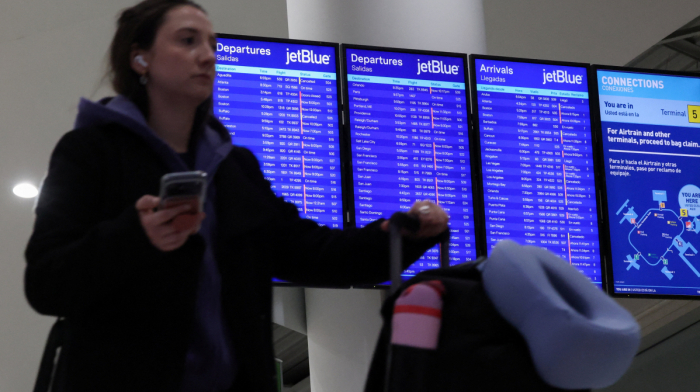
The U.S. Federal Aviation Administration lifted a nationwide ground stop on Friday (13 November) after a communications failure at air traffic control centres caused chaos at airports and triggered the longest nationwide shutdown since the 9/11 attacks in 2001.
More than 30 people have been taken to hospital after a cargo ship collided with a passenger cruise docked on the Mississippi River in New Orleans on Friday (13 November).
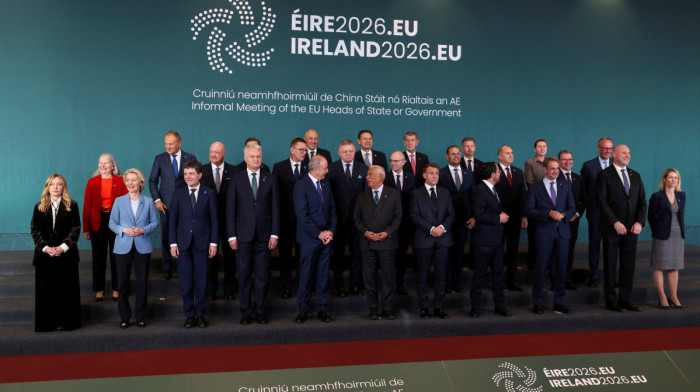
Europe will send a team of diplomats to Ukraine peace talks rather than a single envoy, EU leaders agreed on Friday at the end of a summit in Dublin.
Saudi Arabia said it intercepted two Houthi ballistic missiles targeting Riyadh and three drones in its oil-rich Eastern Province on Sunday (15 November), as Iran's Revolutionary Guards claimed separate attacks on a U.S. military facility in Bahrain.
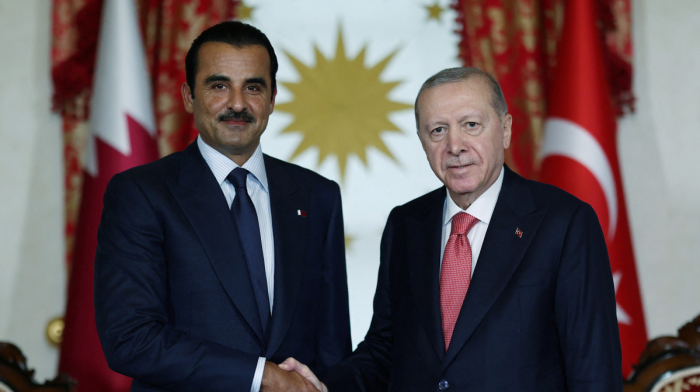
Türkiye and Qatar signed a mutual defence agreement on Friday, November 13, aimed at strengthening collective security and regional stability. The two countries pledged to take a united stance against any external armed attack on either nation.
NASA is inviting people to send their names to Titan, Saturn’s largest moon, aboard its Dragonfly spacecraft. Set to arrive in late 2034, the mission will explore dunes and an impact crater in search of clues about how the chemical ingredients for life may have formed.
Environmental organisations worldwide are increasingly using artificial intelligence to monitor wildfires, protect endangered species and analyse climate data, even as the technology's rising energy and water consumption raises concerns about its environmental impact.
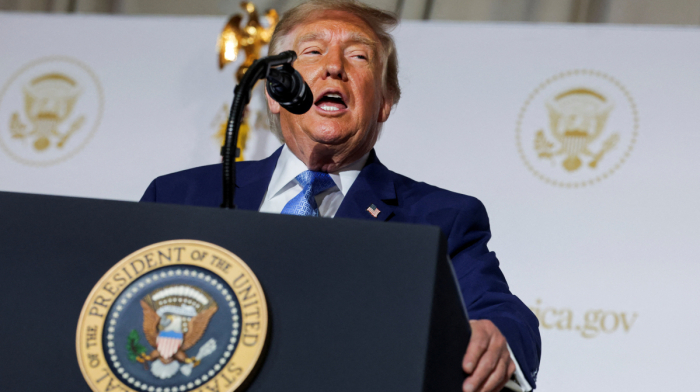
U.S. President Donald Trump said on Friday he would support states seeking to generate wealth through artificial intelligence, pledging to work with them as Democrats outlined plans to address the technology following Tuesday’s elections, which unsettled markets.
Dubai will host GITEX Global 2026 from 7 to 11 December, bringing together global technology leaders, governments and investors as surging demand for artificial intelligence (AI) puts pressure on energy supplies, computing capacity and digital infrastructure.
Saudi Aramco's acquisition of a 49 per cent stake in artificial intelligence (AI) company HUMAIN is putting a spotlight on a wider investment question: why are some of the world's biggest energy companies moving deeper into AI, and what do they expect to gain?
You can download the AnewZ application from Play Store and the App Store.
What is your opinion on this topic?
Leave the first comment