China is set to leverage artificial intelligence in its ambitious mission to explore the outer reaches of the solar system, aiming to enhance spacecraft autonomy and improve data processing for deep space exploration.
In a groundbreaking paper published in Journal of Deep Space Exploration, researchers have outlined how artificial intelligence (AI) could be pivotal in China's ambitious mission to the outer reaches of the solar system. The planned mission, aiming to explore the boundary of the heliosphere, could be supported by AI technologies to overcome the unique challenges of deep space exploration.
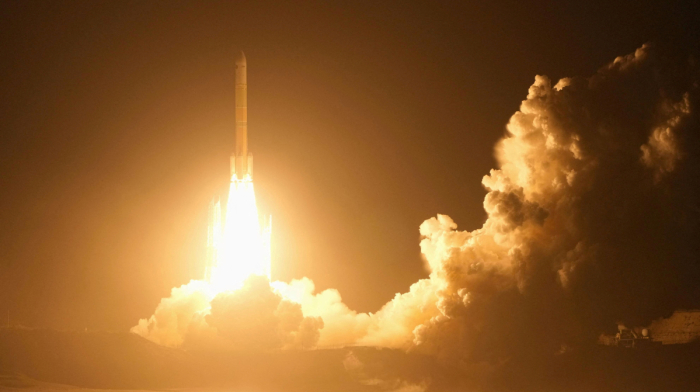
The mission, expected to reach up to 100 astronomical units (AU) by 2049, and eventually 1,000 AU by the century's end, would see spacecraft venturing toward the solar system's frontier. It is designed to study the interplanetary medium, cosmic rays, and the mysterious "hydrogen wall" at the edge of the solar system. The spacecraft will be powered by radioisotope thermoelectric generators, with potential stops at Jupiter and the Kuiper Belt for scientific observations.
AI plays a crucial role in supporting missions beyond the solar system's boundary. These missions face significant hurdles, such as long communication delays, vast distances, and limited data transmission capabilities. AI can assist in data processing, decision-making, and navigation, improving the spacecraft's autonomy. It will also help optimize data transmission by cleaning, compressing, and selecting only the essential information to send back to Earth. Additionally, AI can enhance sensor fusion, ensuring that multiple sensor inputs are accurately integrated for precise measurements.
One of the key advantages AI brings to the table is autonomous perception. Deep space missions may encounter rare and unpredictable events, such as solar storms or asteroid impacts. With AI, spacecraft could autonomously detect and react to these events, ensuring that valuable scientific data is captured without relying on Earth-based intervention.
Furthermore, AI’s decision-making capabilities will allow spacecraft to adjust their trajectory and optimize their course autonomously. Systems such as Reinforcement Learning could help spacecraft adapt to changing conditions, manage resources efficiently, and self-correct technical malfunctions, minimizing the need for communication with Earth and improving mission resilience.
AI also holds promise for enhancing spacecraft health monitoring. With AI, spacecraft can continuously assess their own status, predicting potential failures before they occur, which is critical for ensuring mission longevity.
China’s plans to leverage AI in its solar system boundary exploration mark a significant evolution in space exploration, with the technology set to play an increasingly pivotal role in future deep-space missions. As AI capabilities continue to advance, they will revolutionize how humanity explores the furthest reaches of our solar system and beyond.
This move aligns China with international pioneers in AI and space technology, like NASA and its use of AI in the Perseverance rover. As space exploration enters a new era, China’s focus on AI-driven missions underscores the expanding potential of this cutting-edge technology in shaping the future of space exploration.




















What is your opinion on this topic?
Leave the first comment