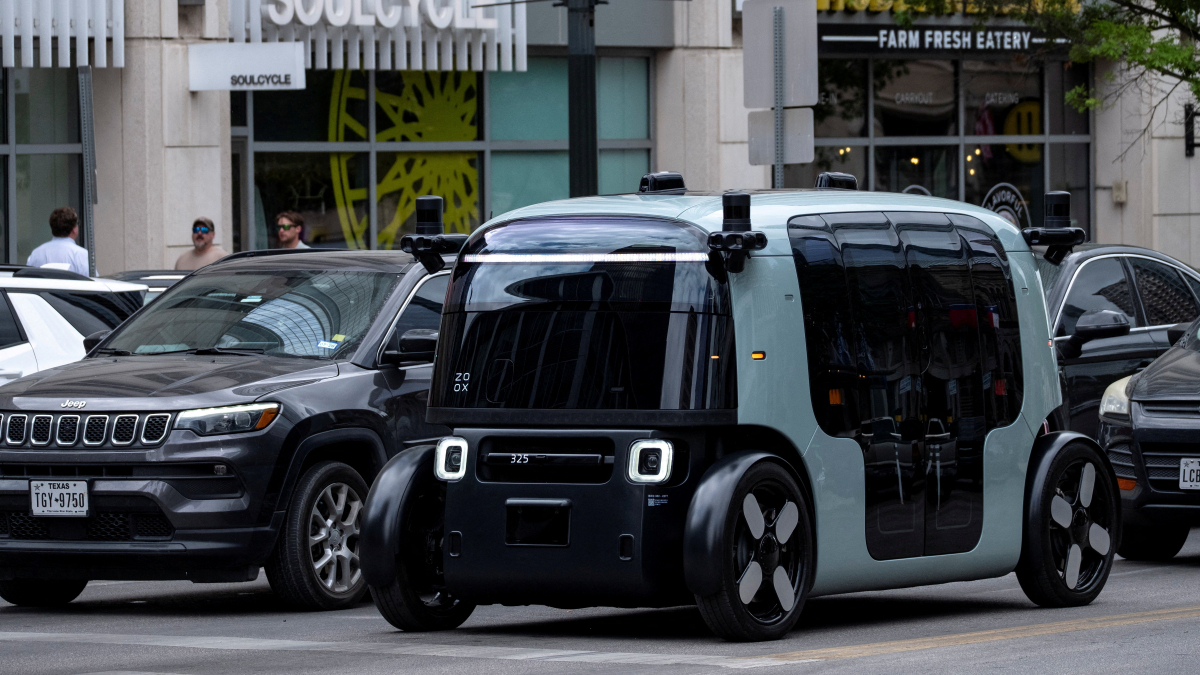
Amazon-owned Zoox has become the first company in the United States to receive federal approval to operate and charge passengers in purpose-built robotaxis without a steering wheel or pedals, marking a major milestone for the autonomous vehicle industry.
The U.S. National Highway Traffic Safety Administration (NHTSA) granted Zoox an exemption from federal vehicle safety rules requiring human controls, allowing the company to deploy up to 2,500 vehicles annually over the next two years.
Zoox said it will soon begin charging passengers for rides in Las Vegas, with additional markets to follow once state and local approvals are secured.
The approval is a significant step for companies developing autonomous vehicles from the ground up, rather than adapting conventional cars. Zoox's electric robotaxi features two rows of inward-facing seats and can travel at speeds of up to 120 km/h.
The company joins rivals including Alphabet's Waymo and Tesla in the race to expand autonomous ride-hailing services. While Waymo already operates commercial robotaxis using modified vehicles, Tesla has yet to obtain regulatory approval for its steering wheel-free Cybercab.
Safety remains under scrutiny
NHTSA said Zoox's vehicles provide a level of safety equivalent to conventional vehicles that meet federal standards, despite being exempt from rules requiring steering wheels and pedals. The vehicles cannot be sold to the public.
As part of the exemption, Zoox must report crashes and other safety incidents, while all remote operators overseeing the fleet must be based in the United States. The agency said it can revoke the exemption if significant safety concerns emerge.
The approval comes as regulators seek to modernise rules written for human-driven vehicles while ensuring autonomous technology remains safe. Earlier this month, NHTSA warned developers to address repeated incidents involving driverless vehicles interfering with emergency responders.
Following that warning, Zoox recalled its fleet of 105 autonomous vehicles to update software after identifying an issue that could prevent the system from detecting heavy smoke during emergency situations.




















What is your opinion on this topic?
Leave the first comment