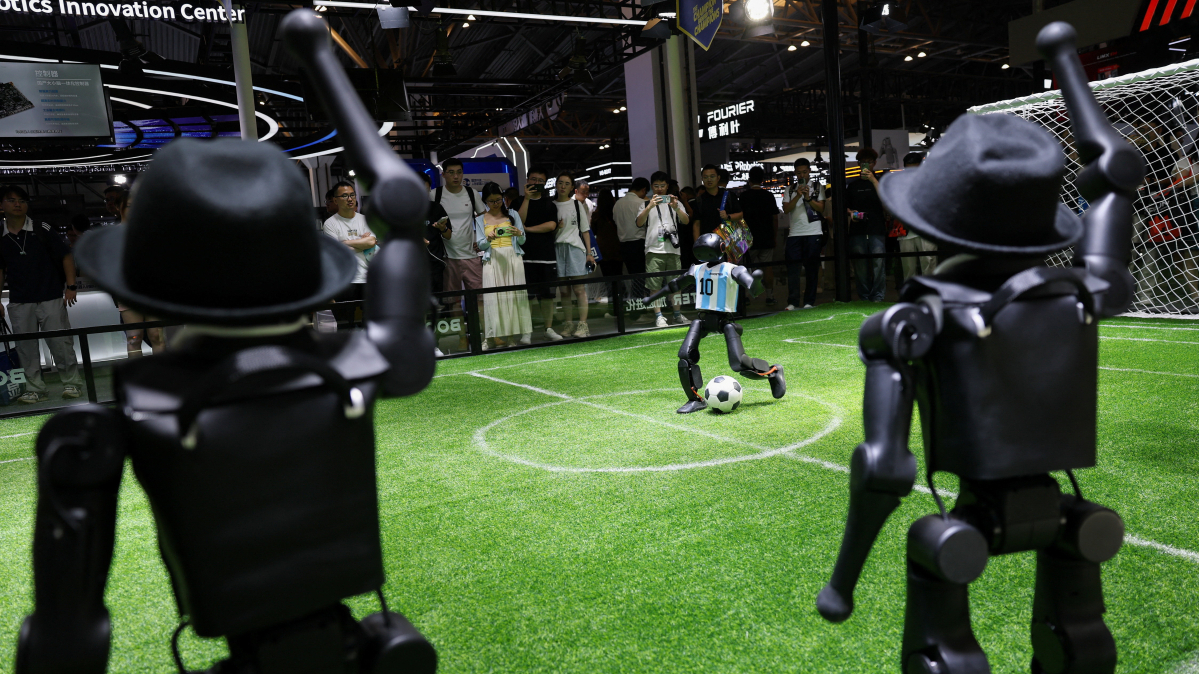
The Trump administration has unveiled bans targeting imports of new Chinese humanoid and quadruped robots as well as connected power inverters, saying the measures are intended to protect the United States’ artificial intelligence (AI) buildout from national security threats.
The Federal Communications Commission (FCC) released the restrictions on Tuesday (28 July). They cover new robot models and power inverters, which help renewable energy sources and batteries connect to grids and data-centre equipment.
The FCC said the devices could create supply-chain vulnerabilities, disrupt U.S. economic and national security, and pose cybersecurity risks to critical infrastructure. FCC Chairman Brendan Carr said the agency would continue working to secure America’s critical supply chains.
Officials say the restrictions are aimed at reducing risks of disruption, data theft and cyberattacks while encouraging companies to shift manufacturing to the United States. The measures took effect on publication and apply to models not yet released, though the FCC also has authority to revoke authorizations for models already approved for U.S. sale.
The Chinese embassy in Washington urged the United States to stop “smearing Chinese companies and threatening them with sanctions,” adding that Beijing would take all necessary measures against actions that materially harm its interests.
Robots and inverters in focus
The robot ban is expected to affect Unitree, a leading Chinese humanoid-robot maker with just under a fifth of the global market, according to Counterpoint Research. Unitree was recently added to the Pentagon’s list of alleged Chinese military-backed companies, a step that can precede tougher U.S. action.
Unitree has formed a partnership with Nvidia to use the U.S. chipmaker’s Blackwell chip in one of its robots. Nvidia has said data from the robots will remain in the United States and that Unitree’s largest customers are U.S. academic and research institutions.
China hawks fear such robots could collect industrial data, aid foreign intelligence services or be remotely commandeered. U.S. Representative John Moolenaar, who chairs the House Select Committee on China, said the FCC move protects the country and strengthens the U.S. robotics industry.
The inverter restrictions also target an industry dominated by China, led by companies including Sungrow Power Supply and Huawei. U.S. officials have raised concerns that government-linked hacking campaigns such as Volt Typhoon could use connected equipment to hide attacks on American critical infrastructure.
Following the FCC action, many non-Chinese suppliers are expected to be exempted, four additional sources said. Treasury Secretary Scott Bessent has separately warned that Chinese AI firms could face U.S. sanctions over alleged theft of U.S. intellectual property.
Read more:
















What is your opinion on this topic?
Leave the first comment