Rally in Tel Aviv calls for return of deceased hostage Ran Gvili
Hundreds of people gathered for a second consecutive week at Tel Aviv’s Hostages Square, on Friday (12 December), to support the family of Master Sg...
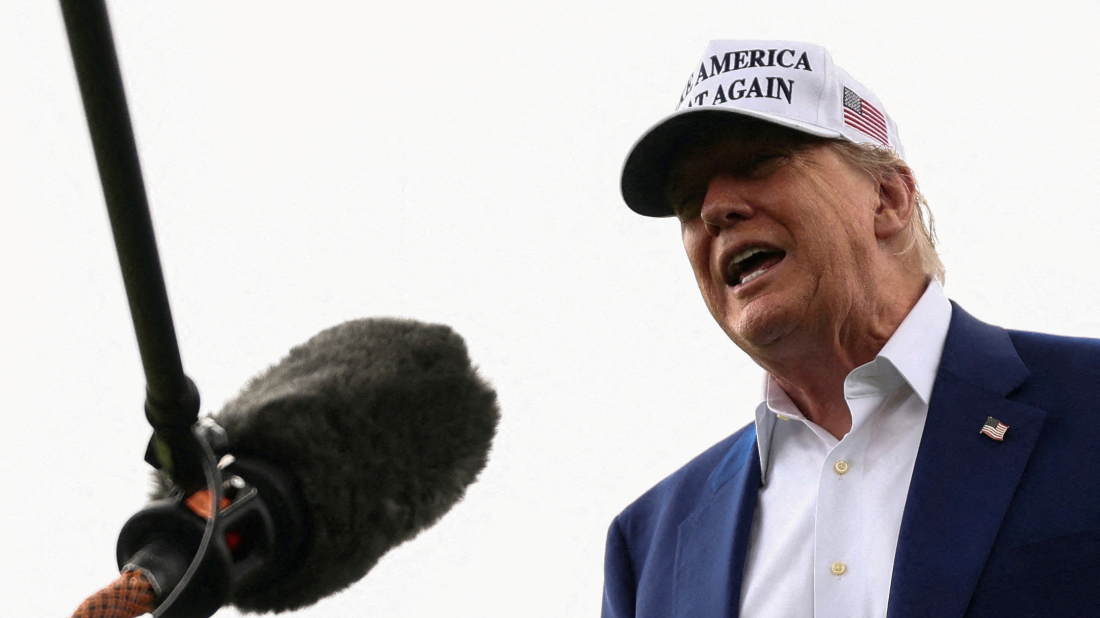
President Donald Trump has said he will make a decision in the coming two weeks on whether the United States will strike Iran, citing a possibility of upcoming negotiations.
President Donald Trump is weighing U.S. military involvement in the ongoing Israel–Iran conflict, according to a statement from the White House on Thursday.
The decision is expected within the next two weeks, a period during which the likelihood of negotiations with Iran may become clearer.
White House Press Secretary Karoline Leavitt told reporters that Trump’s timeline is influenced by diplomatic signals coming from Tehran. “Based on the fact that there’s a substantial chance of negotiations that may or may not take place with Iran in the near future, I will make my decision whether or not to go within the next two weeks,” she quoted the president as saying.
Trump has been under pressure to respond after days of escalating military activity between Israel and Iran. While he has not ruled out a military strike, his latest remarks suggest the U.S. may pause to assess whether diplomacy is still an option.
The announcement comes amid continued air strikes, regional instability, and growing international concern over the direction of the conflict.

Japan has lifted a tsunami advisory issued after an earthquake with a magnitude of 6.9 hit the country's northeastern region on Friday (12 December), the Japan Meteorological Agency (JMA) said. The JMA had earlier put the earthquake's preliminary magnitude at 6.7.
Iran is preparing to host a multilateral regional meeting next week in a bid to mediate between Afghanistan and Pakistan.
The United States issued new sanctions targeting Venezuela on Thursday, imposing curbs on three nephews of President Nicolas Maduro's wife, as well as six crude oil tankers and shipping companies linked to them, as Washington ramps up pressure on Caracas.
The resignation of Bulgaria's government on Thursday (11 December) puts an end to an increasingly unpopular coalition but is likely to usher in a period of prolonged political instability on the eve of the Black Sea nation's entry into the euro zone.
An extratropical cyclone has caused widespread disruption across Brazil’s São Paulo state, with powerful winds toppling trees and power lines, blocking streets and leaving large parts of the region without electricity.
Britain’s King Charles III said on Friday, 12 December, that his cancer treatment is expected to be reduced in the coming year, using a televised address to urge people across the country to take part in cancer screening programmes, officials confirmed.
Talks aimed at ending the war between Ukraine and Russia are set to continue in Berlin this weekend, with U.S. envoy Steve Witkoff due to meet Ukrainian President Volodymyr Zelenskyy and senior European leaders, a U.S. official said.
Türkiye’s Trade Minister Omer Bolat said Friday that discussions in Washington with U.S. officials have strengthened efforts to expand bilateral trade, moving closer to a $100 billion target.
Lebanon is prepared to demarcate its border with Syria, President Joseph Aoun said on Friday, while noting that the dispute over the Shebaa Farms could be addressed at a later stage.
Greek farmers blocked the Port of Thessaloniki on Friday (12 December) as part of nationwide protests demanding delayed European Union subsidies and compensation for rising production costs and livestock losses.
You can download the AnewZ application from Play Store and the App Store.
What is your opinion on this topic?
Leave the first comment