San Diego Mosque Attack: Expert says there is a global connection driving these attacks
More than 2,000 people gathered in San Diego this week for funeral prayers honouring three men killed while trying to stop an attack at the Islamic...
Rwanda and the Democratic Republic of Congo (DRC) have initialed a draft peace agreement, marking a significant step toward ending years of conflict in eastern Congo.
The agreement is expected to be officially signed by ministers from both countries on 27 June, according to a joint statement released by the parties and the United States.
The deal follows three days of intensive negotiations and is viewed as a breakthrough in diplomacy facilitated by President Donald Trump’s administration. It outlines key commitments from both sides, including respect for territorial integrity, cessation of hostilities, and a structured plan for the disengagement, disarmament, and conditional integration of non-state armed groups.
One of the key elements of the agreement is the creation of a joint security mechanism, based on earlier proposals discussed during Angolan mediation efforts.
In 2024, Rwandan and Congolese technical teams had previously reached similar understandings, including the withdrawal of Rwandan troops and joint operations against the Rwandan Hutu rebel group FDLR. However, those agreements were not endorsed at the ministerial level. Angola, which served as mediator, stepped away from its role in March after repeated unsuccessful attempts to secure a lasting resolution amid rising tensions.
Conflict in eastern Congo intensified this year as M23 rebels, allegedly backed by Rwanda, captured major cities in the region. The Congolese government accuses Rwanda of providing military support to M23, including troops and weapons. Rwanda denies these claims, stating its forces are acting in self-defence against Congolese troops and Hutu militias associated with the 1994 genocide.
The mineral-rich region holds vast reserves of cobalt, gold, tantalum, copper, and lithium. The peace agreement, if implemented successfully, could unlock billions in foreign investment and development projects.
The next few days will be critical as both governments prepare for the high-level ministerial signing, which may shape the security and economic future of Central Africa.

Asian stocks surged on Thursday as some vessels resumed passage through the Strait of Hormuz, while forecast-beating results at Nvidia and a suspended workers' strike at Samsung Electronics lifted shares of chipmakers.
Belarusian President Alexander Lukashenko has said Belarus will not be dragged into the war in Ukraine, while also stressing that Minsk and Moscow would jointly respond to any aggression against them.
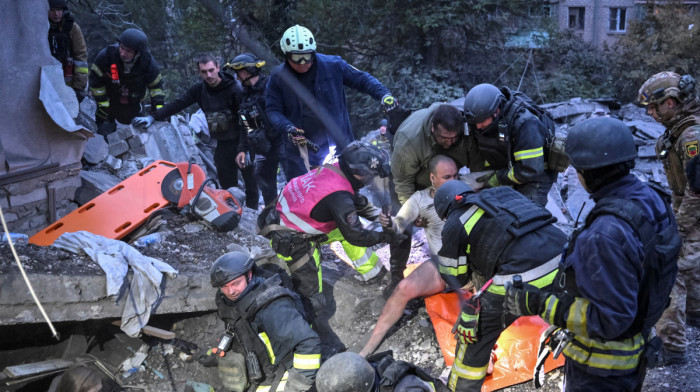
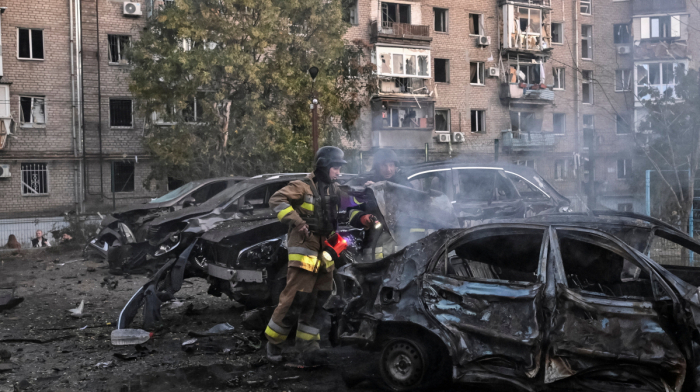
Fighting in the Russia–Ukraine war has intensified sharply, with both sides launching significant strikes far beyond the front lines as the conflict enters its 1,549th day.
The penultimate day of the World Urban Forum 13 in Baku will see Azerbaijan's Pavilion highlight post-construction efforts in Garabagh and East Zangezur, as well as host events on the future of Baku and architectural education.
As the 13th edition of the World Urban Forum ended, Azerbaijan's Pavilion showcased reconstruction efforts in its liberated territories and foregrounded the importance of mine removal in resettlement efforts.
China already dominates the global rare earth supply chain. Now, scientists have discovered new deposits in northeastern China that could prove cheaper and cleaner to extract than those mined elsewhere in the country.
More than 2,000 people gathered in San Diego this week for funeral prayers honouring three men killed while trying to stop an attack at the Islamic Centre of San Diego, in what authorities are investigating as a suspected hate crime.
U.S. Secretary of State Marco Rubio said negotiations with Iran remain deadlocked over uranium enrichment and the Strait of Hormuz, despite what he described as modest progress in recent talks.
Fighting in the Russia–Ukraine war has intensified sharply, with both sides launching significant strikes far beyond the front lines as the conflict enters its 1,549th day.
Serbian President Aleksandar Vučić said he was pessimistic that an agreement would be reached before Friday’s deadline regarding Hungarian oil company MOL group's bid to acquire a majority stake in Naftna Industrija Srbije (NIS), the operator of Serbia’s only oil refinery.
You can download the AnewZ application from Play Store and the App Store.
What is your opinion on this topic?
Leave the first comment