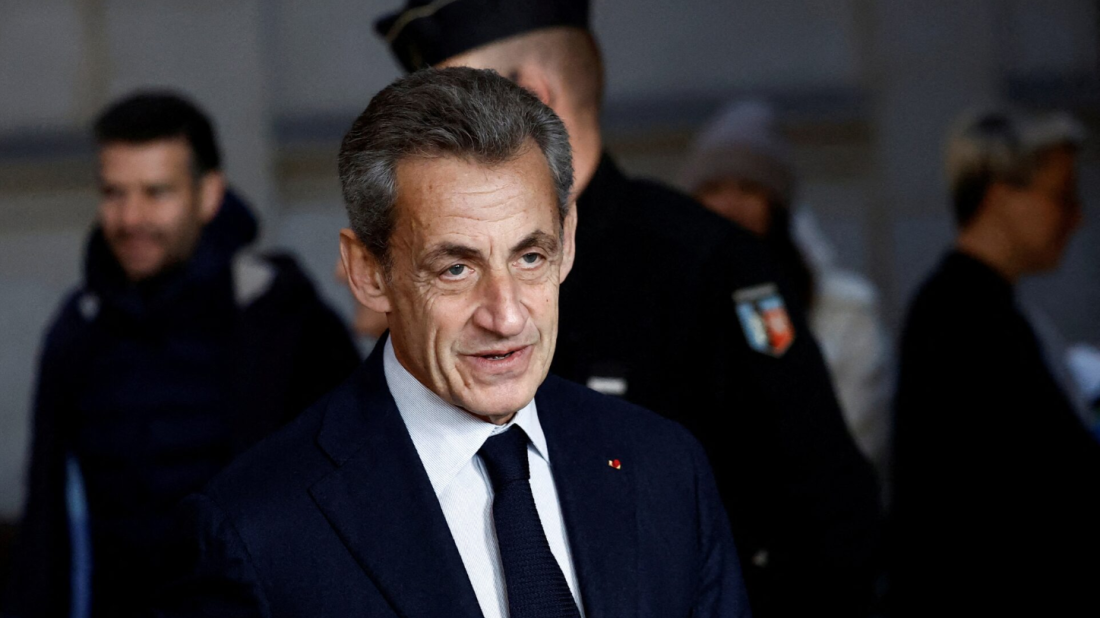
French prosecutors requested a seven-year prison sentence and a €300,000 fine for former President Nicolas Sarkozy in his trial over allegations of accepting illegal financing for his 2007 presidential campaign from the former Libyan dictator Muammar Gaddafi.
The National Financial Prosecutor's Office (PNF) also called for a five-year ban on Sarkozy's civic, civil and family rights, a measure that would bar him from holding elected office or serving in any public judicial role.
Prosecutors have accused Sarkozy and several of his former associates—including ex-Interior Ministers Claude Guéant and Brice Hortefeux, as well as former Budget Minister Eric Woerth, now a member of President Emmanuel Macron’s Renaissance party—of striking an 'unconceivable, unprecedented, and indecent' agreement with Gaddafi.
However, prosecutors have emphasized that the central figure in the case is Sarkozy himself, accusing him of knowingly benefiting from a 'corruption pact' with a foreign dictatorship.
The former president is accused of accepting €50 million in cash from Gaddafi—more than twice the legal campaign funding limit of €21 million at the time. French law imposes strict caps on campaign spending and permits contributions only from French citizens or residents, France24 reported.
70-year-old Sarkozy, who led France from 2007 to 2012, faces charges of passive corruption, illegal campaign financing, concealment of embezzlement of public funds and criminal association.
In exchange for financial support, as Politico reported, Sarkozy allegedly used his presidential powers to strengthen France’s diplomatic and business ties with Tripoli and reconsider the case of Gaddafi’s brother-in-law, Abdullah Senussi. In 1999, a French court found Senussi guilty in absentia for his role in the bombing of a flight from Brazzaville, in the then-People’s Republic of the Congo, to Paris—a tragedy that killed all 170 passengers—and sentenced him to life in prison.
The allegations first emerged in 2011 when a Libyan news agency reported that Gaddafi's government had funded Sarkozy's campaign.
'It’s thanks to us that he reached the presidency,' Gaddafi claimed in an interview. 'We provided him with the funds that allowed him to win.
In 2012, the French investigative outlet Mediapart published what it described as a Libyan intelligence memo referencing a €50 million funding agreement.
Investigators confirmed that the memo was authentic, though no conclusive evidence of a completed transaction has been presented. They also looked into a series of trips by Sarkozy's associates to Libya between 2005 and 2007.
Sarkozy has dismissed the Libya allegations as politically motivated and rooted in forged evidence.
"I will therefore continue to fight step by step for the truth, and for my faith in the wisdom of the court," he said.
Sarkozy said during the trial that he had never accepted any money from Kadhafi.
"You will never ever find a single euro, a single Libyan cent, in my campaign," he said.
The 70-year-old is already serving a one-year prison sentence under house arrest after being found guilty of corruption.











What is your opinion on this topic?
Leave the first comment