U.S.-Iran peace talks open in Switzerland amid Hormuz dispute
U.S. Vice President JD Vance arrived in Switzerland on Sunday for peace talks with Iran, as a dispute over the Strait of Hormuz threatened to complica...
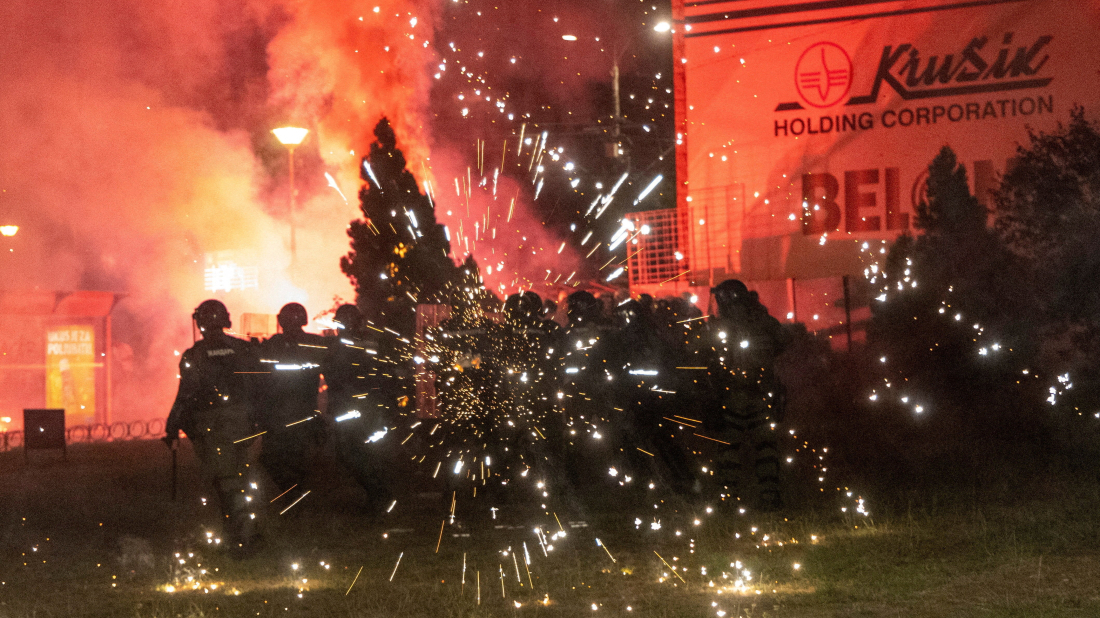
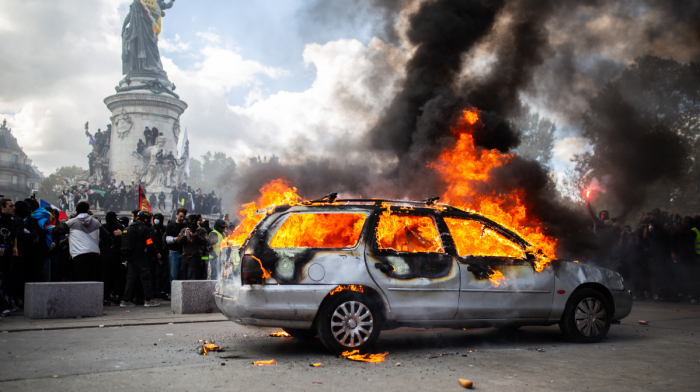
Serbian police used teargas and crowd control vehicles in Belgrade on Friday evening to disperse anti-government protesters who threw firecrackers and flares at officers, marking a sharp escalation in the nine-month-long demonstrations.
Protesters gathered at around 8 p.m. local time in front of the army headquarters building that was bombed by NATO in 1999. Hours later, they began throwing flares at police. Trash containers were overturned and set on fire, and one tree caught fire. Police deployed teargas to push the crowd back.
Demonstrations also took place in Novi Sad, Nis, Kragujevac and Valjevo. Teargas was used in Nis. No official figures were released on the number of injured.
The protests began after 16 people died when a roof collapsed at a renovated railway station in Novi Sad. The gatherings had been largely peaceful until Wednesday when clashes left 27 police officers and about 80 civilians injured. Forty-seven people were detained.
President Aleksandar Vucic said on Friday that 3,000 police are deployed each evening across Serbia and that they are facing assaults and injuries.
Protesters have accused the government of corruption over the Novi Sad disaster and are calling for early elections. Opposition groups, students and anti-corruption watchdogs allege links between Vucic and organised crime, the use of violence against rivals, and media suppression. The president and his allies deny the allegations.
Council of Europe Human Rights Commissioner Michael O'Flaherty said he was closely following events in Serbia and voiced concern over human rights issues. He condemned what he described as disproportionate police force in Valjevo and urged authorities to avoid excessive force, end arbitrary arrests and de-escalate the situation.

A train driver has been killed and nine people remain in a critical condition in hospital, after two trains collided near Beford in the east of England on Friday. The passenger trains heading to London collided at around 17:15 local time (1615 GMT).
Morocco captain and PSG defender Achraf Hakimi will face trial in France after an appeals court ruled there was enough evidence for the case to proceed.
Paraguay kept their World Cup hopes alive with a hard-fought 1-0 victory over Türkiye, but the celebrations were tempered by a costly red card for veteran forward Miguel Almirón.
A magnitude 5.8 earthquake struck southwest of Greece’s island of Crete on Saturday, with no immediate reports of damage.
Israel and Hezbollah have agreed to a ceasefire, a senior U.S. official has said. Hezbollah has released a statement saying Israel must leave southern Lebanon. Israel has said it agrees to the ceasefire, but has said its armed forces won't leave Lebanon and will resume hostilities if attacked.
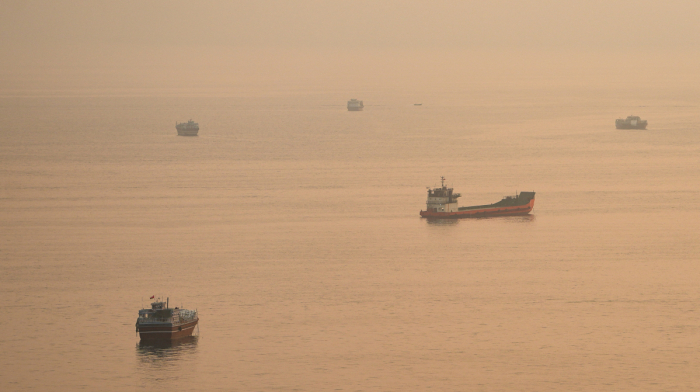
U.S. Vice President JD Vance arrived in Switzerland on Sunday for peace talks with Iran, as a dispute over the Strait of Hormuz threatened to complicate a fragile 60-day ceasefire between Washington and Tehran.
Thousands gathered in Novi Sad, Serbia, to commemorate the deaths of 16 people in the 2024 railway station awning collapse and renew calls for snap elections.
Start your day informed with the AnewZ Morning Brief. Here are the top stories for 20 June, covering the latest developments you need to know.
Ukrainian President Volodymyr Zelenskyy has warned that Russia is preparing a “massive” attack on Ukraine, urging residents to pay close attention to air raid warnings
A severe heatwave sweeping across much of Europe has led France to restrict alcohol consumption at public events, while Germany issued widespread heat warnings and Spain closed a football fan zone in Madrid.
You can download the AnewZ application from Play Store and the App Store.
What is your opinion on this topic?
Leave the first comment