Iran rules out ballistic missile restrictions in resumed U.S. nuclear talks
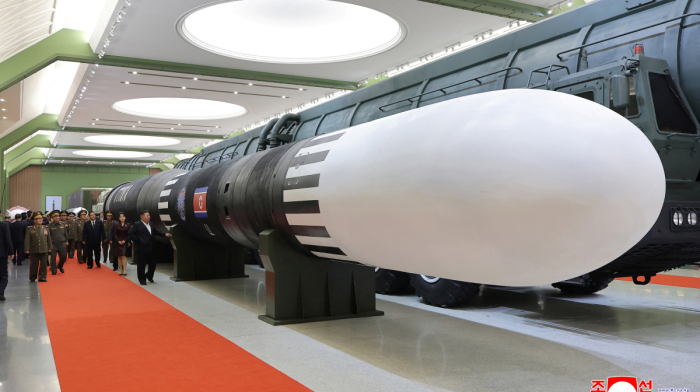
Iran’s Foreign Minister Abbas Araghchi has firmly ruled out any discussion of the country’s ballistic missile capabilities in the newly resumed, O...
European arms imports jumped 155% from 2020-24, with Ukraine emerging as the world’s largest arms importer, according to a Stockholm International Peace Research Institute (SIPRI) report released Monday. The surge follows Russia’s 2022 invasion, which has reshaped global defence markets.
The United States retained its dominance in global arms exports, increasing its market share from 35% to 43%, supplying more than 50% of Europe’s arms imports in the period. Key European buyers included Britain, the Netherlands, and Norway.
Ukraine alone accounted for 8.8% of global arms imports, with nearly half coming from the U.S. The report comes as Washington pauses military aid to Kyiv under President Donald Trump, raising concerns over Europe’s defence reliance on American supplies.
Russia’s arms exports dropped to 7.8% of the global market, down from 21%, as sanctions and domestic war demands disrupted supply. Meanwhile, China ramped up its own weapons production, leading to a 21% decline in arms imports across Asia and Oceania.
European leaders recently pledged increased defence spending, citing uncertainty over U.S. support and Russia’s growing military posture. Despite efforts to reduce dependency, NATO states continue to rely heavily on American arms, with nearly 500 combat aircraft and other weapons still on order.
Global arms transfers remained steady overall, with shifting regional demands reflecting the widening geopolitical divide since the war in Ukraine began.

The United States and Azerbaijan signed a strategic partnership in Baku on Tuesday (10 February) encompassing economic and security cooperation as Washington seeks to expand its influence in a region where Russia was once the main power broker.
Greek Prime Minister Kyriakos Mitsotakis arrived in Ankara on Wednesday, where Turkish President Recep Tayyip Erdoğan held an official welcoming ceremony at the Presidential Palace, marking the start of high-level talks between the two NATO allies.
Europe heads into the Munich Security Conference, 13 February, amid deepening unease over U.S. policy, as President Donald Trump’s hard-line stance on defence, trade and territory fuels doubts about Washington’s long-term commitment to transatlantic security.
The European Union is preparing a further expansion of its sanctions against Russia, with Central Asia emerging for the first time as a distinct point of focus.
A senior adviser to Iran’s Supreme Leader said on Tuesday that negotiations with the United States must remain focused on the nuclear issue and be grounded in realism, as Washington and Tehran prepare to resume talks mediated by Oman.
A Republican lawmaker accused on Wednesday (11 February) Attorney General Pam Bondi of concealing the names of Jeffrey Epstein’s powerful associates. The claim was made during a heated House hearing on the Justice Department’s handling of the files.
Start your day informed with AnewZ Morning Brief: here are the top news stories for the 12th of February, covering the latest developments you need to know.
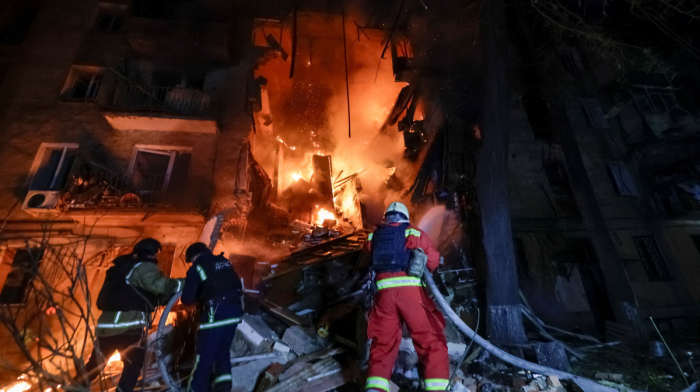
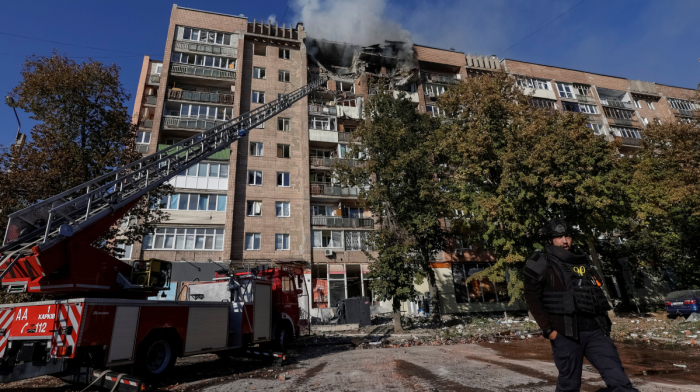
The Ukrainian capital came under a “massive” Russian missile attack early Thursday (12 February), with explosions heard across the capital according to authorities. The assault unfolded as uncertainty lingers over upcoming U.S.-brokered peace talks.
The U.S. House of Representatives narrowly backed a measure on Wednesday (11 February) disapproving President Donald Trump's tariffs on Canada, a rare rebuke of the president and leaders of his party in the Republican-majority House.
Russia has attempted to "fully block" Meta Platforms-owned WhatsApp in the country, a company spokesperson told Reuters on Wednesday, as Moscow promotes home-grown platforms and seeks greater control over its internet space.
You can download the AnewZ application from Play Store and the App Store.
What is your opinion on this topic?
Leave the first comment