live Global markets weigh U.S.-Iran tensions as talks to end war continue
Global equities rose after mild inflation data strengthened expectations that the Federal Reserve will keep interest rates steady. Oil prices also edg...
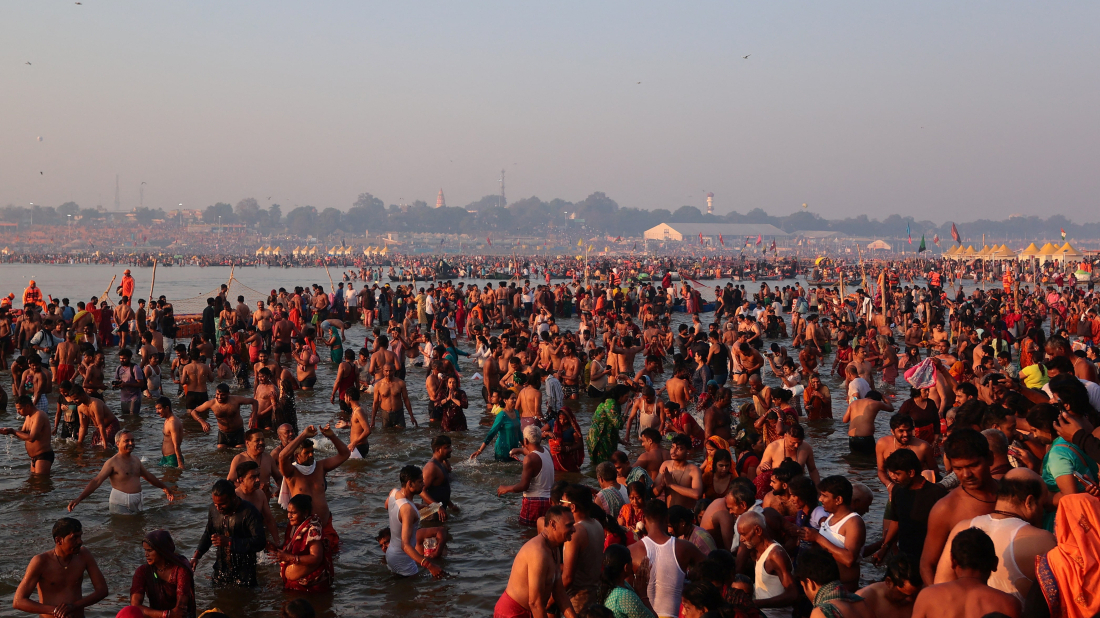
In a stunning display of devotion, millions of Indians flocked to the banks of the sacred rivers on Wednesday for the last day of the six-week Maha Kumbh Mela - a religious festival that has drawn a staggering total of 663 million visitors over its duration.
Television images captured large crowds navigating through temporary townships set up in Prayagraj, where security officials worked diligently to guide thousands of pilgrims around barricades and manage the surging flow of people. “There is a huge rush because it is the last day for all devotees to take a ‘holy dip,’” said a devotee identified only as Rahul. “Thankfully, we were lucky enough to take a holy dip today.”
Organizers had bolstered security and enforced strict traffic controls after complaints of extensive congestion and traffic jams stretching for kilometers near the riverbanks. The massive scale of the event has once again set world records, reaffirming India’s tradition of hosting the largest human gatherings in history.
Held once every 12 years, the Maha Kumbh Mela is regarded as one of Hinduism’s most significant religious events. This year’s festival, described as “maha” or great, was made even more auspicious by a rare celestial alignment—an occurrence that has not been witnessed in 144 years.
The event, which attracts a diverse mix of participants ranging from local devotees and high-ranking officials including Prime Minister Narendra Modi, to international figures such as Chris Martin of Coldplay, stands as a testament to the enduring power of faith and tradition. However, the celebrations were not without challenges. Last month, a stampede on the festival’s most auspicious day tragically resulted in the deaths of dozens of people and left several injured, casting a shadow over the otherwise jubilant proceedings.
As the final day of the Maha Kumbh Mela concludes, authorities and organizers continue to work tirelessly to ensure the safety and well-being of millions, while devotees leave with the hope and belief that the sacred waters have cleansed them of past sins and paved the way for a new beginning.

Disruption in the Strait of Hormuz has increased the strategic importance of Bab al-Mandab, raising fears that instability in both waterways could trigger a wider global energy and trade crisis.
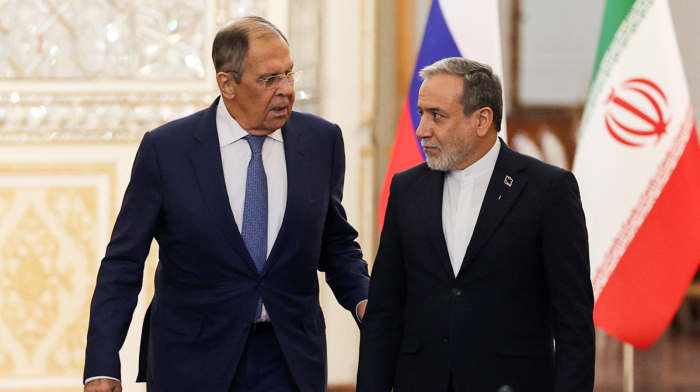
Iran and the United States remain at loggerheads over efforts to agree a permanent end to the war in the Gulf, according to a senior Iranian source who said there had been no progress in talks to revive the interim deal agreed in June and define a timeframe to implement it.
U.S. President Donald Trump has called for Iran to pay compensation for decades of deaths and damage, adding a new demand to peace talks as Tehran seeks compensation and sanctions relief before reopening the Strait of Hormuz.
A criminal court in Damascus has sentenced former Syrian President Bashar al-Assad to death in absentia for premeditated murder, torture, arbitrary detention and crimes against humanity, according to Syria’s state news agency SANA.
Millions of people across Spain and Iceland are preparing on Wednesday to witness a rare total solar eclipse, when the moon will pass directly between Earth and the Sun, briefly turning daylight into darkness along a narrow path.
Start your day informed with AnewZ Morning Brief. Here are the top news stories for the 13th of August, covering the latest developments.
Venezuelan authorities plan to focus on reconstruction efforts and recovering around 31 metric tons of gold, worth an estimated $4 billion, held in the Bank of England's underground vaults, National Assembly Chief Jorge Rodríguez said, as monthly inflation surged to 20 per cent.
Millions of people across Europe, including northern Spain and Iceland, watched the sky darken on Wednesday evening as Western Europe experienced its first total solar eclipse in 27 years.
Turkish Foreign Minister Hakan Fidan on Wednesday met Libya's eastern army commander Khalifa Haftar in Benghazi, as Ankara seeks to widen its outreach across divided Libya.
Colombia's President Abelardo De La Espriella has pledged to establish an emergency fund to rebuild infrastructure damaged by Monday's 7.4-magnitude earthquake. Rescuers, meanwhile, are racing to find survivors as search operations enter a critical phase.
You can download the AnewZ application from Play Store and the App Store.
What is your opinion on this topic?
Leave the first comment