The United Kingdom and Norway have unveiled a new joint naval initiative designed to protect undersea infrastructure and counter increased Russian submarine activity in the North Atlantic.
The agreement, announced Thursday (4 December) during talks in London between UK Prime Minister Keir Starmer and Norwegian Prime Minister Jonas Gahr Støre, marks one of the most significant bilateral defence steps the nations have taken in recent years.
Under the plan, a combined fleet of at least 13 warships will conduct coordinated patrols to safeguard critical seabed assets, including communication and energy cables, while tracking Russian submarines operating near NATO’s northern flank.
The UK government described the partnership as essential to addressing “a new era of threat,” noting that Russian naval activity close to British waters has risen by 30% during the last two years.
The pact builds on a £10 bln (€11 billion) deal signed in August that will see Norway purchase at least five British-built frigates. These vessels, together with eight UK ships, will form the backbone of the joint patrol force. As part of the broader defence arrangement, the Royal Navy will also incorporate Norwegian-made missiles into its surface fleet.
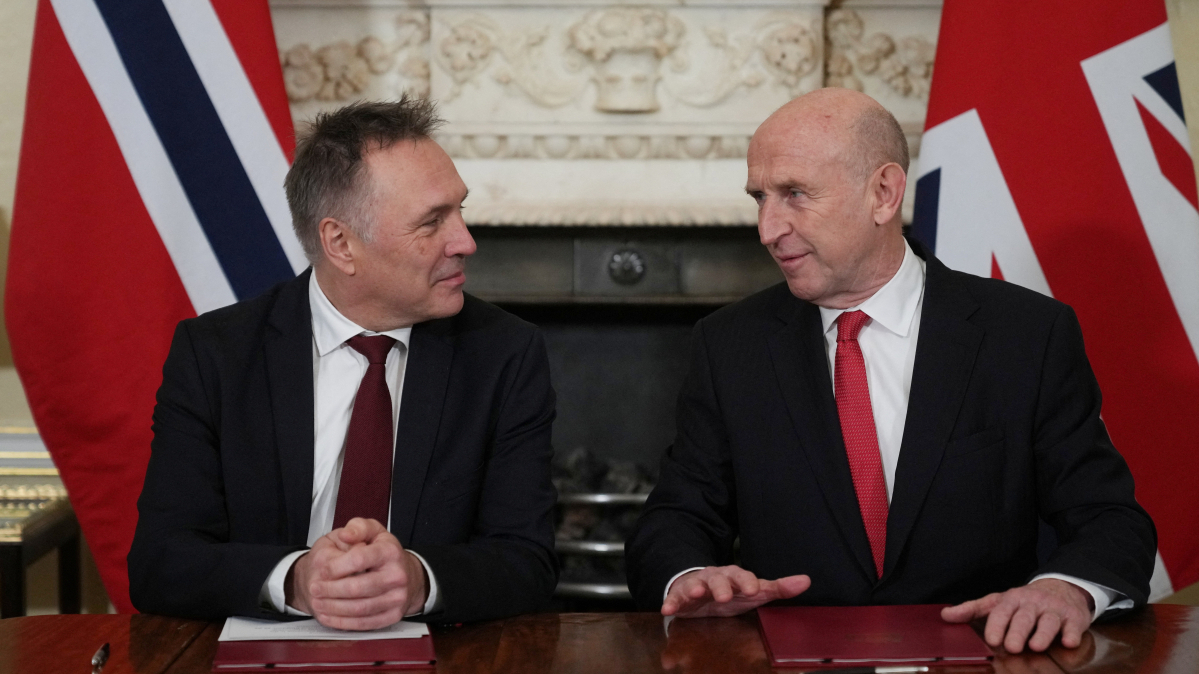
“In this new era of threat and with increasing Russian activity in the North Atlantic, our strength comes from hard power and strong alliances,” UK Defence Secretary John Healey said at the signing ceremony.
His Norwegian counterpart, Defence Minister Tore O. Sandvik, emphasised that the deal will allow both countries to “defend themselves together.”
Starmer and Støre met at 10 Downing Street before travelling to RAF Lossiemouth in Scotland to visit British and Norwegian personnel involved in maritime surveillance missions. Crews stationed there have been closely tracking Russian movements across key transit routes used by undersea communications infrastructure.
Concerns over the security of seabed networks have surged across Europe, particularly after multiple incidents involving damaged cables in the Baltic Sea last year. NATO attributed several of these disruptions to Russia, prompting calls for stronger regional protection measures.
Russia denies damaging cables, with the Kremlin calling the accusations "absurd."
James Appathurai, NATO’s senior official for hybrid and cyber threats, warned that persistent interference with undersea cables now represents “the most active threat” to Western infrastructure.
The new UK–Norway alliance signals a deepening of defence cooperation at a time when NATO states are accelerating efforts to harden critical infrastructure against both physical and hybrid threats. With undersea cables carrying the vast majority of global data and financial traffic, officials across Europe have stressed that protecting them has become a strategic priority.
















What is your opinion on this topic?
Leave the first comment