Uganda has introduced a 21-day quarantine for citizens returning from the Democratic Republic of Congo as authorities tighten Ebola prevention measures following recent cases linked to travellers who passed through the country.
Ugandan citizens returning home with a recent history of travel to the Democratic Republic of Congo will be required to undergo a 21-day quarantine, Health Minister Chris Baryomunsi said on Sunday.
The measure comes as Uganda strengthens surveillance and screening despite declaring itself Ebola-free in July following the end of its latest outbreak.
Health authorities have become increasingly cautious after two people who had recently travelled through Uganda later tested positive for Ebola in Kenya and Nigeria.
Nigeria case under investigation
Uganda is investigating the case confirmed in Nigeria, involving the 42-year-old wife of a Swiss diplomat.
According to Nigeria's Centre for Disease Control, the woman travelled from Uganda through Addis Ababa before arriving in Abuja on 3 October. She remains in isolation and Nigerian authorities said her condition had improved significantly.
Officials have traced 53 people who were in contact with her.
Ugandan authorities are reviewing genomic sequencing data, travel records and the woman's movements and interactions in coordination with Nigerian officials and international partners.
Swiss authorities have said they believe the woman contracted Ebola in Uganda, but Baryomunsi rejected that conclusion as premature.
He said relatives of the woman from Uganda's West Nile region had visited her in Kansanga, a suburb of Kampala, and that those relatives had previously travelled to DR Congo.
Baryomunsi said conclusions about where the infection occurred should be based on scientific evidence.
Kenya case also passed through Uganda
Kenya's first Ebola patient had travelled from DR Congo into Uganda before flying from Entebbe International Airport to Nairobi on 3 October. The patient died two days later.
The Kenyan and Nigerian cases passed through Entebbe airport on the same day, although Ugandan officials said a review of CCTV footage showed there had been no physical interaction between them.
Diana Atwine, permanent secretary at Uganda's health ministry, said authorities had examined the movements of both travellers at the airport.
Baryomunsi also said all 60 people identified as contacts of the Kenyan Ebola patient had completed their 21-day monitoring period and had been discharged.
Screening stepped up at airports and borders
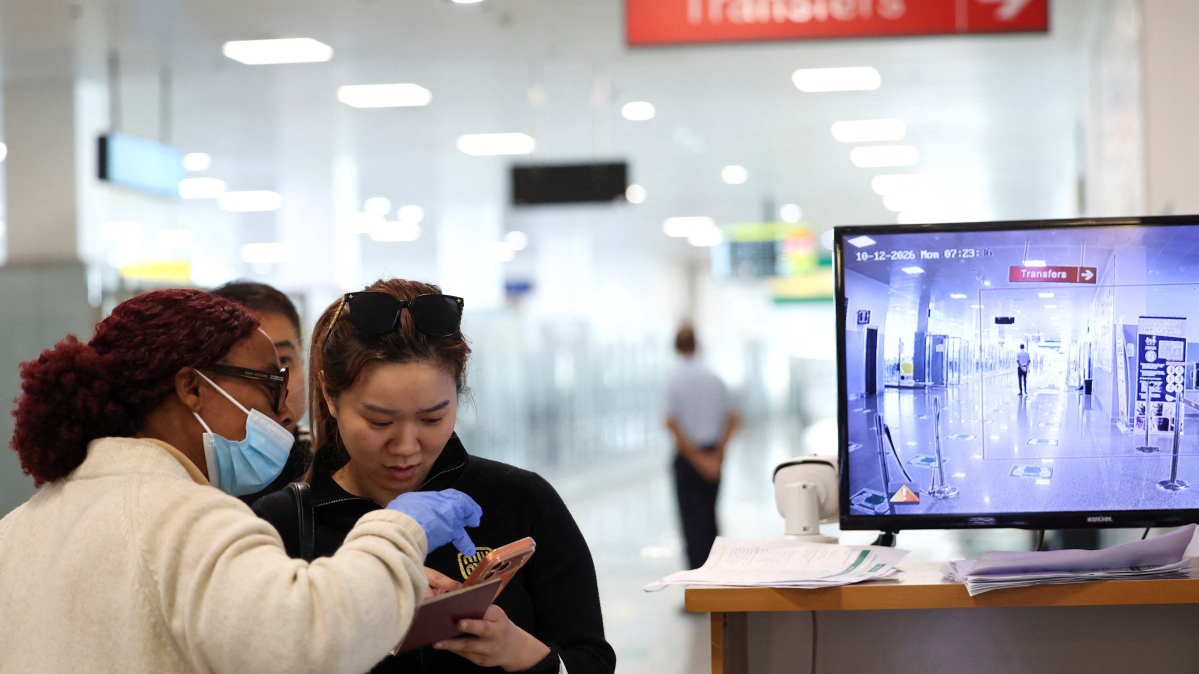
Uganda has intensified health screening at Entebbe International Airport and at land border crossings as part of its response.
All travellers entering the country by air, land or water are now required to complete a passenger locator form.
The measures are intended to help health authorities identify possible cases quickly and trace people who may have been exposed to the virus.
Genomic analysis of Nigeria's confirmed case showed that the virus was closely related to the strain identified in Kenya's first case. However, Nigerian authorities said there was no evidence that the Kenyan patient had travelled to Nigeria or had any direct connection with the Nigerian case.
Uganda shares a border with the Democratic Republic of Congo, where the current outbreak began, and has experienced several Ebola outbreaks in the past.
Health worker killed during Ebola response in Congo
Concerns over the outbreak were further heightened after the World Health Organization reported an attack on health workers responding to an Ebola alert in northern Congo.
WHO Director-General Tedros Adhanom Ghebreyesus said a nurse was killed and another health worker seriously injured in the town of Bafwasende on Saturday.
He condemned the violence and said health workers responding to the disease must be able to carry out their duties safely and with dignity.
Read more:









What is your opinion on this topic?
Leave the first comment