Nigeria's first Ebola case in more than a decade may be linked to travel in Uganda, Swiss authorities said on Thursday, although the source of infection remains unclear. Uganda maintains it has no cases of the disease.
The patient is the Ugandan-born wife of a Swiss diplomat based in Abuja. In a statement to Reuters, Switzerland's Federal Department of Foreign Affairs said she had spent around a week in a private clinic in the Nigerian capital after developing symptoms. Authorities believe she contracted the virus during a trip to Uganda about two weeks earlier.
Her husband, who travelled with her, is in isolation but has shown no symptoms, the statement added.
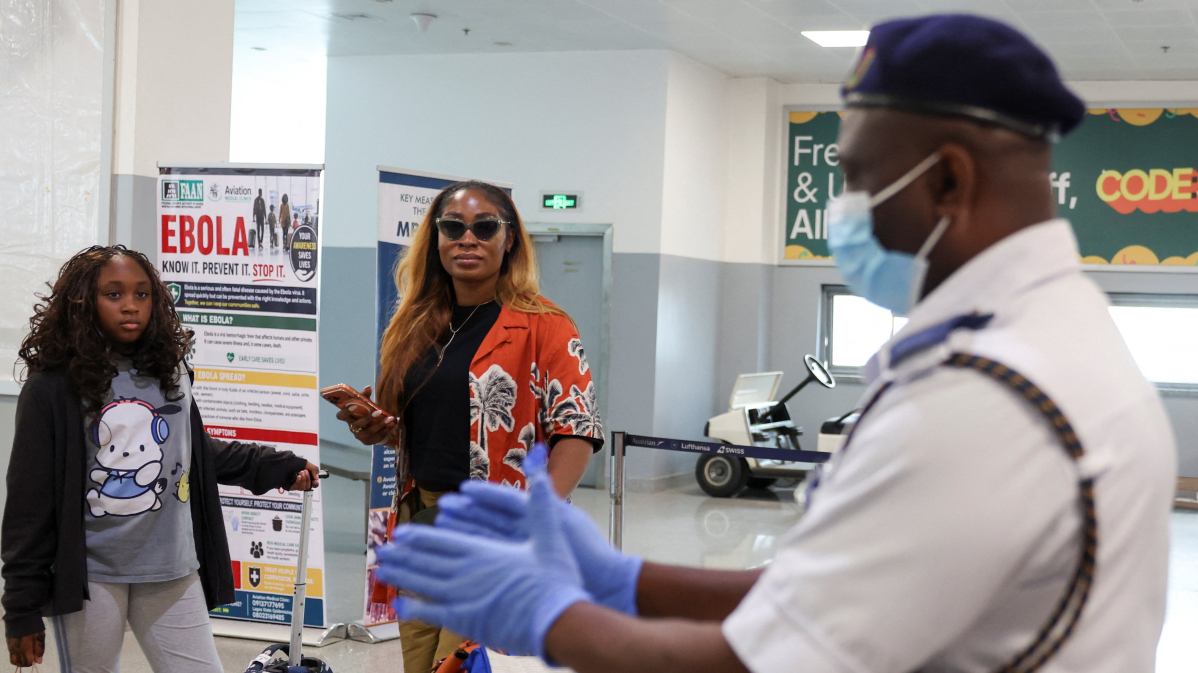
Nigeria confirmed the case on Tuesday, becoming the fourth African country affected by the outbreak and the fifth worldwide, after France reported an imported infection in June. Nigeria is also the most populous country affected.
The outbreak began in the Democratic Republic of Congo, where it was declared in mid-May. The World Health Organization (WHO) has described it as the fastest-moving Ebola outbreak on record.
Conflicting accounts of travel history
Ugandan authorities say the woman travelled to eastern Congo before passing through Uganda. Government spokesperson Alan Kasujja told Reuters there were no Ebola cases in Uganda.
“If we did, as has happened before, we'd be the first to say,” he said.
The WHO declared Uganda Ebola-free in August, after the country recorded 20 cases in May and June, most of them imported from Congo.
However, both the WHO and the Africa Centres for Disease Control and Prevention (Africa CDC) say they have received no confirmed evidence that the woman visited Congo.
Africa CDC official Wessam Mankoula said Nigeria and Uganda were exchanging information to trace her movements and identify where she may have been exposed to the virus.
Pavel Ursu, the WHO's representative to Nigeria, said available information indicated that the woman had been in Uganda since 16 September and returned to Abuja on 3 October.
According to the WHO, she developed symptoms on 7 October, four days after returning to Nigeria. She sought treatment at a private health facility in Abuja on 11 October, with laboratory tests confirming Ebola on 20 October.
Nigerian authorities have identified 44 contacts, all of whom are being monitored.
Ursu said the patient remained in hospital, but her biochemical markers were showing signs of improvement.
WHO emergency response manager Patrick Otim stressed that the source of infection had yet to be established.
Investigators are also working to identify which health facilities she visited in Abuja during the 48 hours between falling ill and being admitted to hospital, according to Otim.
Possible link to Kenya case
Africa CDC is investigating a possible connection between the Nigerian patient and Kenya's first Ebola case after discovering that both individuals departed Uganda's Entebbe airport on the same day.
Mankoula said possible transmission between the two patients was among the scenarios under investigation.
Kenya confirmed its first case on 6 October and has since reported eight additional infections. Health ministry director-general Patrick Amoth said all 135 contacts linked to the country's first patient had been traced.
Deadly outbreak spreads across Africa
The current outbreak is caused by Bundibugyo virus, which kills around half of those infected. There is currently no approved vaccine or specific treatment.
Ebola spreads through direct contact with the bodily fluids of infected people, including those who have died from the disease.
According to Africa CDC, the outbreak has killed approximately 4,700 people across the four affected African countries.
Read more:









What is your opinion on this topic?
Leave the first comment