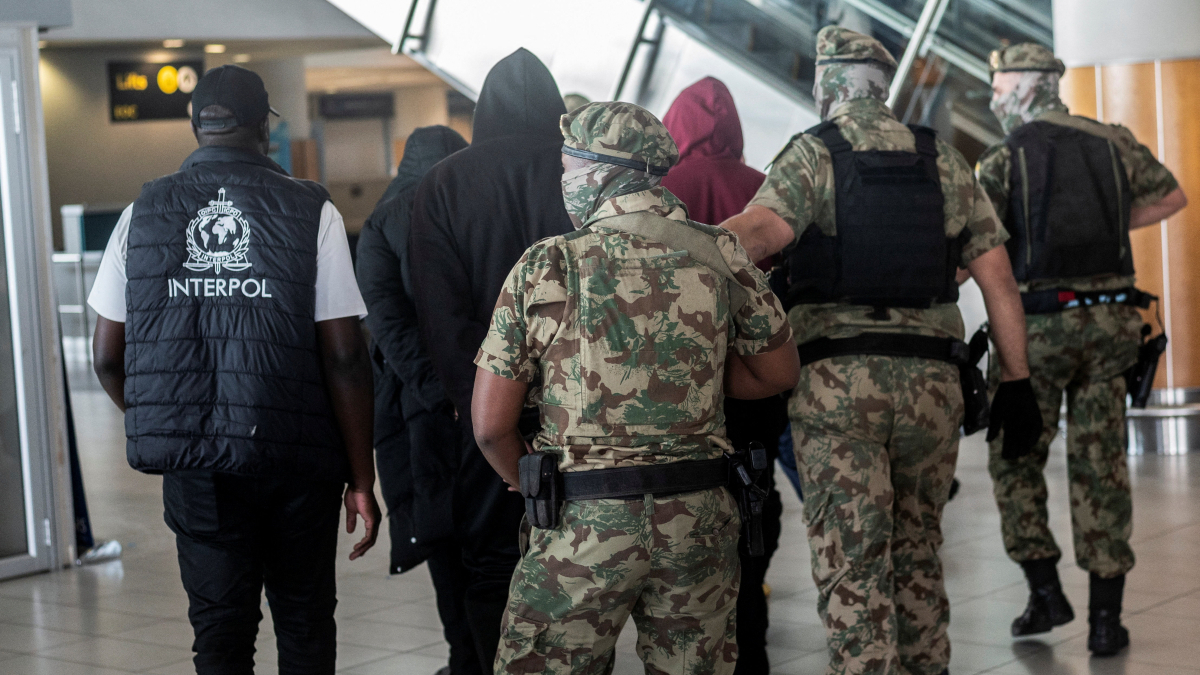
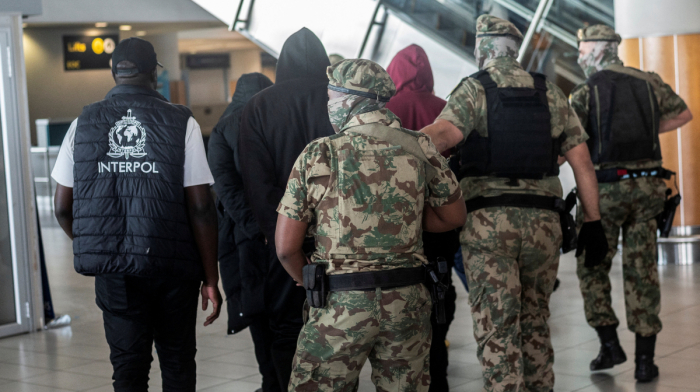
An Interpol-led crackdown on cybercrime across Africa has led to at least 1,462 arrests and the recovery of $105 million in illicit assets, exposing the growing reach of international online fraud networks.
The international police organisation said on Thursday that Operation Serengeti III, carried out between 29 June and 31 August, involved law enforcement agencies from 21 countries. The operation also disrupted 10,909 malicious online networks linked to various forms of cybercrime.
According to Interpol, the fraud schemes uncovered were responsible for losses exceeding $385 million, affecting tens of thousands of people worldwide.
Neal Jetton, Interpol's Director of Cybercrime, said, “Criminal networks are increasingly exploiting digital technologies without regard for national borders, allowing them to target victims on an unprecedented scale.”
Nearly 66,000 victims identified
Investigators identified almost 66,000 victims of cybercrime, including online investment fraud, ransomware attacks, digital extortion and business email compromise schemes.
The findings revealed how criminal groups are moving beyond basic online scams, using increasingly sophisticated digital systems and cross-border financial networks to transfer illicit profits and hide their activities.
Investigations are continuing, with analysts examining digital evidence and financial records to track down more suspects and recover additional stolen assets.
Uganda raids expose international fraud networks
In one of the operation's biggest raids, investigators in Uganda dismantled two international fraud networks, arresting 365 foreign nationals.
Police said the groups targeted victims in Asia through sophisticated investment and pension-related scams.
The suspects allegedly ran large call centres, using scripted sales pitches, fake investment websites and fraudulent online trading platforms to lure victims into investing in non-existent financial products.
Those targeted included pensioners and other vulnerable investors seeking higher returns on their savings.
Angola shuts down illegal cryptocurrency mining sites
In Angola, police shut down two illegal cryptocurrency mining operations and arrested nine suspects.
Authorities seized more than 2,000 cryptocurrency mining machines, along with six unauthorised power installations supplying electricity to the sites.
Officials estimated that the seized electrical infrastructure alone was worth more than $1 million.
The raids also highlighted concerns about illegal cryptocurrency mining in parts of Africa, where operators may exploit subsidised electricity or unauthorised power connections to run energy-intensive facilities.
Nigeria uncovers phishing and investment scams
Nigerian authorities uncovered several major fraud schemes during the operation.
Investigators arrested a suspect accused of operating a large-scale phishing scheme that allegedly collected software login credentials and approximately 2.1 million email addresses.
Separately, authorities uncovered an international investment fraud network promoted through mobile messaging applications. Investigators traced more than $2.4 million in suspected criminal proceeds, reportedly transferred largely through cryptocurrency transactions.
Other cases included fraudulent mobile lending operations dismantled in Tanzania and an online vehicle import scam uncovered in Gabon.
In the Republic of Congo, police arrested 30 suspects allegedly linked to a cybercrime network spanning several countries.
Artificial intelligence adds to cybercrime threat
The crackdown brought together authorities from across Africa, including Kenya, Ghana, South Africa, Rwanda, Cameroon and Zimbabwe, with support from U.S. authorities.
Interpol said intelligence-sharing and cooperation with technology companies were crucial to detecting malicious online networks and tracing criminal activity across borders.
The organisation warned that criminals are increasingly using artificial intelligence (AI) to make their scams more convincing and expand their reach.
Security experts say AI can help fraudsters produce realistic messages, automate social engineering attacks and impersonate individuals online, making it harder for both victims and investigators to spot deception.
International cooperation key to tackling cybercrime
As internet access, digital payments and emerging technologies expand, cybercrime has become a rapidly growing threat to individuals, businesses and governments worldwide.
Interpol said Operation Serengeti III underscored the need for closer international cooperation to combat criminal networks operating across national borders.
Jetton said the crackdown demonstrated how coordinated action can help dismantle these networks, recover stolen funds and protect communities from online crime.
Further arrests and asset seizures remain possible, with investigations continuing into seized electronic devices and financial records.
Read more:
















What is your opinion on this topic?
Leave the first comment