As U.S. troops complete their withdrawal from Iraq, Washington's military footprint may be shrinking. Its financial influence, however, remains deeply embedded in the country's economy.
More than two decades after the U.S.-led invasion that toppled Saddam Hussein, much of Iraq's oil income still moves through accounts linked to the Federal Reserve Bank of New York.
The arrangement has become one of the most consequential and controversial legacies of the post-2003 order.
For critics, it is evidence that Iraq's financial sovereignty remains constrained. For supporters, it is a mechanism that has helped protect Iraq's revenues and maintain confidence in its economy.
A new system is birthed
The framework emerged in the aftermath of the U.S.-led invasion.
The Coalition Provisional Authority established the Development Fund for Iraq under a United Nations mandate, creating a mechanism to manage oil revenues and protect them from disputes that had accumulated during years of sanctions and international isolation.
Over time, that structure evolved into an account held by Iraq's central bank at the Federal Reserve Bank of New York.
Foreign buyers of Iraqi oil continue to deposit payments through this system.
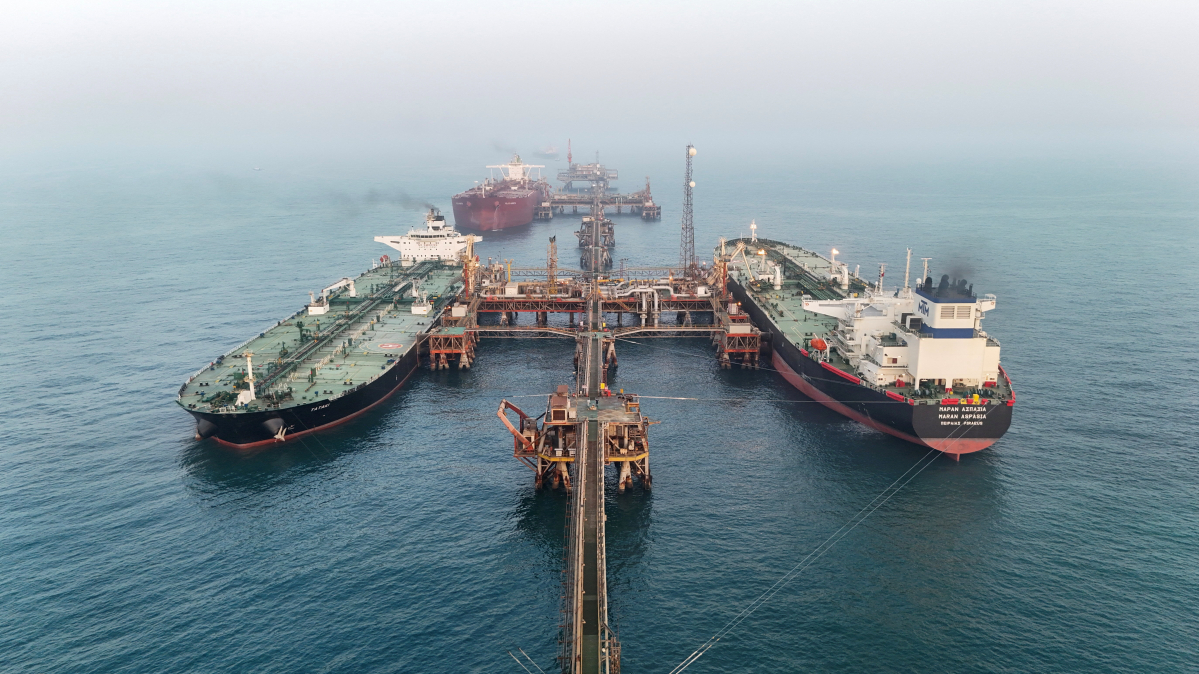
Oil remains the foundation of Iraq's economy. According to recent U.S. State Department assessments, petroleum revenues account for the overwhelming majority of government income, leaving Baghdad heavily dependent on the uninterrupted flow of oil proceeds.
The system allows Iraq to receive oil payments in dollars and use those funds to finance government spending and international trade.
The Iraqi government converts part of those revenues into dinars to fund its budget, while commercial banks rely on dollar access to pay for imports and international transactions.
Because these flows pass through the U.S.-dominated financial system, Washington retains significant influence over how and when dollar transfers occur.
That influence has become particularly visible at moments of political tension.
A source of U.S. leverage
The issue attracted international attention in 2020 after Iraq's parliament voted to call for the removal of foreign troops following the U.S. killing of Iranian commander Qasem Soleimani in Baghdad.
Reuters reported at the time that Washington raised the possibility of restricting Iraq's access to funds held in New York, highlighting the extent of U.S. financial leverage even after years of Iraqi state-building.
More recently, Reuters reported that American officials used the prospect of restrictions on dollar transfers during political disputes involving Iraqi parties seen as being closely aligned with Iran.
Analysts argue that control over dollar access can have immediate effects on Iraq's banking sector, exchange rates and government finances.
The Iran factor
The issue is particularly sensitive because Iraq occupies a unique position in the Middle East.
Baghdad maintains strategic relations with both Washington and Tehran, often balancing competing interests between the two powers.
American officials have long argued that tighter oversight of Iraqi dollar flows helps prevent sanctions evasion and limits financial transfers to Iran and Iran-aligned groups.
Critics, however, view the system as evidence that Iraq remains vulnerable to pressure from external actors.
For many Iraqi politicians, the debate has become increasingly tied to national sovereignty.
The withdrawal of U.S. troops has renewed questions about whether Iraq should seek alternative arrangements for managing its oil revenues or reduce its reliance on the U.S. financial system.
Such proposals surface regularly but have proved difficult to implement.
The global oil trade remains overwhelmingly dollar-based, and economists warn that moving away from existing structures could carry significant financial risks.
Why the debate is not going away
As Iraq attempts to diversify its economy and reduce dependence on oil, the country's financial relationship with the United States is likely to remain a subject of debate.
The departure of American forces may mark the end of one chapter in U.S.-Iraq relations. Yet the deeper connections created by international finance, oil markets and the dominance of the dollar are likely to endure.
For now, Iraq's oil wealth may be pumped from fields in Basra, but much of the financial architecture that supports it still runs through New York.
Read more:













What is your opinion on this topic?
Leave the first comment