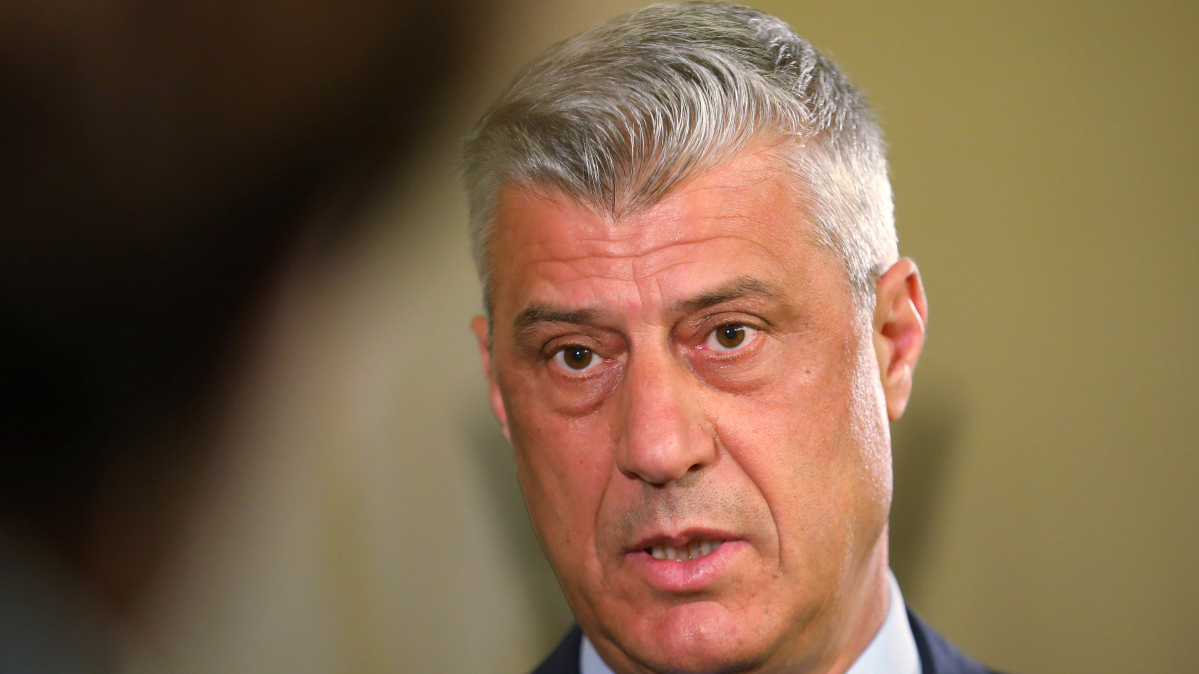
Hashim Thaçi was once one of the most recognisable faces of Kosovo’s struggle for independence. On Wednesday, that political journey reached a dramatic turning point when a court in The Hague sentenced him to 25 years in prison for war crimes committed during the 1998-99 Kosovo conflict.
Thaçi, 58, was convicted of crimes including murder, torture and illegal detention on 16 September.
The tribunal said Thaçi was guilty of the murder of 96 political opponents and perceived collaborators with Serbian security forces by Kosovo Liberation Army forces during the conflict.
He was also convicted for the arbitrary illegal detention of 385 people, torture of 303 people and cruel treatment of 49 people. None of the victims were active participants in hostilities at the time the crimes were committed, the court added.
It said Thaçi had actively participated in and encouraged crimes as part of a joint criminal enterprise with a common plan.
He has consistently denied wrongdoing. In his closing statement, he told judges, “I am completely innocent.”
From student activist to KLA leader
Born in Kosovo’s Drenica region in 1968, Thaçi became involved in the Kosovo Albanian independence movement while studying at the University of Pristina. He later moved to Switzerland, where he continued his political activism.
In the 1990s, he joined the Kosovo Liberation Army (KLA), the armed movement fighting Serbian and Yugoslav forces. He became one of its leading political figures and represented Kosovo Albanians at the 1999 Rambouillet peace talks in France.
The negotiations failed. NATO then launched a 78-day bombing campaign against Yugoslavia, after which Serbian and Yugoslav forces withdrew from Kosovo.
The war left thousands dead and displaced more than a million people.
From wartime politics to the presidency
After the conflict, Thaçi helped establish the Democratic Party of Kosovo (PDK), which grew out of the KLA's political wing.
His political career rose quickly. He became prime minister in 2008, the same year Kosovo declared independence from Serbia. He later served as foreign minister before becoming president in 2016.
As president, Thaçi played a prominent role in efforts to improve relations with Serbia, including the European Union-backed dialogue between the two sides.
For many Kosovars, he remains closely associated with the country's independence. His supporters have displayed images of Thaçi and other former KLA figures with the words “Heroes of War and Peace.”
Why was he tried?
The Kosovo Specialist Chambers was created in 2015 under Kosovo law to investigate alleged crimes linked to the KLA. Although based in The Hague, it is separate from the International Criminal Court (ICC).
Thaci was indicted in 2020 and resigned as president before being transferred to detention in The Hague.
Prosecutors accused him and three other former KLA leaders of crimes against civilians and people viewed as opponents of the KLA, including Kosovo Albanians, Serbs and Roma.
The prosecution argued that the defendants were individually responsible for a campaign involving persecution, imprisonment, torture and killings. Thaçi's defence rejected the allegations and disputed claims that he had effective control over those accused of committing abuses.
Major ruling for Kosovo
The trial began in 2023 and heard evidence from 134 witnesses before proceedings closed late last year.
The court's 25-year sentence is one of the most significant judgments involving a senior figure from Kosovo's independence movement. Prosecutors had sought a 45-year sentence.
The case does not amount to a ruling against the KLA as an organisation. Prosecutors have stressed that the proceedings concern the individual criminal responsibility of the defendants.
Thaçi is also facing a separate case over alleged attempts to obstruct proceedings and influence witnesses. He denies those allegations too.
For Kosovo, his conviction brings a painful chapter of the country's recent history back into focus: the same wartime movement that helped drive the push for independence has also faced longstanding allegations of serious abuses.
Read more:















What is your opinion on this topic?
Leave the first comment