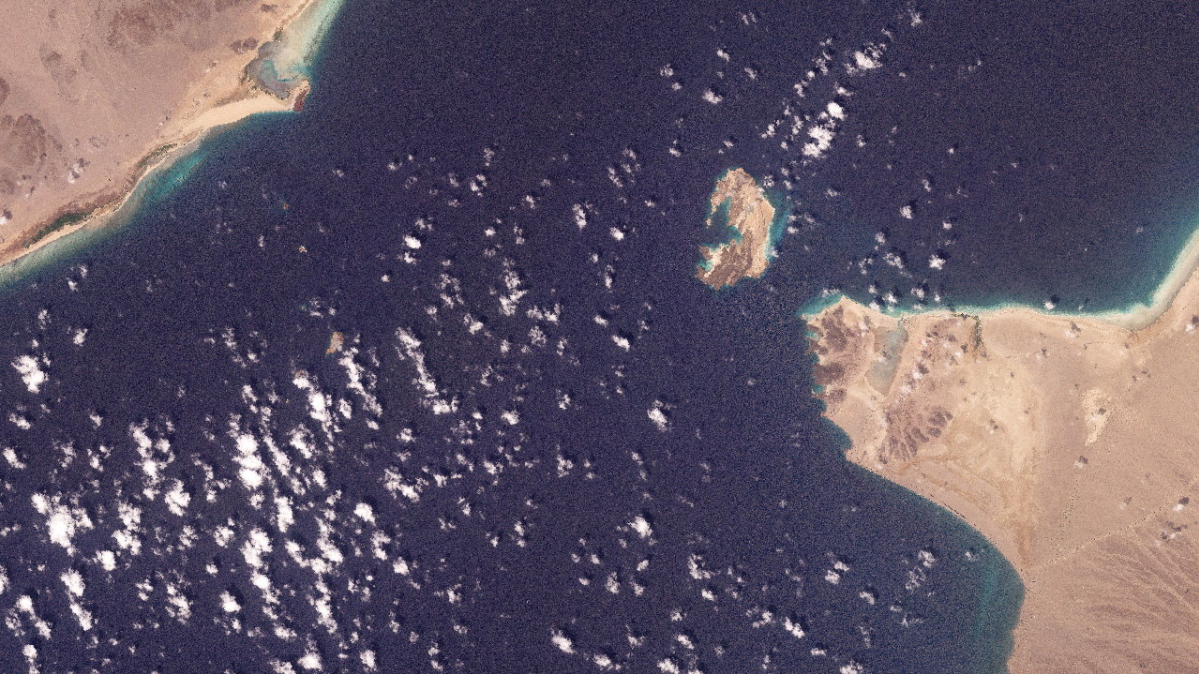
At the southern tip of the Red Sea, where Yemen faces Djibouti and Eritrea across a channel only around 30 kilometres wide at its narrowest, lies one of the world's most consequential waterways: the Bab el-Mandeb Strait.
Its Arabic name translates as the “Gate of Tears”, a reference to the strait's notoriously difficult currents, according to an academic analysis published by the non-profit organisation The Conversation.
With Iran's effective closure of the Strait of Hormuz earlier this year, the Bab el-Mandab strait can be described as the Middle East's most critical maritime chokepoint.
An artery for global trade
The scale of shipping that relies on this narrow gateway is striking. The International Crisis Group puts the figure at around seven per cent of global maritime trade in ordinary times, carried by more than 25,000 vessels a year and worth some $700 billion annually.
A separate analysis published by The Conversation, drawing on Suez Canal Authority figures, suggests the share can run as high as 14 per cent of global maritime trade in normal conditions. Either way, the strait links Asian manufacturing, Gulf energy exports and European and American consumers along one of the shortest sea routes between them.
Suez Canal Authority data cited in The Conversation shows that, in the final quarter of 2025, roughly 40 per cent of the ships using the Suez Canal were carrying fossil fuels, another 40 per cent were bulk and general cargo, such as grain, and the remainder were mostly container vessels.
An oil and gas lifeline
Energy supplies depend heavily on safe passage through the strait. Before Houthi attacks on shipping began in late 2023, roughly nine million barrels of oil moved through Bab el-Mandab each day, CSIS says; the ensuing violence cut that flow by more than half.
The International Energy Agency, cited in The Conversation, estimated that around 4.2 million barrels of crude oil and petroleum liquids crossed the strait daily in 2025, about five per cent of global oil production.
The Crisis Group estimates that Europe sources close to 60 per cent of its energy through this route, while the American Security Project places the strait's share of global oil transport at roughly 12 per cent.
Geography of a chokepoint
Bab el-Mandeb is divided by Perim Island into two channels, the larger and deeper of which is used by big vessels. At its narrowest, the strait is around 18 miles, roughly 30 kilometres, across, according to U.S. Energy Information Administration figures cited by CSIS. The American Security Project ranks it third among the world's busiest maritime chokepoints, moving close to a tenth of global trade.
What closure would cost
The penalty for avoiding the strait is severe. Bloomberg's analysis, carried by the shipping title gCaptain, found that a voyage from Saudi Arabia to Rotterdam takes about 22 days via Bab el-Mandeb and the Suez Canal, compared with 39 days around Africa's Cape of Good Hope.
During the Houthi campaign of 2023-24, many shipowners chose that longer route anyway, driving up freight and insurance costs worldwide, the Crisis Group reports.
Saudi Arabia's pressure valve
The strait matters doubly for Saudi Arabia now that Hormuz is effectively shut. CSIS reports that the kingdom has leaned heavily on its East-West pipeline, which carries crude overland to the Red Sea port of Yanbu, bypassing Hormuz, but that the pipeline, with a capacity of around seven million barrels a day, is already running near its limit.
Any disruption to Bab el-Mandeb would undercut this workaround, since oil from Yanbu still has to leave by sea through the strait, with three-quarters of Saudi oil exports bound for Asia.
A renewed flashpoint
The strait has seen repeated violence since October 2023, when Yemen's Houthi movement began targeting merchant shipping in solidarity with Palestinians in Gaza.
Vessels including the Eternity C were sunk, with at least four crew members killed in the July 2025 attack, according to the Crisis Group's continuously updated tracker, which, as of August 2026, rated the threat level in the area as “critical”.
Attacks have continued intermittently since, entangled with the wider conflict between the U.S., Israel and Iran.
The bigger picture
Taken together, the figures explain why so much now hinges on this narrow stretch of sea. With an alternative route through Hormuz effectively closed, the Bab el-Mandeb has become, in CSIS's words, a vital artery connecting European and Asian markets and a newly important corridor for Saudi energy exports.
A sustained disruption here would be felt well beyond the Red Sea, in fuel prices, shipping schedules and the finances of countries such as Egypt that depend on the wider trade route for revenue.
Read more:












What is your opinion on this topic?
Leave the first comment