North Korea has sharply criticised a new round of joint military exercises involving the United States, South Korea and Japan, accusing Washington and its allies of increasing military tensions in Northeast Asia.
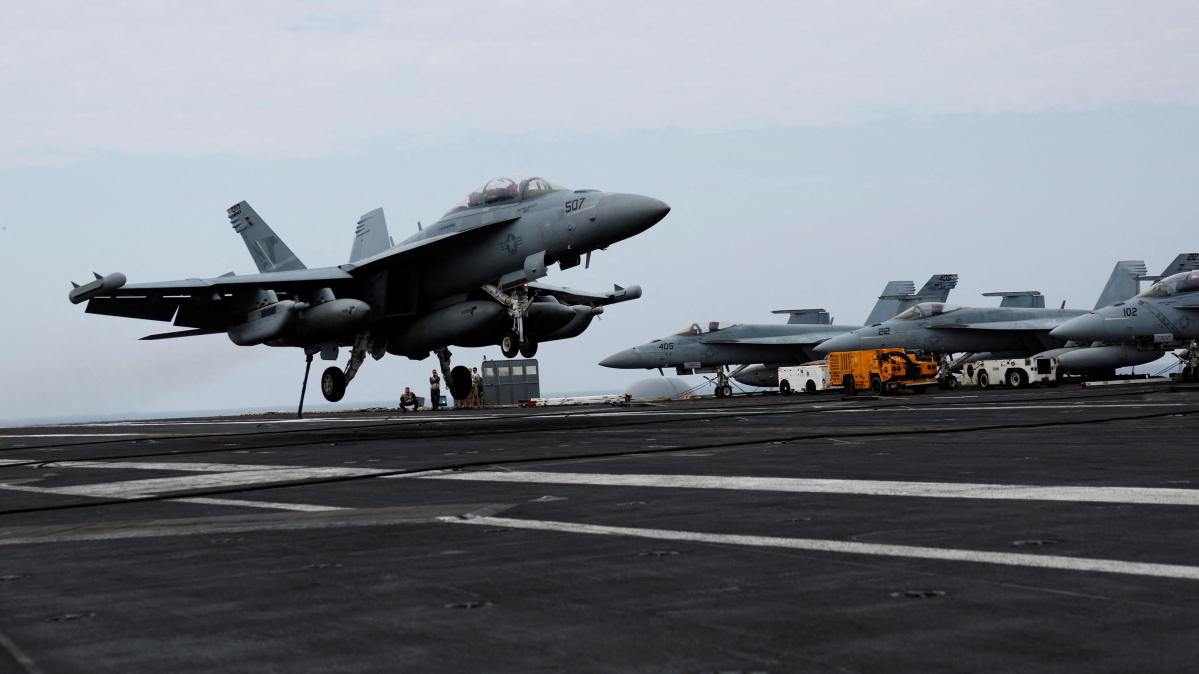
The remarks came as the latest edition of the Freedom Edge exercise officially began, bringing together forces from the three countries for five days of training designed to enhance coordination across multiple military domains.
Conducted in waters and airspace around the Korean Peninsula and at military facilities in Japan, the drills focus on improving cooperation in areas including air defence, maritime operations, missile defence and cyber security.
While Seoul and Washington have described the exercises as defensive in nature, North Korea views them as evidence of a growing military alignment directed against it.
Pyongyang accuses Washington of escalating tensions
In a statement carried by state media, North Korean officials condemned the drills as a provocation that could increase the risk of confrontation in the region.
Defence Minister Kim Song Ji warned against what he described as reckless military activities by the United States and its allies, arguing that the exercises were contributing to a more dangerous security environment on the Korean Peninsula.
Pyongyang also reiterated its long-standing position that it would continue responding firmly to what it sees as hostile policies from Washington.
The latest criticism reflects North Korea's growing concern over enhanced military cooperation between the United States, South Korea and Japan, a partnership that has expanded significantly in recent years in response to Pyongyang's missile and nuclear programmes.
Drills proceed despite Trump's earlier comments
The exercise comes weeks after U.S. President Donald Trump suggested a more cautious approach towards military activities involving South Korea.
In August, Trump said he had instructed the Pentagon to scale back separate bilateral exercises with Seoul, arguing that such drills were expensive and sent an unnecessarily hostile message to North Korea.
Despite those remarks, Freedom Edge has gone ahead as planned, highlighting the importance Washington, Seoul and Tokyo place on maintaining readiness and strengthening coordination against regional security threats.
South Korean officials have consistently argued that joint exercises remain necessary to deter potential aggression and improve collective responses to missile launches and other military challenges.
Regional security concerns remain high
The latest tensions unfold against a backdrop of continuing concern over North Korea's weapons programmes.
South Korea and Japan have repeatedly warned about advances in Pyongyang's missile capabilities, while the United States has continued to stress the importance of close coordination with regional allies.
The trilateral exercises also reflect broader strategic changes in the Indo-Pacific, where cooperation among U.S. allies has become increasingly important amid growing geopolitical competition and security concerns.
For North Korea, however, the strengthening relationship between Washington, Seoul and Tokyo is often portrayed as evidence of an encirclement strategy aimed at undermining its security.
South Korea expands defence partnership with the Philippines
As the Freedom Edge exercise began, South Korea was simultaneously taking steps to strengthen defence ties elsewhere in Asia.
South Korean Defence Minister Ahn Gyu-back met Philippine Defence Secretary Gilberto Teodoro Jr. in Seoul, where the two sides agreed to expand military and defence industry cooperation.
The discussions covered a range of areas, including personnel exchanges, joint military exercises and broader collaboration between their defence establishments.
Officials also discussed opportunities to deepen cooperation in the arms sector, building on existing partnerships involving naval and air defence systems.
Growing role for South Korean defence industry
During the talks, Seoul promoted its defence manufacturing capabilities and expressed interest in participating more actively in the Philippines' military modernisation programme.
South Korea has emerged as a major exporter of defence equipment in recent years, supplying a range of military systems to partners across Asia, Europe and the Middle East.
Philippine officials praised South Korea's defence industry and signalled support for expanding cooperation beyond existing projects.
The meeting also highlighted broader regional security cooperation, with both sides discussing peacekeeping operations and developments in the wider Indo-Pacific region.
Read More:













What is your opinion on this topic?
Leave the first comment