The latest escalation between the United States and Iran is being fought not only on the ground and at sea, but increasingly in the skies above the Gulf where a missile launch or intercepted drone can force an aircraft thousands of metres above the region to change course.
For Gulf aviation, this has created a new security reality.
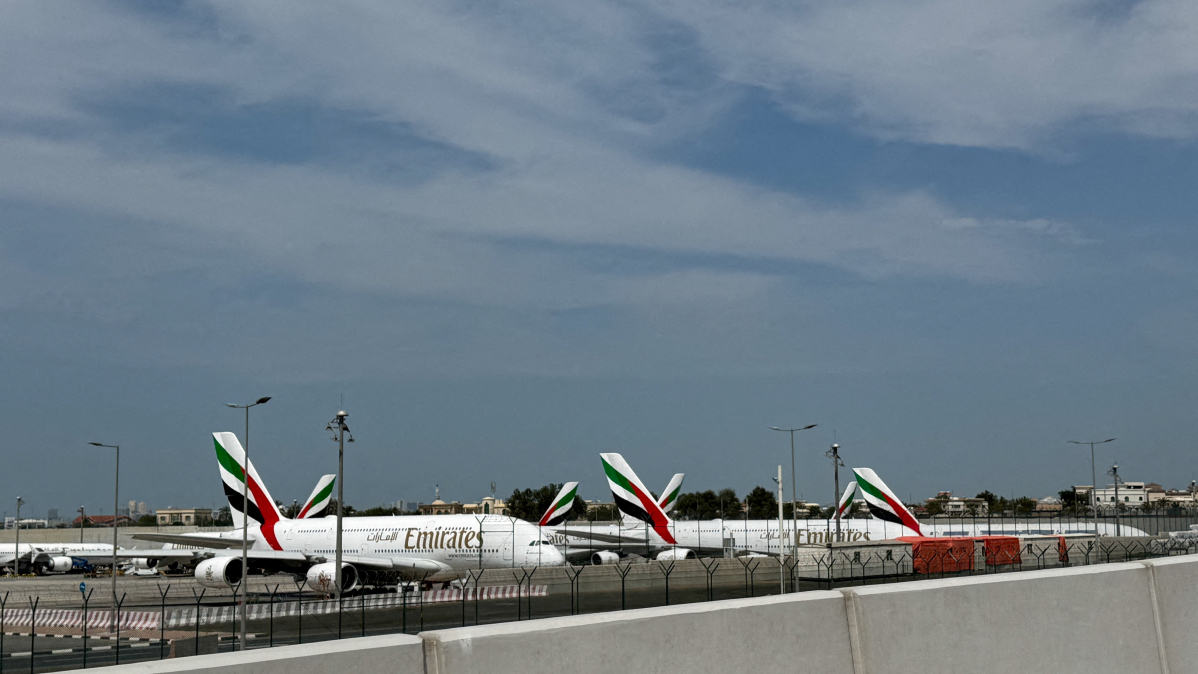
Airports in Dubai, Abu Dhabi, Doha, Bahrain and Kuwait remain central to international travel, but the airspace surrounding them is no longer treated as routine commercial territory. Airlines are having to consider military activity, missile and drone launches, interceptions, debris and even the possibility of sudden restrictions before deciding whether and how to operate.
European warning about Gulf travel
The European Union Aviation Safety Agency has extended its travel warning for the Persian Gulf and Gulf of Oman until September 30. Its latest assessment specifically covers airspace associated with Bahrain, Kuwait, Qatar and the UAE, while continuing to advise operators to avoid Iranian airspace.
Conflict has effectively introduced a second map over the Gulf - the map used by military and aviation authorities to identify where civilian aircraft can safely travel. Airlines operating from the UAE had to use alternative corridors, including routes farther south and over Saudi Arabia, to avoid areas affected by military activity. The changes allowed flights to continue, but they also meant longer journeys, greater fuel consumption and more complicated scheduling.
Travel dropped in 2026 amid conflict
Dubai International handled 31.5 million passengers in the first half of 2026, down about a third from the year before, although traffic has since recovered significantly.
By August, inbound flights to Dubai were still around 17 per cent below the previous year's level, while Doha was about 13 per cent lower, showing that the summer recovery remained uneven across the region.
Oxford Economics estimates that the Middle East could lose 23-38 million international visitors and $34-56 billion in tourism spending in 2026, depending on how long the conflict lasts.
As airlines are forced to avoid Iranian airspace and some parts of the Persian Gulf, fuel and operating costs - amid limited capacity and disrupted schedules - have also pushed ticket prices higher on some routes.
For example, a normal Baku-Dubai flight takes around three hours, while some current routings are closer to four hours, adding roughly an hour to the journey.
An impact on regional routes
The impact is even greater on some Europe-Gulf and Europe-Asia routes, where avoiding Iranian and other restricted airspace can add up to around three hours to the journey.
At the same time, some international airlines have suspended or reduced Gulf services altogether, further limiting available seats and putting upward pressure on fares.
Recent military operations between United States and Iran show that even when Gulf airports remain open, aircraft may have to use longer alternative routes, while some services can be delayed, diverted or suspended.
With shipping through the Strait also falling sharply amid the latest escalation, Hormuz has effectively become a wider regional security concern affecting both maritime trade and international aviation.
Read more:














What is your opinion on this topic?
Leave the first comment