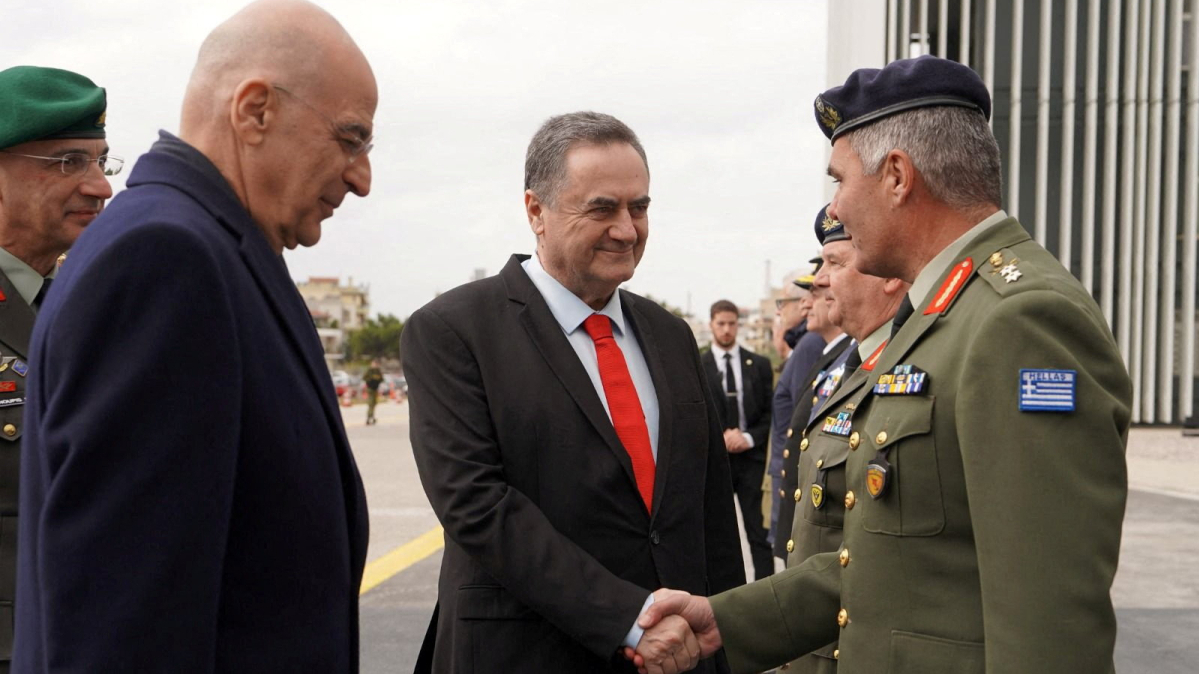
Israel and Greece have signed a €3 billion defence agreement that will see Israel build a new multi-layered air-defence system for Greece. It is Israel's largest-ever defence export deal with Greece and one of the biggest in Israel's history.
The system, known as “Achilles Shield”, is part of Athens’ wider effort to modernise its armed forces and strengthen its ability to defend against missiles, aircraft and drones.
Under the agreement, Greece will receive several Israeli-made defence systems.
These include David’s Sling and SPYDER, produced by Rafael Advanced Defense Systems, and BARAK MX, made by Israel Aerospace Industries.
The package will also include MMR multi-mission radars from IAI subsidiary ELTA Systems, along with a new national command-and-control system developed by Rafael.
The aim is to bring Greece’s different air-defence capabilities together into a single, integrated network.
Israel’s defence ministry described the agreement as reflecting the country’s advanced defence technology and the battlefield record of its systems.
The deal comes as Greece embarks on one of its most ambitious military modernisation programmes in decades.
Athens plans to spend around €28 billion by 2036 on the Achilles Shield system and other major defence purchases.
The wider programme includes plans to acquire up to 40 F-35 fighter jets from the United States, as well as new frigates from France and Italy.
Greece already spends nearly 3.5 per cent of its GDP on defence, putting it among the higher-spending NATO members.
Tensions with Türkiye remain a factor
Behind much of Greece’s long-term defence planning is its difficult relationship with neighbouring
Türkiye.
The two NATO allies have repeatedly clashed over territorial waters, airspace, energy resources and competing claims in the eastern Mediterranean and Aegean Sea.
While both countries remain members of the same military alliance, tensions have periodically raised concerns about the possibility of a confrontation.
For Athens, strengthening air and missile defences is therefore seen as an important part of maintaining its military deterrent.
The agreement also gives Israel’s David’s Sling system its second foreign customer, after Finland.
The system, designed to intercept medium- to long-range missiles, has been used by Israel to intercept Iranian missiles during this year’s war between the two countries.
Its inclusion in the Greek system highlights the growing international demand for Israeli air-defence technology following years of conflict in the Middle East.
More protection against drones
Alongside the €3 billion agreement, Israel and Greece have signed a separate €26 million deal for Rafael’s Drone Dome systems.
The technology is intended to protect strategic locations from drone attacks and strengthen Greece’s existing defences.
The two countries will also deepen defence-industrial cooperation, including technology transfers and the sharing of expertise with Greek companies.
For Greece, the agreement is about more than buying individual weapons. It is an attempt to build a layered national shield capable of responding to a range of threats from drones and aircraft to ballistic missiles, while giving the country a more integrated and modern air-defence network.
Read more about Israel:













What is your opinion on this topic?
Leave the first comment