live Missile fire continues across the Middle East - Day 12 of the conflict, Wednesday 11th March
Iran and Israel continue to exchange missile and drone strikes across the Middle East - all the latest updates throughout the day on AnewZ...
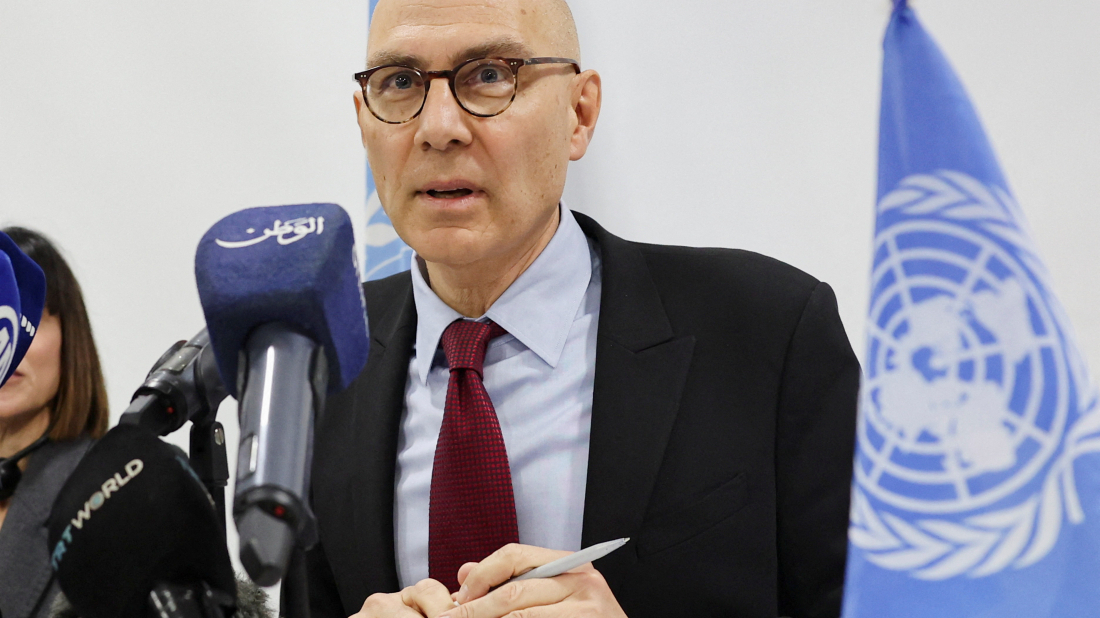
The U.N. human rights chief appealed on Thursday for $500 million in funding for 2025 to support its work such as investigating human rights abuses around the world from Syria to Sudan, warning that lives hang in the balance.
The U.N. human rights office has been grappling with chronic funding shortages that some worry could be exacerbated by cuts to U.S. foreign aid by President Donald Trump. The annual appeal is for funds beyond the allocated U.N. funds from member states' fees, which make up just a fraction of the office's needs.
"In 2025, we expect no let-up in major challenges to human rights," High Commissioner for Human Rights Volker Turk told member states in a speech at the U.N. in Geneva.
"I am very concerned that if we do not reach our funding targets in 2025, we will leave people ... to struggle and possibly fail, without adequate support," he said.
He said any shortfall would mean more people remain in illegal detention; that governments are allowed to continue with discriminatory policies; violations may go undocumented; and human rights defenders could lose protection.
"In short, lives are at stake," he said.
The human rights office gets about 5% of the regular U.N. budget, but the majority of its funding comes voluntarily in response to its annual appeal announced on Thursday.
Western states give the most, with the United States donating $35 million last year or about 15% of the total received in 2024, followed by the European Commission, U.N. data showed. Still, the office received only about half of the $500 million it sought last year.

Tensions in the region remained high on Tuesday (10 March), as the United States and Iran exchanged increasingly sharp warnings, including threats over the strategic Strait of Hormuz, a critical artery for global oil supplies.
China has urged Afghanistan and Pakistan to resolve their dispute through dialogue after Chinese envoy Yue Xiaoyong met Afghan Foreign Minister Amir Khan Muttaqi, as fighting between the two neighbours entered its eleventh day.
Entry and exit across the state border between Azerbaijan and Iran for all types of cargo vehicles, including those in transit, will resume on 9 March, according to a statement by the Cabinet of Ministers of Azerbaijan.
Iranian civilian and military officials have pledged their obedience to the new leader, Ayatollah Seyed Mojtaba Khamenei, with President Masoud Pezeshkian saying his leadership “will herald a new era of dignity and authority for the Iranian nation.”.
Kazakhstan has evacuated more than 7,300 citizens from the Middle East since regional tensions escalated, using both air and land routes to bring nationals home while closely monitoring political developments and potential economic effects linked to rising oil prices.
Iran and Israel continue to exchange missile and drone strikes across the Middle East - all the latest updates throughout the day on AnewZ
U.S. Ambassador to the United Nations, Mike Waltz, has addressed the U.N. Security Council, saying the world must consider how effective its engagement with the Taliban-run country is as millions face hunger.
British MPs have rejected a proposal to introduce an Australia-style ban on social media for under-16s, opting instead to give ministers flexible powers to impose restrictions on platforms.
Australia has granted humanitarian visas to five Iranian women footballers who sought asylum, fearing persecution after refusing to sing their national anthem at an Asia Cup match.
Start your day informed with AnewZ Morning Brief. Here are the top news stories for the 10th of March, covering the latest developments you need to know.
You can download the AnewZ application from Play Store and the App Store.
What is your opinion on this topic?
Leave the first comment