Meloni says Greenland security should be discussed within NATO framework
Italian Prime Minister Giorgia Meloni said on Saturday (17 January) that concerns over security in Greenland should be addressed within the framework ...
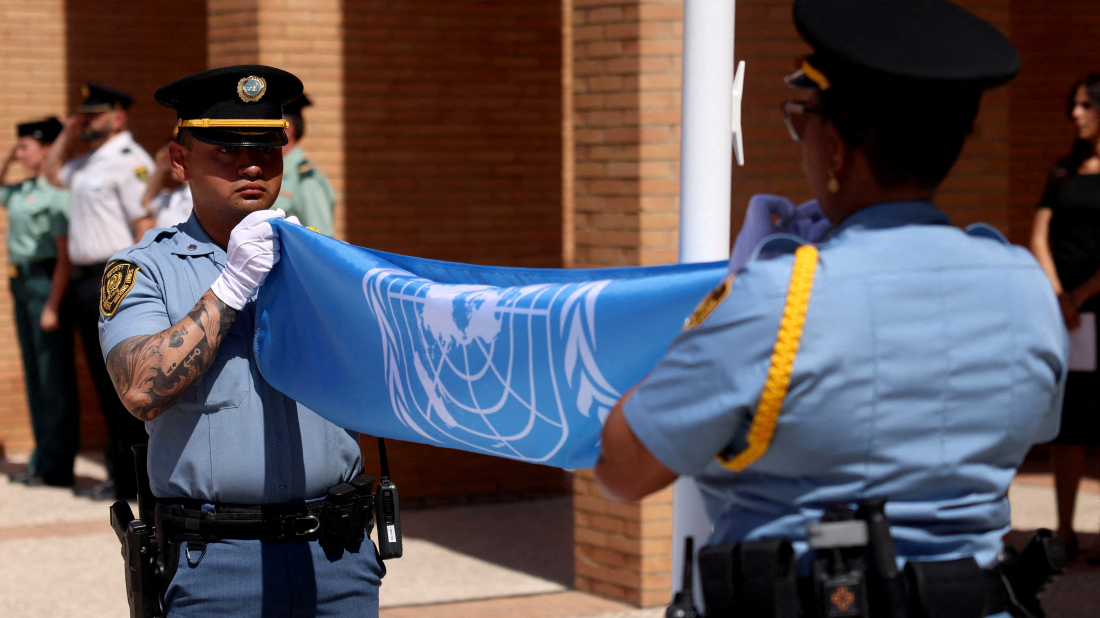
More than a 1,000 civil society representatives gathered in Seville this week for a major United Nations conference on development financing, but many said they left feeling side lined and frustrated, with expectations already low before the event began.
The four-day summit aimed to mobilise funding to help developing countries close a $4.3 trillion gap needed to address debt, climate challenges, and inequality. However, wealthy nations’ growing focus on defence spending and shrinking aid contributions cast doubt on the feasibility of the summit’s goals.
Civil society organisations (CSOs) criticised the final 'Seville Commitment' as diluted by richer countries unwilling to commit fully, and many objected to the emphasis on private sector-led solutions. ActionAid’s secretary general, Arthur Larok, said that Global South nations were leaving with nothing, while Global North governments avoided accountability.
Some proposals, such as a global wealth tax and levies on luxury travel, were welcomed by CSOs. Still, many were frustrated by limited access to the event, reporting difficulties with accreditation and exclusion from key talks. This led to a protest by civil society delegates on the summit’s final day.
Oyebisi Babatunde Oluseyi of the Nigeria Network of NGOs said civil society voices were systematically ignored and called for a new system to ensure their input. U.N. Deputy Secretary General Amina Mohammed acknowledged these concerns and promised efforts to widen their participation.
Oxfam’s Hernan Saenz warned that if the U.N. continues to restrict civic space, it risks losing its credibility. In a joint declaration, CSOs called the global financial system unjust and demanded a complete overhaul.
Despite the disillusionment, all interviewed CSO delegates affirmed their belief in the U.N., with Hirotaka Koike of Japan’s NGO Center for International Cooperation stating that, despite its flaws, it remains the only platform where all nations have equal standing.

A railway power outage in Tokyo disrupted the morning commute for roughly 673,000 passengers on Friday (16 January) as two main lines with some of the world's busiest stations were halted after reports of a fire.
The Turkish Defence Ministry has voiced its support for recent military operations by Syrian government forces against the Kurdish-led Syrian Democratic Forces (SDF), which enjoy the support of the United States.
Tens of thousands of users were left unable to access Elon Musk’s social media platform X on Friday, with outages reported across multiple countries including the United States, the United Kingdom, Canada and Australia.
Armenia has reaffirmed that it has no intention of taking any actions directed against Iran, with senior officials stressing that relations with Tehran remain friendly and constructive.
Russian President Vladimir Putin held separate calls with Israeli Prime Minister Benjamin Netanyahu and Iranian President Masoud Pezeshkian on 16 January, offering Russia’s help to mediate tensions and promote dialogue in the Middle East.
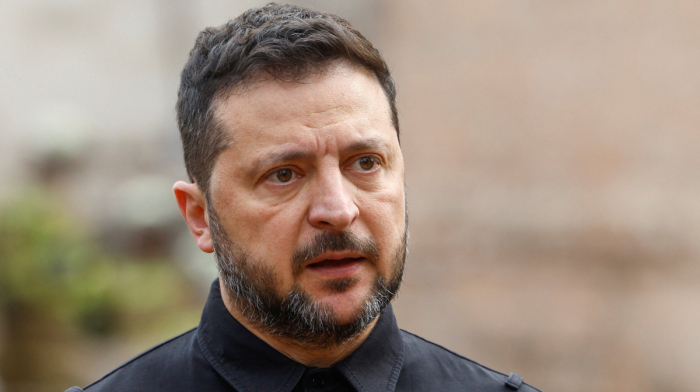
Italian Prime Minister Giorgia Meloni said on Saturday (17 January) that concerns over security in Greenland should be addressed within the framework of NATO, describing a ground military intervention as highly unlikely.
The European Union has called an emergency meeting of its ambassadors after U.S. President Donald Trump vowed to impose escalating tariffs on European allies unless the United States is allowed to buy Greenland.
The European Union and South American bloc Mercosur have signed a long-awaited free trade agreement in Paraguay, opening the way for what would become the EU’s largest-ever trade deal.
Israel said on Saturday that the Trump administration’s announcement on the composition of a new Gaza executive board was made without coordination and contradicts Israeli government policy.
Trump administration officials held months-long discussions with Venezuela’s hardline interior minister Diosdado Cabello before the U.S. operation that led to the seizure of President Nicolás Maduro, according to multiple people familiar with the matter.
You can download the AnewZ application from Play Store and the App Store.
What is your opinion on this topic?
Leave the first comment