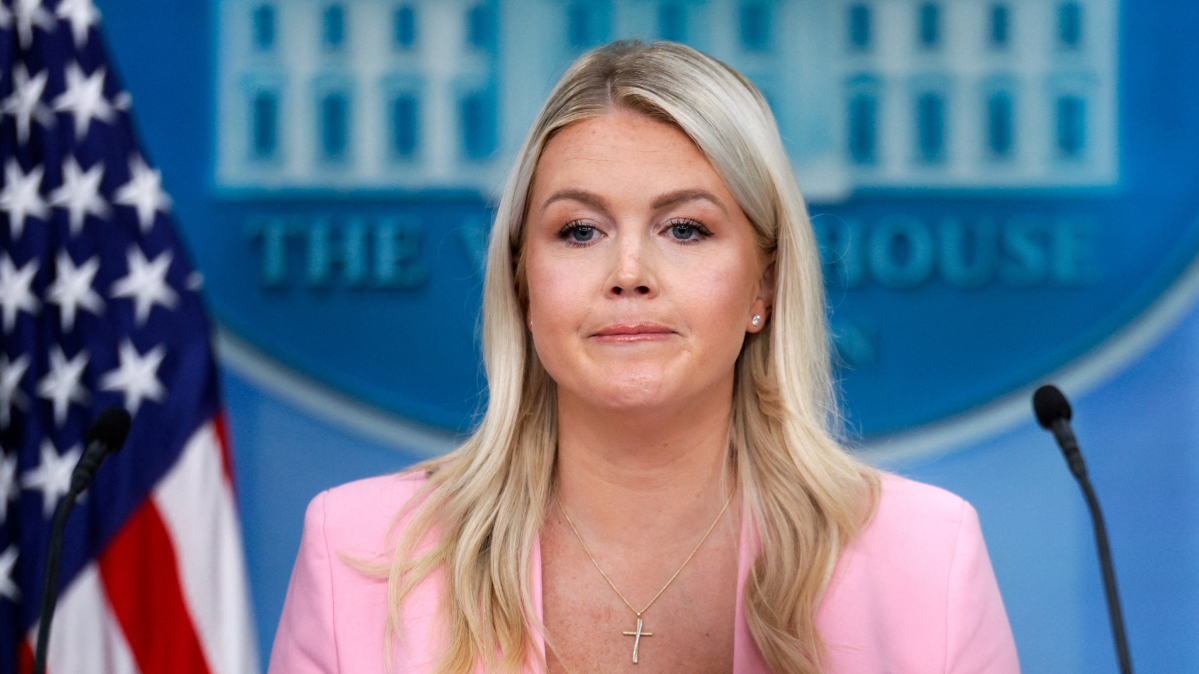
White House Press Secretary Karoline Leavitt will leave her post at the end of August, marking the departure of one of President Donald Trump's closest and most visible advisers just months before the midterm elections.
Trump announced the move on Wednesday, praising Leavitt's role in his administration and political movement. While she is stepping away from her day-to-day White House duties, both the president and Leavitt indicated that she will remain involved in Republican politics and the broader "Make America Great Again" movement as an outside communications adviser.
Leavitt said her decision was driven in part by family considerations. The 28-year-old recently returned from maternity leave after the birth of her second child and said she wants to spend more time with her young family.
In a social media statement, Leavitt described her tenure as "the honor and adventure of a lifetime," while Trump called her one of the most effective press secretaries to serve in the role.
A rapid rise in Republican politics
Leavitt's political profile rose quickly during Trump's successful 2024 presidential campaign. After serving as a campaign spokesperson and later as part of the presidential transition team, she was selected to become White House press secretary at the start of Trump's second term.
Her appointment made her the youngest person ever to hold the position, placing her at the centre of some of the most contentious political and media debates of the administration.
Over the past year and a half, Leavitt became one of the administration's most recognisable public faces, frequently defending White House policies and serving as a key messenger for the president.
Former colleagues have credited her with understanding both Trump's political style and the modern media environment, skills that helped solidify her standing within the administration.
A new approach to media relations
Leavitt's time in office coincided with major changes in how the White House interacted with journalists.
Working alongside White House Communications Director Steven Cheung, she helped oversee a restructuring of media access that departed from long-established practices.
One of the most significant changes involved the White House's decision to take greater control over which journalists were granted access to the president. That move reduced the traditional role played by the White House Correspondents' Association in organising the presidential press pool, a system that had operated for decades.
Supporters argued the change modernised presidential coverage and challenged what they viewed as outdated media structures. Critics, however, said it risked giving the administration excessive influence over press access.
The administration also expanded opportunities for non-traditional media outlets by creating a dedicated "new media" seat in the White House briefing room. Podcasts, newsletter publishers and emerging digital platforms gained a higher profile within presidential coverage, reflecting shifts in how Americans consume news.
Exit comes amid heightened scrutiny
Leavitt's departure comes at a moment when the administration's handling of communications is receiving renewed attention.
Recent reports have focused on the extraordinary security measures employed during Trump's travel to a NATO summit in Türkiye in July. According to reports, the president was secretly transferred between aircraft amid concerns over a potential Iranian assassination threat, while journalists and staff travelling with the administration were unaware of the move.
The episode added to the ongoing debate about transparency, security and media access in the second Trump administration.
Looking beyond the White House
Although Leavitt will no longer serve as press secretary, her influence within Republican politics is unlikely to disappear.
Both Trump and Leavitt have signaled that she will remain involved in shaping messaging and political strategy outside government. With midterm elections approaching and the future direction of the MAGA movement already being debated within Republican circles, Leavitt is expected to continue playing a role in the party's communications efforts.
Her departure leaves the White House searching for a replacement at a critical political moment, while also closing a chapter that saw the youngest press secretary in U.S. history become a central figure in the administration's often combative relationship with the media.
Read more:















What is your opinion on this topic?
Leave the first comment