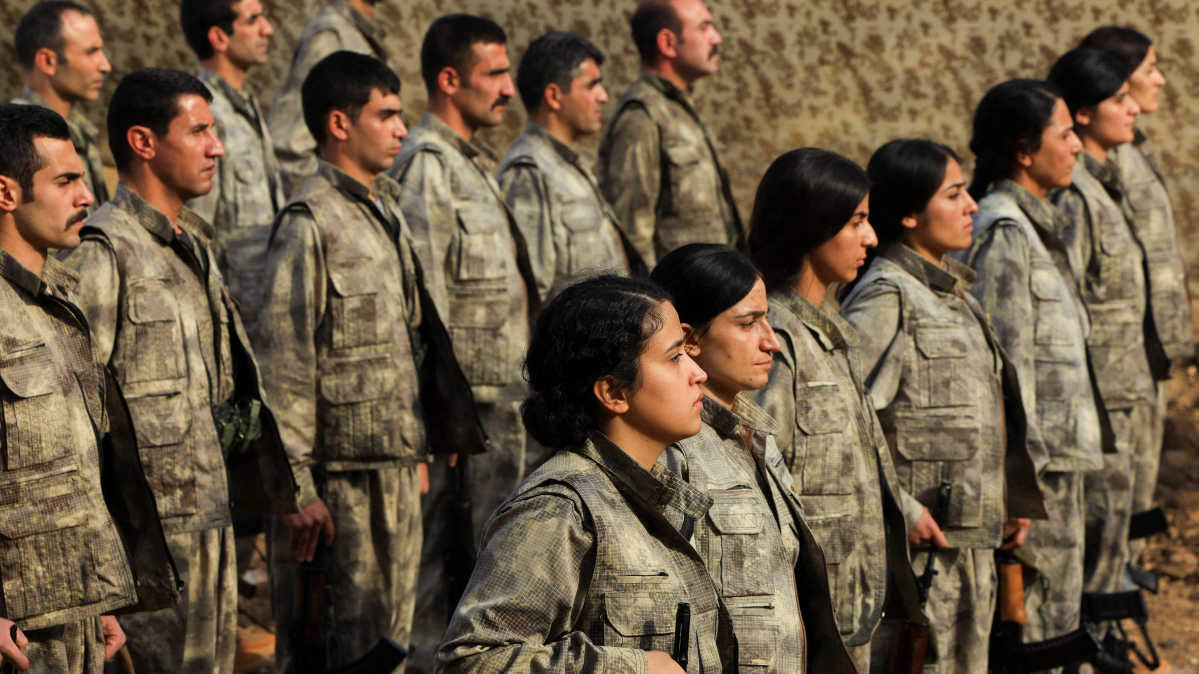
Türkiye's parliament has approved legislation laying out how the Kurdistan Workers' Party (PKK) could formally disarm and dissolve, marking a significant step in Ankara's latest effort to bring an end to one of the country's longest-running conflicts.
The legislation, adopted on 10 August after a lengthy and often heated parliamentary debate, received overwhelming support from lawmakers with a 468 to 88 vote. Government officials hailed the vote as an important milestone towards national unity, while critics warned it could undermine justice for victims of decades of violence.
Disarmament comes first
The legislation does not take effect immediately. Instead, it establishes a legal mechanism that would only be activated after Türkiye's National Security Council determines that the PKK and affiliated groups have fully ended their armed activities and surrendered their weapons.
Before any provisions can be implemented, security institutions must verify that the organisation has effectively ceased operating as an armed group. A formal decision by Türkiye's National Security Council would then need to be published before the process can move forward.
The law applies to a range of offences linked to the PKK, including membership, leadership, assistance and other crimes connected to the group's activities.
Suspensions instead of prosecutions
One of the most closely watched aspects of the legislation concerns criminal investigations and court proceedings involving people linked to the organisation.
Under the new framework, cases involving offences carrying prison terms of up to 15 years could be suspended for five years. More serious offences carrying heavier penalties would be suspended for 10 years.
Proceedings involving crimes carrying sentences exceeding 15 years, life imprisonment or aggravated life imprisonment will be suspended for 10 years.
The provision excludes investigations and prosecutions concerning intentional homicide committed within the organisation's activities, as well as offences committed before 1 June 2005 that carry a life sentence or aggravated life imprisonment.
However, the law does not apply to all crimes. Cases involving intentional killings carried out as part of the conflict remain excluded, as do certain offences committed before June 2005 that carry life sentences.
Authorities would retain the relevant case files and evidence would remain on record during the postponement period, with the legislation specifying the legal consequences of the suspension period.
The legislation also includes safeguards designed to prevent abuse of the process. Individuals who commit another terrorism-related offence during the suspension period would lose the benefit of the arrangement and face renewed prosecution.
If no new offences are committed, prosecutors could eventually drop the cases altogether.
Hope and scepticism
The legislation has prompted mixed reactions among people whose lives have been shaped by the conflict.
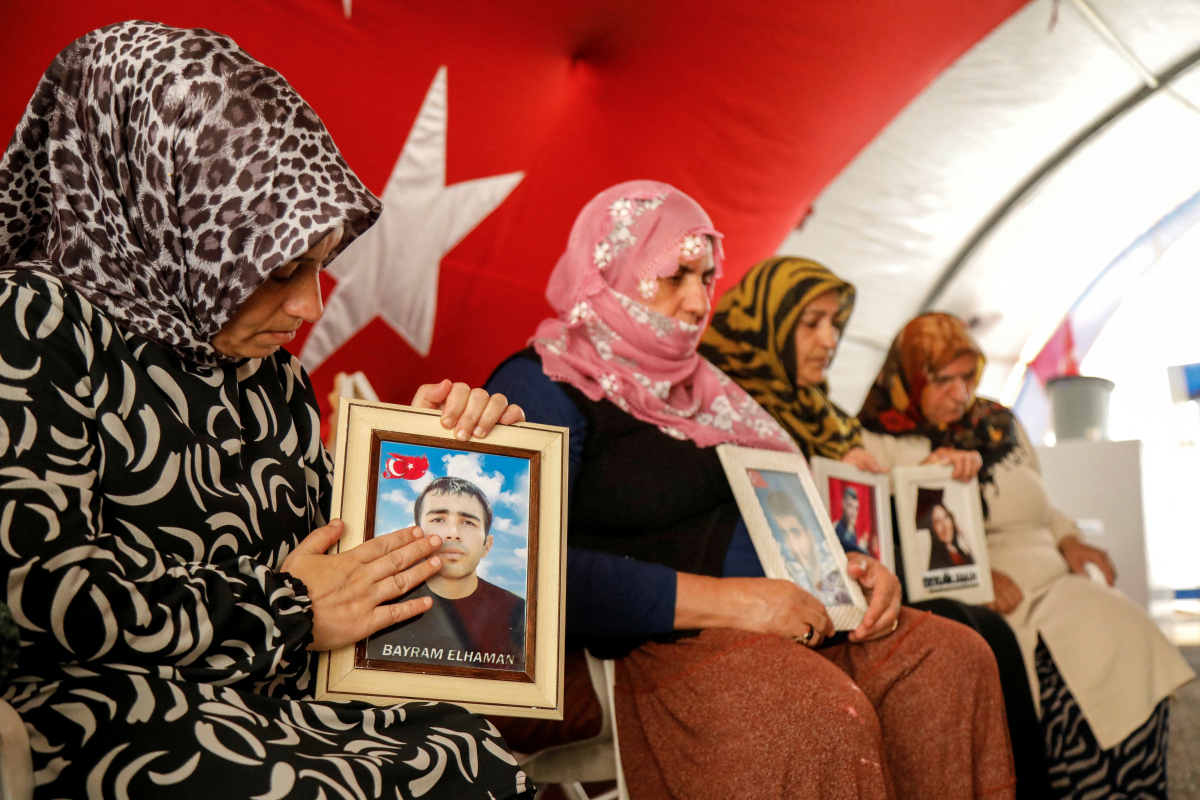
For some families, particularly those who have spent years hoping for the return of relatives who joined the PKK, the vote represents a chance for reconciliation.
Mothers participating in a long-running vigil in Diyarbakir expressed hope that the legislation could encourage militants to return home and help prevent further bloodshed.
Others welcomed the prospect of peace but questioned whether the process would be implemented fairly, reflecting longstanding distrust between parts of the Kurdish community and the Turkish state.
Anger among veterans
Not everyone sees the legislation as a positive development.
Some military veterans and families of security personnel killed during the conflict have fiercely opposed the measure, arguing that it risks diminishing the sacrifices made by those who fought against the PKK.
At protests following the parliamentary vote, veterans questioned why they had been sent to fight if former militants could ultimately benefit from suspended prosecutions.
Associations representing veterans and relatives of fallen soldiers described the legislation as deeply painful and said they would continue to oppose any process they view as granting concessions to the group.
Others adopted a more cautious position, saying they could support reintegration if former militants genuinely renounce violence and contribute positively to society.
Government argues peace must be matched by stability
Türkiye's leaders have presented the legislation as part of a broader strategy to close a chapter that has dominated the country's politics and security landscape for decades.
Parliament Speaker Numan Kurtulmus described the vote as a national achievement that transcended party politics, while Vice President Cevdet Yilmaz pointed to the large majority in favour as evidence of broad political backing.
President Recep Tayyip Erdoğan has framed the process as an opportunity to remove what he has called the burden of terrorism from Türkiye's future. He has also argued that the conflict has imposed enormous economic costs on the country over the past four decades.
Whether the legislation ultimately achieves its goal now depends on developments beyond parliament. The law's provisions will only come into force if Türkiye's authorities conclude that the PKK has genuinely laid down its arms, a step that would mark one of the most consequential turning points in the history of the conflict.















What is your opinion on this topic?
Leave the first comment