Romanian military divers have destroyed two Gerbera-type drones found drifting near the Neptun Deep offshore gas development in the country’s Black Sea exclusive economic zone.
Defence Minister Radu Miruță said a civilian vessel operating near Neptun Deep spotted the drones on Tuesday. He said the Defence Ministry contacted Ukrainian partners, who confirmed the systems did not belong to Ukraine.
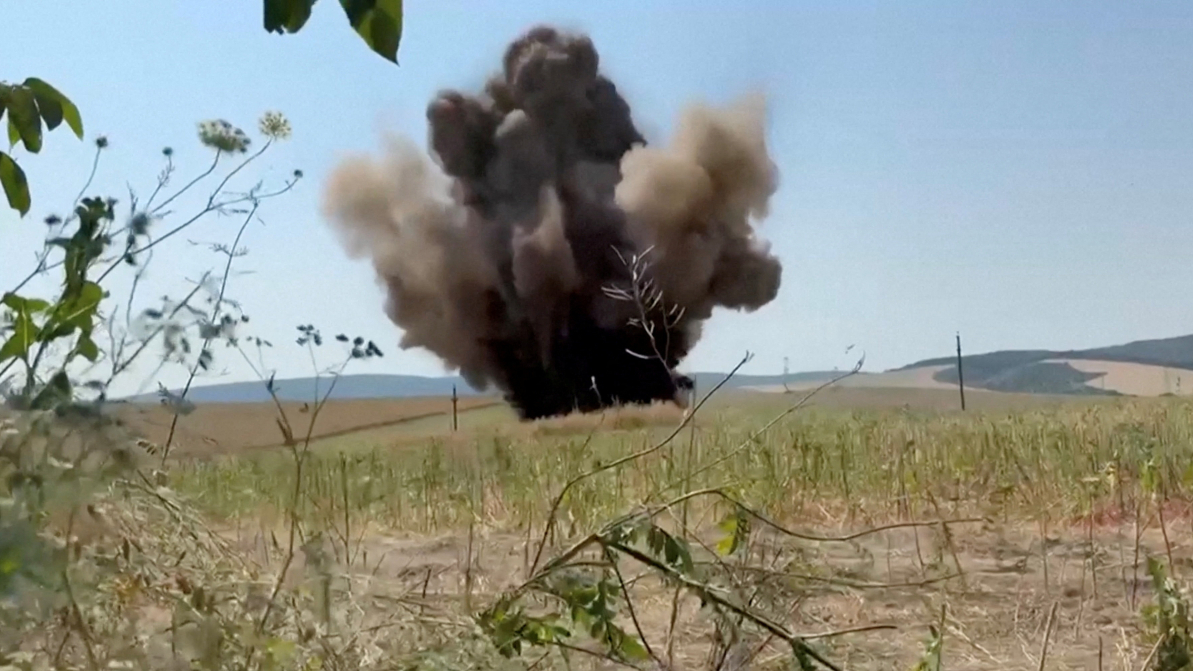
Miruță said authorities carried out a controlled detonation to protect the shipping lane and work under way around the offshore gas development. The minister did not identify the origin of the drones.
The incident raises further security concerns in the western Black Sea, where Romania, Bulgaria and Türkiye have already been clearing mines drifting across trade and energy routes since the start of Russia’s war in Ukraine.
Why the location matters
Neptun Deep is jointly owned by OMV Petrom and Romanian state gas producer Romgaz. It is due to come on stream in 2027 and is expected to make Romania the European Union’s largest gas producer.
All three NATO members along the Black Sea’s western and southern coasts - Romania, Bulgaria and Türkiye - have gas exploration or production interests in the area, while the same waters remain important for shipping, grain routes and wider regional energy security.
Romania shares a 614-kilometre land border with Ukraine and has repeatedly reported Russian drone incursions during Moscow’s invasion. In July, Romanian F-16 pilots shot down three Russian drones that breached the country’s airspace over three consecutive days.
Black Sea security cooperation
Bucharest has also worked with Ankara and Sofia to neutralise more than 150 drifting mines. In July, the three countries agreed to expand their joint Black Sea mine-clearing task force to support the protection of critical infrastructure.
For Türkiye, the latest incident highlights Ankara’s repeated calls for both Russia and Ukraine to avoid actions that endanger commercial vessels and Black Sea traffic. Turkish-linked ships and routes have been affected by recent drone and maritime security incidents in the region.
The incident does not prove direct involvement by either side in the war in Ukraine, but it shows how military debris, drones and mines can pose practical risks to NATO members, energy projects and commercial shipping far beyond the front line.
Read more:

















What is your opinion on this topic?
Leave the first comment