Japan is carrying out its biggest military buildup since World War II, with Tokyo citing China's expanding military capabilities and increasingly assertive regional activities as the main reason for the shift in its defence strategy.
Japan has kept military spending relatively restrained under its post-war constitution, which was designed to prevent the country from returning to militarism.
Today, however, Tokyo argues that the security environment has changed dramatically. China's expanding military capabilities, growing naval presence and closer cooperation with Russia are now viewed as major security challenges.
Japan's latest defence white paper describes China as the country's "greatest strategic challenge."
China's military is growing rapidly
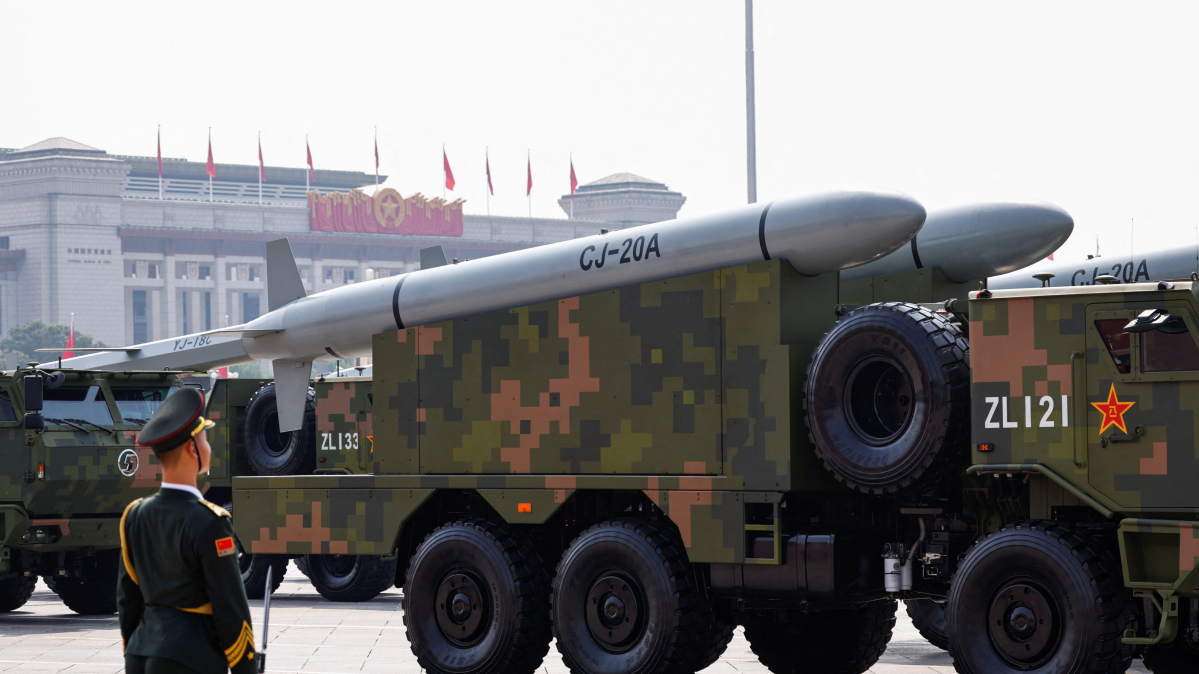
China has spent years modernising its armed forces, investing heavily in advanced missiles, warships, aircraft carriers, submarines and cyber capabilities.
What concerns Japan is not only the size of China's military, but also the growing reach of its operations beyond Chinese waters. Japanese officials have become increasingly alarmed by Chinese naval activity in the Pacific, including the deployment of Chinese aircraft carriers near Japanese territory and joint military exercises with Russia.
Most recently, Japan expressed concern after a Chinese destroyer conducted live-fire drills near Okinotori, a remote Japanese island in the Pacific. Tokyo has also highlighted growing China-Russia military cooperation, including joint bomber flights and naval patrols around Japan.
Japanese Defence Minister Shinjiro Koizumi said these developments demonstrate the increasingly close military coordination between Beijing and Moscow.
Taiwan is at the centre of Japan's concerns
One of Tokyo's biggest concerns is the possibility of a conflict over Taiwan.
Although Taiwan governs itself, China considers it part of its territory and has repeatedly said it would not rule out using force to bring the island under its control.
For Japan, any conflict involving Taiwan would not be a distant issue. The island lies close to Japan's south-western islands, and any military confrontation could disrupt key shipping routes, regional trade and Japan's security.
Prime Minister Sanae Takaichi sparked a diplomatic dispute last year when she suggested that a Chinese military operation against Taiwan could threaten Japan's survival and potentially trigger Japanese involvement under collective self-defence arrangements.
Beijing reacted angrily, accusing Japan of interfering in China's internal affairs.
Why Japan is increasing defence spending
In response to these concerns, Japan has significantly increased defence spending, raising military expenditure to around 2 per cent of GDP.
Much of that funding has been directed towards acquiring long-range missiles capable of striking targets more than 1,000 kilometres away. Japan is also investing heavily in drones, missile defence systems and new technologies designed to deter potential adversaries.
Tokyo's objective is not necessarily to prepare for war, but to convince potential rivals that the cost of attacking Japan or its allies would be too high.
This strategy, known as deterrence, is increasingly focused on China.
Defence and the economy
Japan is also making a new case for increased defence spending, arguing that it can support economic growth.
The government's latest defence white paper says military investment can create jobs, encourage technological innovation and help fund emerging companies. Officials are seeking closer cooperation between the defence industry, technology start-ups and research institutions.
The report also signals a shift in how the government presents military policy to the public. Rather than focusing solely on weapons and security threats, it argues that investment in advanced technology can deliver wider benefits, including for everyday life and economic development.
A complicated relationship
Despite growing tensions, neither China nor Japan wants a complete breakdown in relations.
China remains one of Japan's most important trading partners, while Japan continues to pursue dialogue with Beijing. However, political trust has declined in recent years.
Disagreements over Taiwan, military activity in the East China Sea and increasingly frequent encounters between Chinese and Japanese forces have all contributed to worsening relations.
China accuses Japan of exaggerating the "China threat" to justify military expansion. Japanese leaders, meanwhile, argue they are responding to a rapidly changing security environment.
The bigger picture
For decades, Japan was regarded primarily as an economic power rather than a military one. The scale of its current defence transformation therefore marks a significant shift.
Tokyo's leaders increasingly believe that China's expanding military reach, combined with growing cooperation between Beijing and Moscow, presents security challenges that can no longer be ignored.
The reasons behind Japan's military buildup will continue to be debated. What is clear, however, is that concerns over China's rising military power are now shaping almost every aspect of Japan's security strategy, from defence spending and technological investment to diplomacy and economic planning.













What is your opinion on this topic?
Leave the first comment