For more than two decades, Iran-backed armed groups have become some of the most powerful players in Iraq.
They have evolved from insurgent militias into organisations with political parties, seats in parliament, businesses and thousands of fighters.
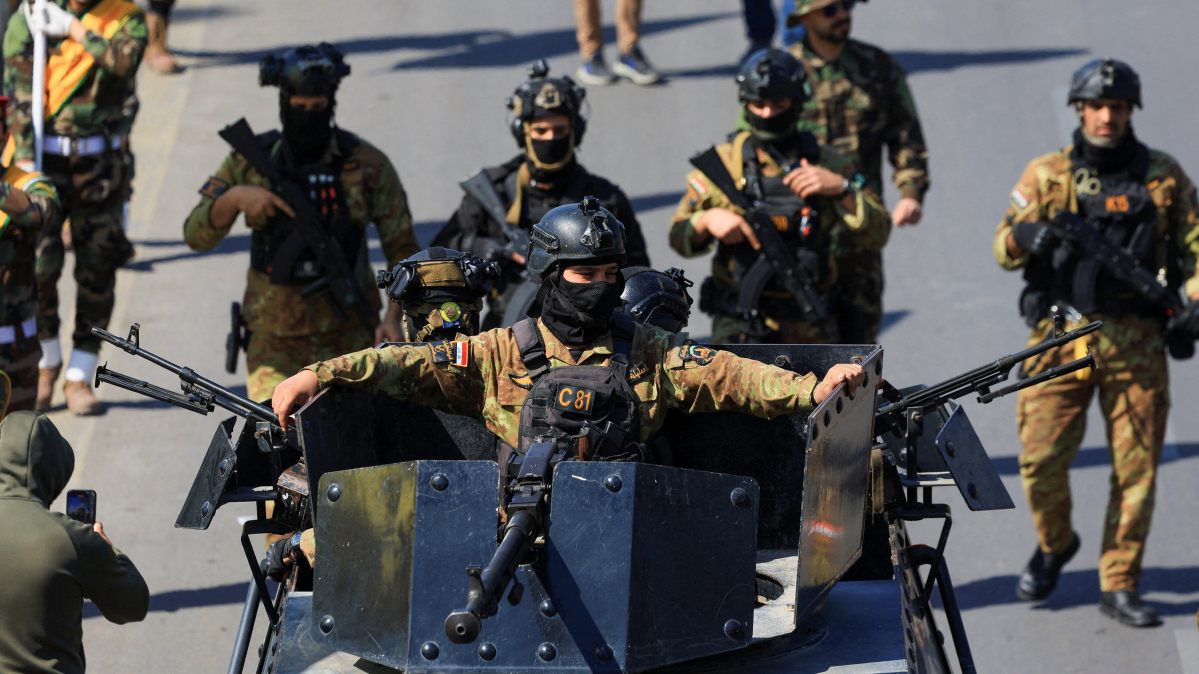
While many are officially part of Iraq's security apparatus through the Popular Mobilisation Forces (PMF), several continue to operate with significant autonomy and maintain close ties to Iran's Islamic Revolutionary Guard Corps (IRGC).
The groups once again came under intense scrutiny after the United States and Saudi Arabia struck targets linked to Iran-backed militias, accusing them of launching drone attacks on Saudi oil facilities.
The strikes have renewed questions about how much influence these organisations hold and whether Baghdad can ever bring them fully under state control.
How it all started
The roots of Iraq's Iran-backed militias stretch back to the years following the 2003 US-led invasion that toppled Saddam Hussein. As Iraq descended into conflict, Tehran steadily expanded its influence by backing Shiite armed groups with funding, weapons and training.
Many of these factions later became central to the fight against the Islamic State (IS) after the militant group swept across northern Iraq in 2014. Their battlefield role won them legitimacy among many Iraqis and paved the way for the creation of the PMF, an umbrella force that was formally incorporated into Iraq's security services in 2016.
Today, the PMF receives state funding, but several of its most powerful brigades retain their own command structures and political agendas. According to Reuters, many also built extensive business networks and secured positions in parliament and government, giving them influence that extends well beyond the battlefield.
Kataib Hezbollah: Iran's closest ally in Iraq
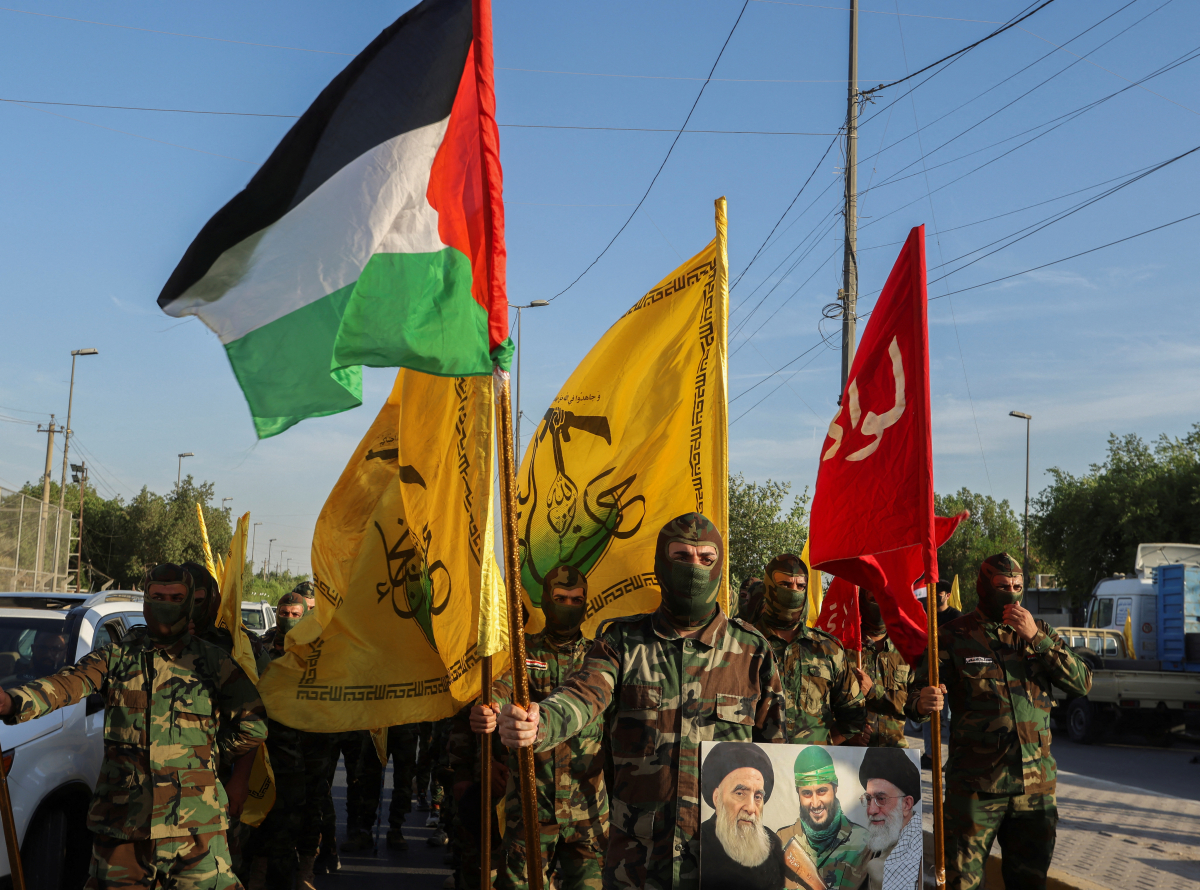
Kataib Hezbollah is widely regarded as the most powerful and influential Iran-backed militia in Iraq. Founded in the mid-2000s by Abu Mahdi al-Muhandis, the group developed a reputation for sophisticated attacks against U.S. and coalition forces using rockets, roadside bombs and sniper teams.
Muhandis was killed alongside IRGC Quds Force commander Qassem Soleimani in a U.S. drone strike near Baghdad airport in January 2020.
Reuters reports that the group has thousands of fighters and possesses drones, rockets and short-range ballistic missiles. It has also deployed fighters to Syria in support of President Bashar al-Assad during the country's civil war.
Unlike some rival factions, Kataib Hezbollah has rejected calls to surrender its weapons. Instead, it has mocked groups willing to cooperate with the government, even offering to buy their weapons.
The Washington Institute says the organisation remains one of Tehran's most hardline proxies and appears determined to preserve its independent military capability despite growing pressure from Baghdad and Washington.
Asaib Ahl al-Haq: Armed but with political ambitions
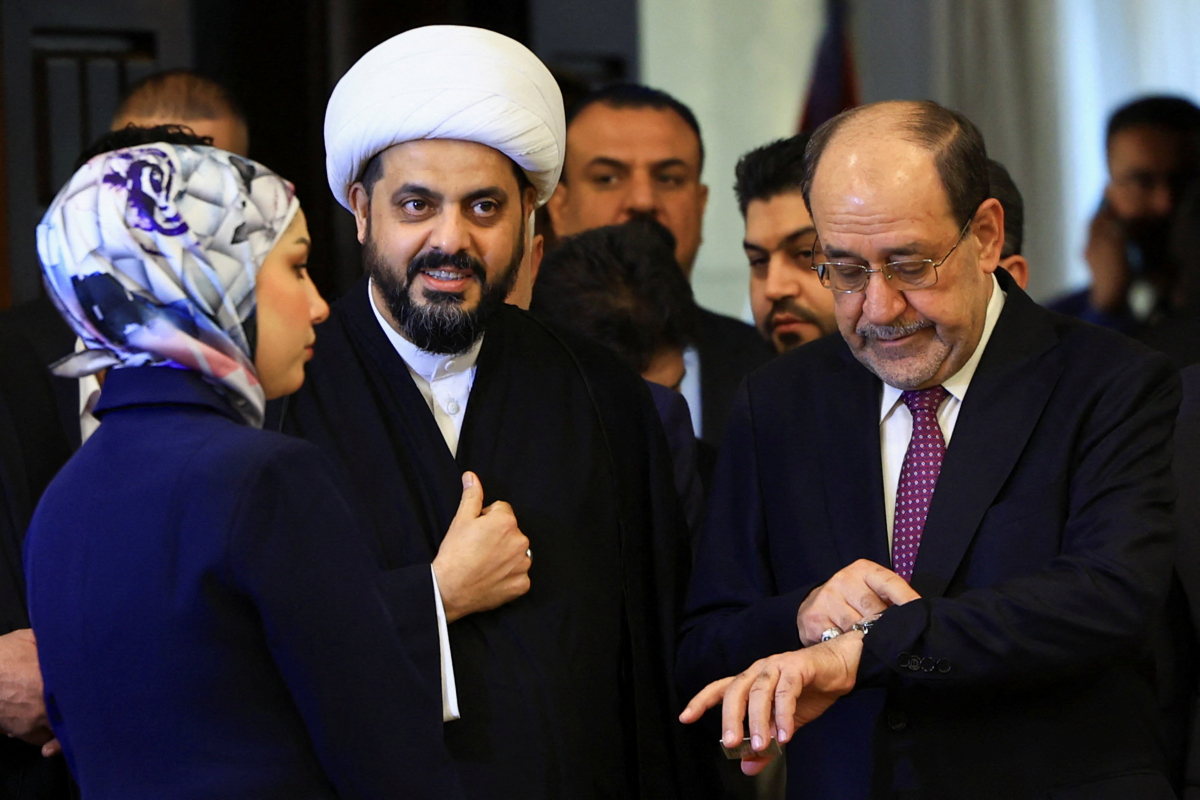
Led by Qais al-Khazali, Asaib Ahl al-Haq (AAH) has increasingly tried to balance its military identity with political influence.
Khazali, once a close associate of Shiite cleric Muqtada al-Sadr, founded the group in 2006 after splitting from the Mahdi Army.
AAH fought against U.S. forces during the Iraq War and later joined the campaign against IS. Over the past decade, however, it has also built a significant political presence through its Sadiqoon bloc, becoming an influential member of Iraq's ruling Coordination Framework.
According to the Foundation for Defense of Democracies (FDD), AAH won 28 parliamentary seats in the 2025 elections, making it one of Iraq's strongest political movements.
Yet Washington continues to designate the organisation as a Foreign Terrorist Organisation, arguing that its political participation has not changed its military activities.
Earlier this year, AAH announced it was willing to place its weapons under state control and separate from the PMF. Iraqi Prime Minister Ali al-Zaidi welcomed the move, describing it as being in Iraq's national interest.
However, The Washington Institute argues there is little evidence the group intends to surrender its real military power, suggesting the move is more likely aimed at improving its international legitimacy while retaining its influence behind the scenes.
Harakat Hezbollah al-Nujaba: The uncompromising faction
Harakat Hezbollah al-Nujaba has taken perhaps the hardest line against disarmament. The group has repeatedly declared that its weapons are non-negotiable, describing them as essential to defending Iraq and resisting the United States and Israel.
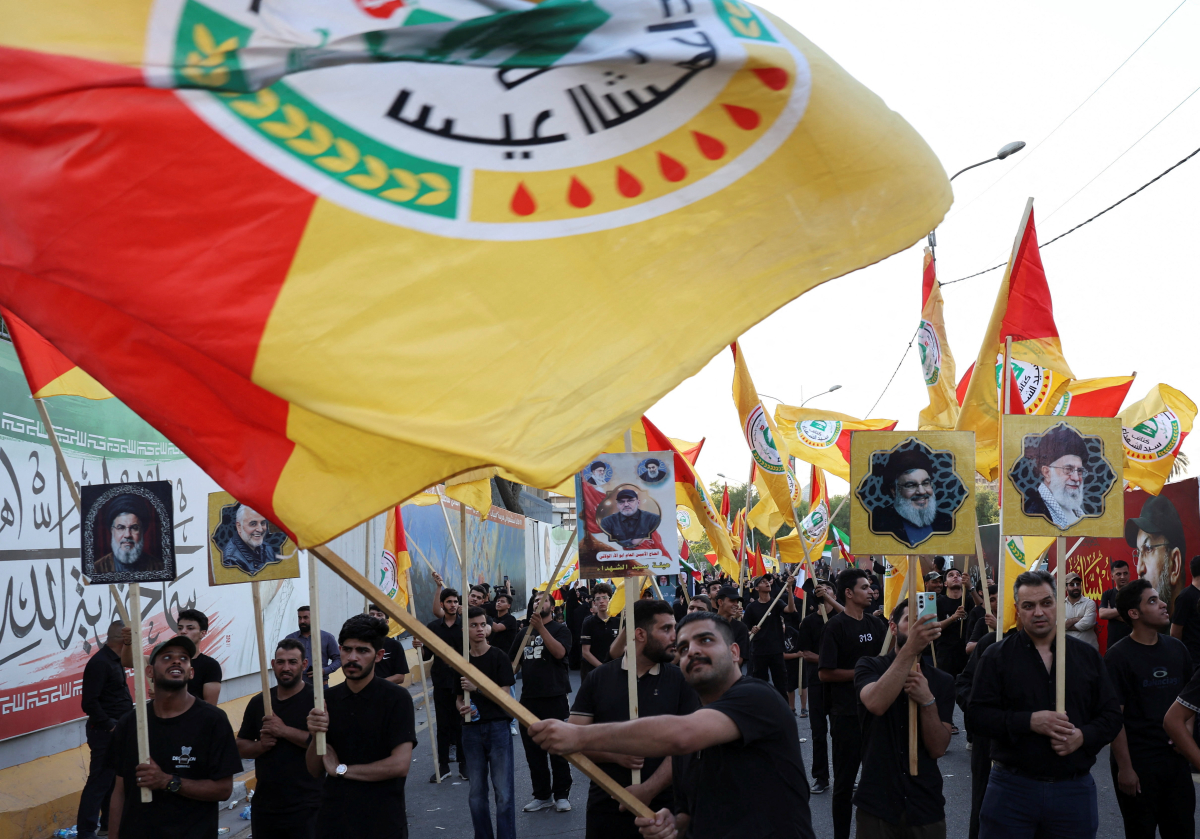
It is regarded as one of the core members of the Islamic Resistance in Iraq, an umbrella network of roughly 10 hardline Shiite factions that Reuters says commands around 50,000 fighters.
During the recent confrontation involving the United States, Israel and Iran, Nujaba was among the groups linked to attacks on U.S. interests and regional targets.
According to FDD, the organisation has dismissed government calls to integrate fully into Iraq's security forces, reinforcing concerns that some militias remain more responsive to Tehran's strategic priorities than Baghdad's authority.
Kataib Sayyid al-Shuhada and Kataib Imam Ali
Kataib Sayyid al-Shuhada has also refused to disarm. Its leaders argue that their weapons remain necessary while U.S. troops are still present in Iraq, describing armed resistance as a continuing duty. The group is considered another important component of the Islamic Resistance in Iraq and has been linked by U.S. officials to attacks against American interests.
Kataib Imam Ali has taken a different approach. Alongside AAH, it has pledged to separate from the PMF and place its fighters and equipment under state authority. According to Amwaj.media, the group says committees will oversee the transfer of personnel and weapons under government supervision.
FDD argues that these promises are likely to be cosmetic unless accompanied by independent monitoring and genuine dismantling of military structures.
A key front in the U.S.-Iran rivalry
These militias have become a front line in the wider confrontation between Washington and Tehran.
Since the Gaza war began in 2023, the Islamic Resistance in Iraq has claimed dozens of missile and drone attacks on Israel and U.S. forces in Iraq and Syria, Reuters reports.
The International Crisis Group records that on 17 May 2026, Saudi Arabia intercepted three drones inbound from Iraqi airspace, and on 25 March 2026, six Gulf states issued a joint statement condemning the atacks.
The statement called on Baghdad to "immediately halt the attacks launched by factions, militias and armed groups from Iraqi territory."
The Washington Institute reported that on 17 May 2026, just days after Zaidi's government was seated, militia elements launched a drone attack at Saudi Arabia and the UAE, scoring a hit on the latter's Barakah nuclear power site.
According to the Crisis Group, a senior Kataib Hezbollah commander warned in January 2026 that if the US attacked Iran, the group would target American military bases in Iraq and neighbouring countries "using missiles and drones."
Can Iraq bring the militias under control?
While AAH and Kataib al-Imam Ali have made public pledges, Kataib Hezbollah, Nujaba and Kataib Sayyid al-Shuhada have refused to surrender.
The Washington Institute argues that the real test will not be public statements but whether these groups dismantle their financial networks, military command structures and links to Iran's IRGC. Amwaj.media similarly notes that translating political declarations into genuine reform will require difficult negotiations over command, budgets and control of thousands of fighters.
For now, Iraq remains caught between competing pressures. The government wants to strengthen state authority without provoking powerful armed groups, while the United States wants meaningful reform and Iran is unlikely to relinquish one of its most important regional networks.
Until those competing interests are resolved, Iraq's Iran-backed militias are likely to remain among the country's most influential political and military actors.











What is your opinion on this topic?
Leave the first comment