live Iran ties Hormuz reopening to U.S. concessions on several demands
Iran said it was nearing a final pact with Oman defining new shipping lanes between them through the Strait of Hormuz but repeated that the U.S. must ...
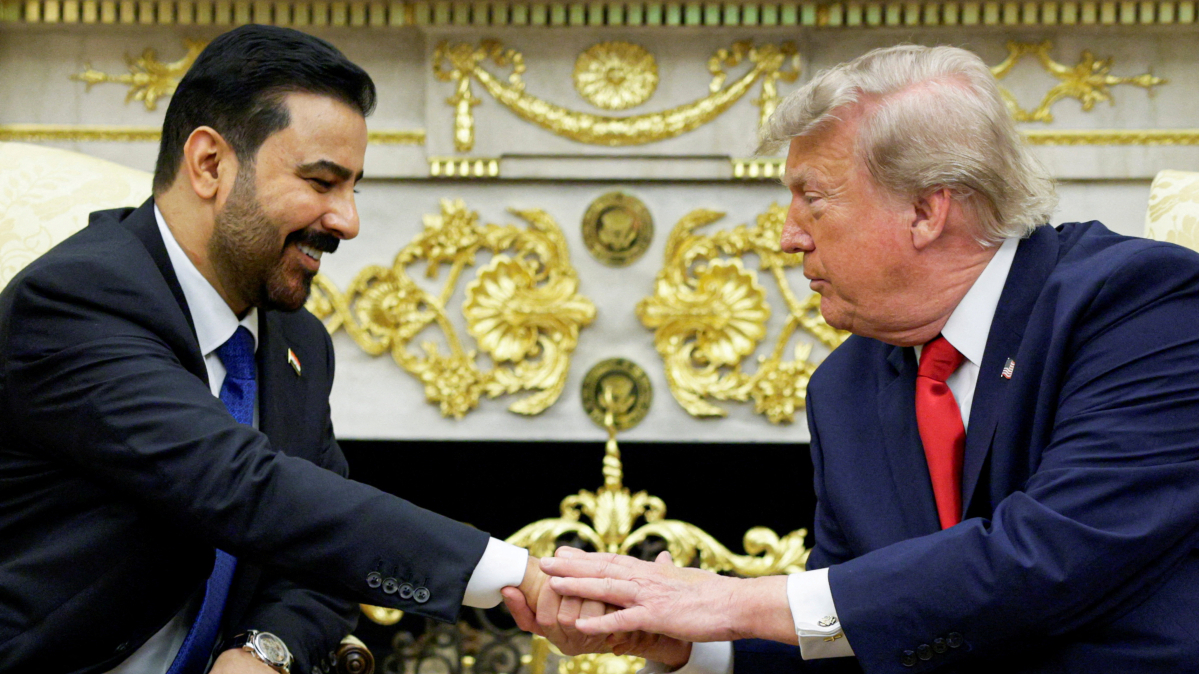
The United States will complete the withdrawal of its military forces from Iraq by 30 September, Iraqi Prime Minister Ali al-Zaidi announced during a meeting with President Donald Trump at the White House on Tuesday.
The move marks the end of a U.S. military presence in the Middle Eastern country that began with the 2003 invasion.
Speaking alongside Trump in the Oval Office, al-Zaidi said the withdrawal would conclude a phased transition agreed between Baghdad and Washington, with Iraqi security forces assuming full responsibility for the country's security.
The Pentagon said most U.S. personnel have already departed, with the remaining troops serving primarily in advisory roles.
Trump said the United States no longer believed it needed a military presence in Iraq, while highlighting plans to deepen economic ties with Baghdad.
"Iraq has tremendous potential because of their oil," Trump said, adding that American companies would pursue new investment opportunities in the country's energy sector.
The U.S. first invaded Iraq in 2003 to overthrow Saddam Hussein. Although American combat troops withdrew in 2011, thousands returned in 2014 to support Iraqi forces in the fight against Islamic State.
Under a 2024 agreement, Washington and Baghdad began gradually winding down the U.S.-led coalition mission.
Al-Zaidi stressed that while American troops would leave Iraq, U.S. businesses would continue operating in the country as Baghdad seeks greater investment in its oil, gas and power sectors.

An agreement between Iran and the U.S. to reopen the Strait of Hormuz is expected "soon," a U.S. official has said. The deal would result in the resumption of commercial shipping through the sea passage and the lifting of an American naval blockade on Iranian ports.
Flights arriving at Catania airport in eastern Sicily were suspended after volcanic ash from a new eruption of Mount Etna drifted into the airspace around the airport, disrupting operations at one of Italy’s busiest aviation hubs.
A deal on a new route for vessels through the Strait of Hormuz is "very close," Iranian Foreign Minister Abbas Araghchi has said, while warning that the reopening of the waterway depends on the U.S. meeting other conditions, including paying compensation to Iran.
Start your day informed with AnewZ Morning Brief. Here are the top news stories for the 9th of August, covering the latest developments.
Iran said it was nearing a final pact with Oman defining new shipping lanes between them through the Strait of Hormuz but repeated that the U.S. must meet other conditions.
Uzbekistan has secured preferential tariffs for fertiliser and petroleum product shipments through Kazakhstan’s Kuryk port to Georgian ports, as Uzbek cargo volumes across the Caspian continue to rise.
Police in eastern India used tear gas, batons and water cannon on Monday to disperse thousands of young protesters marching on the Jharkhand state legislature over alleged irregularities in civil service examinations.
Rising temperatures are threatening Georgia’s farms, energy supply and banking sector, with experts warning that the country has a narrow window to prepare before the economic costs grow significantly.
Pakistan is seeking to strengthen its energy security through a proposed Gulf oil storage scheme, $5 billion in refinery upgrades and renewed offshore exploration with Türkiye as global supply disruptions expose its reliance on imports.
Syria and Russia have signed a memorandum of understanding on the future of Russian bases at Tartous and Hmeimim after 18 months of negotiations, the Syrian foreign ministry said on Sunday.
You can download the AnewZ application from Play Store and the App Store.
What is your opinion on this topic?
Leave the first comment