Brazil has denied visa requests for two Trump administration officials who planned to travel to the country to cast doubt on the integrity of its electoral system, two Brazilian officials with knowledge of the matter told Reuters.
The officials, speaking on condition of anonymity due to the sensitivity of the matter, said the U.S. plan represented an attempt to shape Brazil’s October presidential election.
Brazil denied the request for visas to the U.S. delegation, which would have included Assistant Secretary Riley M. Barnes from the State Department's Bureau of Democracy, Human Rights, and Labor, and also Samuel Samson, a deputy assistant secretary, the Brazilian officials said.
The rejection was based on "evidence pointing to a renewed attempt to politically exploit the situation and undermine the electoral system", one of the officials said.
The U.S. State Department did not immediately respond to a request for comment. Flávio Bolsonaro, the son of former Brazilian President Jair Bolsonaro, also did not respond on Saturday to a request for comment.
The U.S. plan was first reported by the Washington Post and then confirmed by Reuters.
Renewed debate over Brazil’s electoral system
Former President Bolsonaro repeatedly sought to undermine confidence in Brazil’s electoral system before the 2022 election.
At the time, the U.S. Central Intelligence Agency director, under former President Joe Biden, told the Bolsonaro administration to stop casting doubt on Brazil's voting system.
Still, in the months before the 2022 vote, which Lula ultimately won, Bolsonaro had convened foreign diplomats to present unsubstantiated allegations that Brazil’s electronic voting system was vulnerable to fraud.
Brazil’s Superior Electoral Court, which oversees elections, later ruled that Bolsonaro had abused his position and barred him from seeking public office until 2030.
Bolsonaro was later convicted and sentenced to 27 years in prison for plotting to overturn the election result and remain in power. He is serving the sentence under house arrest.
Now, as Brazil heads toward a new election cycle, Senator Bolsonaro has reignited doubts over the country's electoral system, which have been spreading through social media.
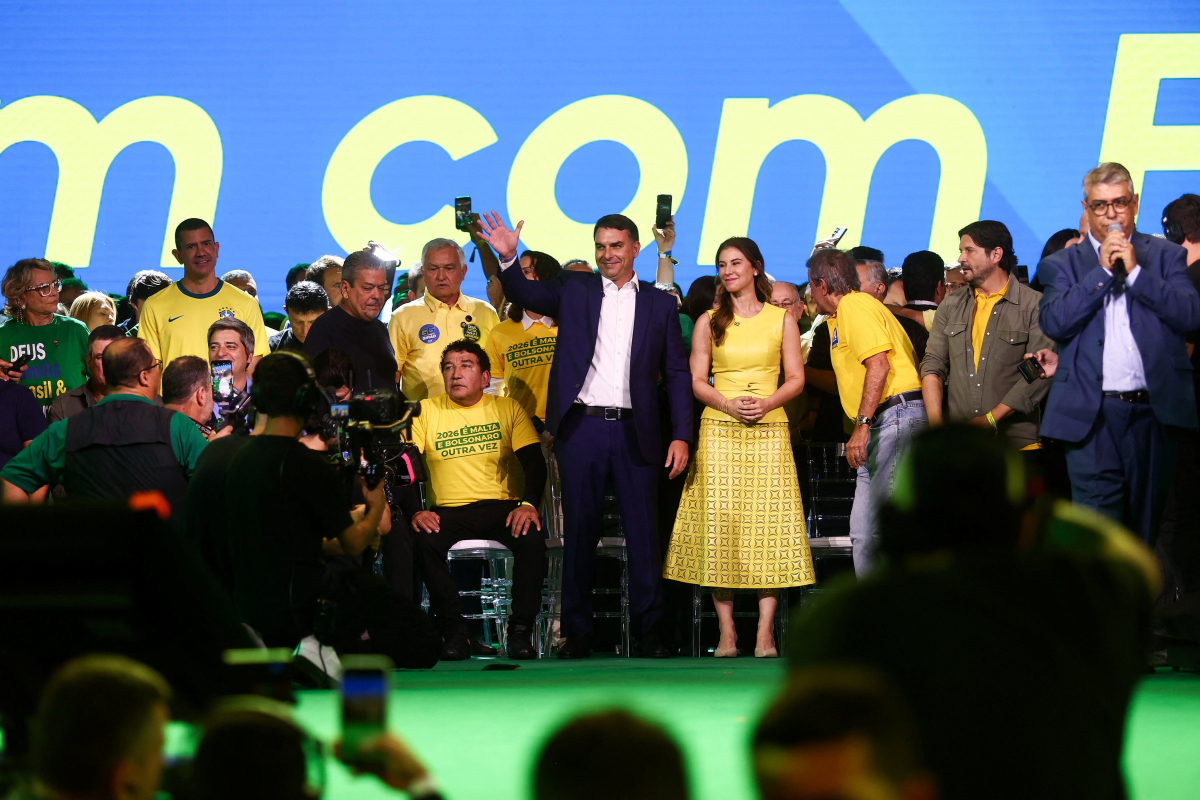
Speaking at an event attended by dozens of diplomats last week, the senator urged foreign governments to send observers to monitor Brazil’s elections.
At the same event, the younger Bolsonaro claimed that Brazil’s electronic voting machines were produced by Smartmatic, the company that U.S. authorities have linked to electoral manipulation allegations in Venezuela.
Smartmatic and Brazil’s electoral court both told Reuters that no Brazilian voting machines were supplied by the company.













What is your opinion on this topic?
Leave the first comment