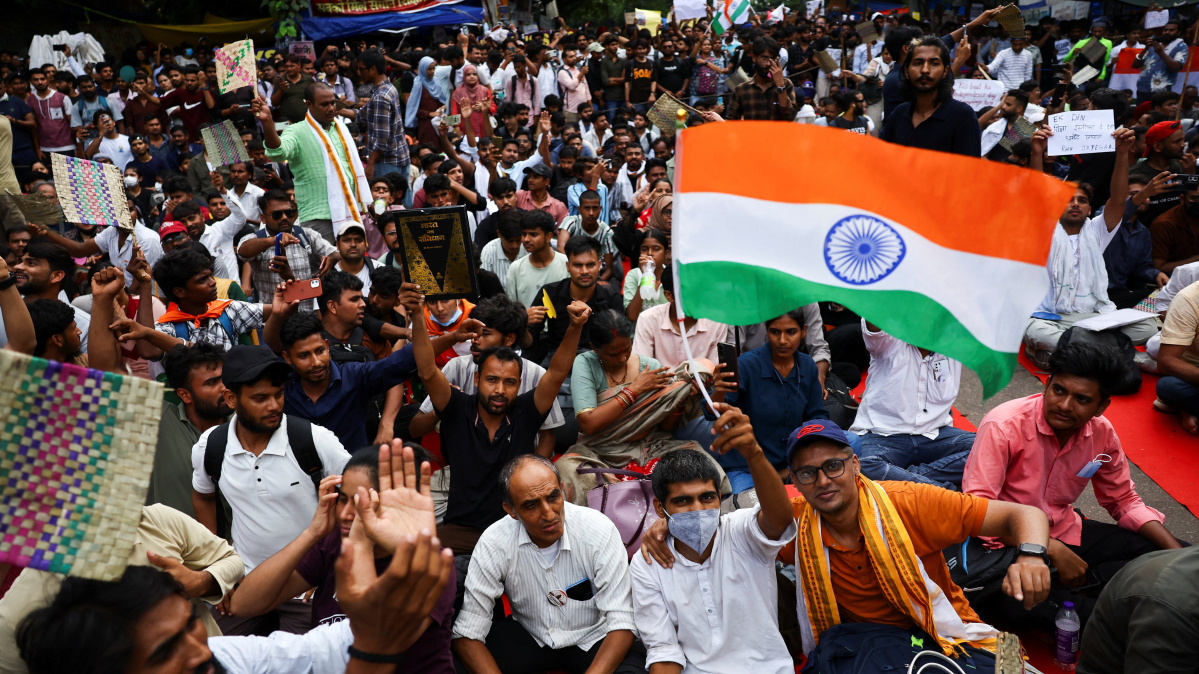
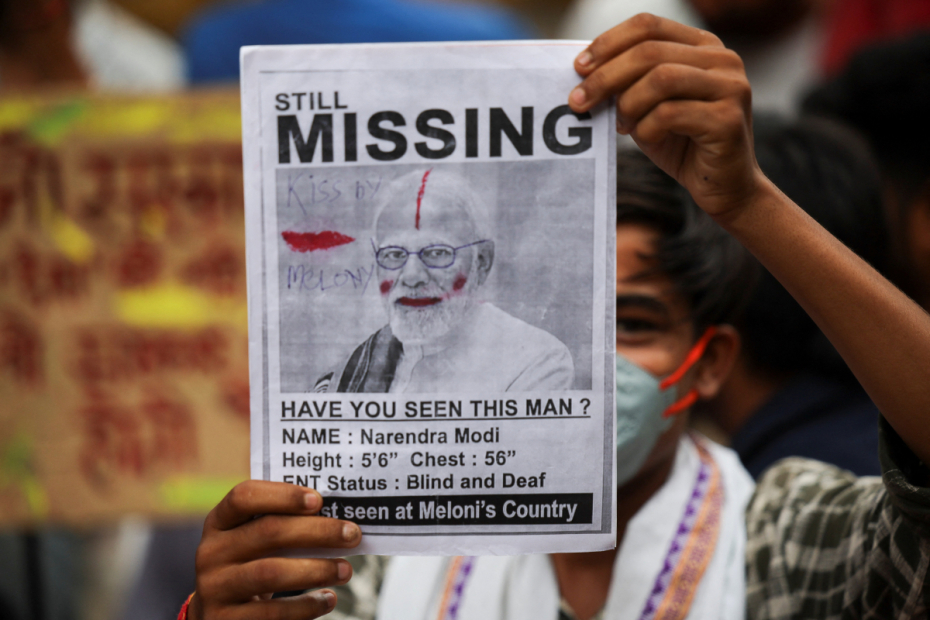
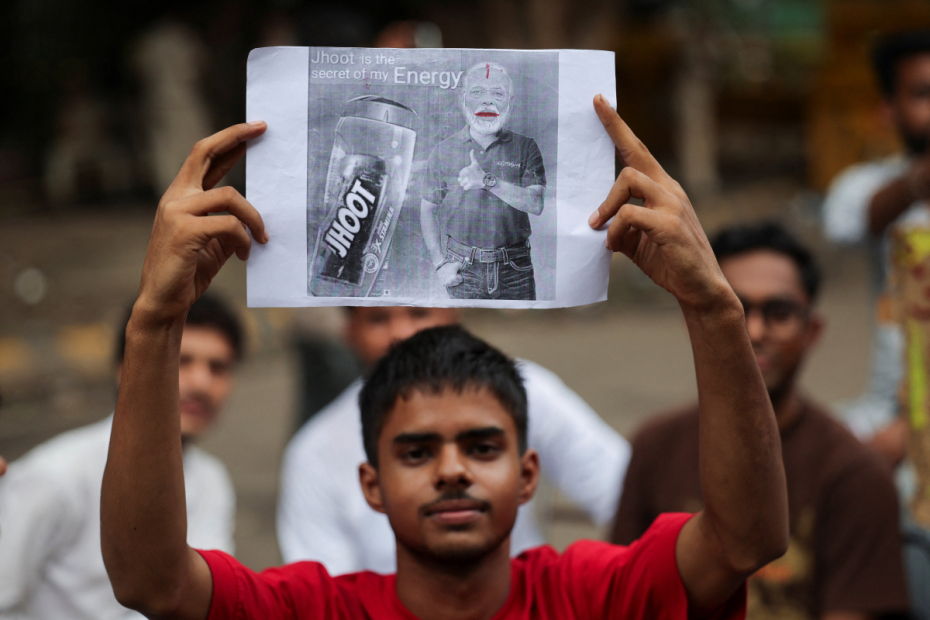
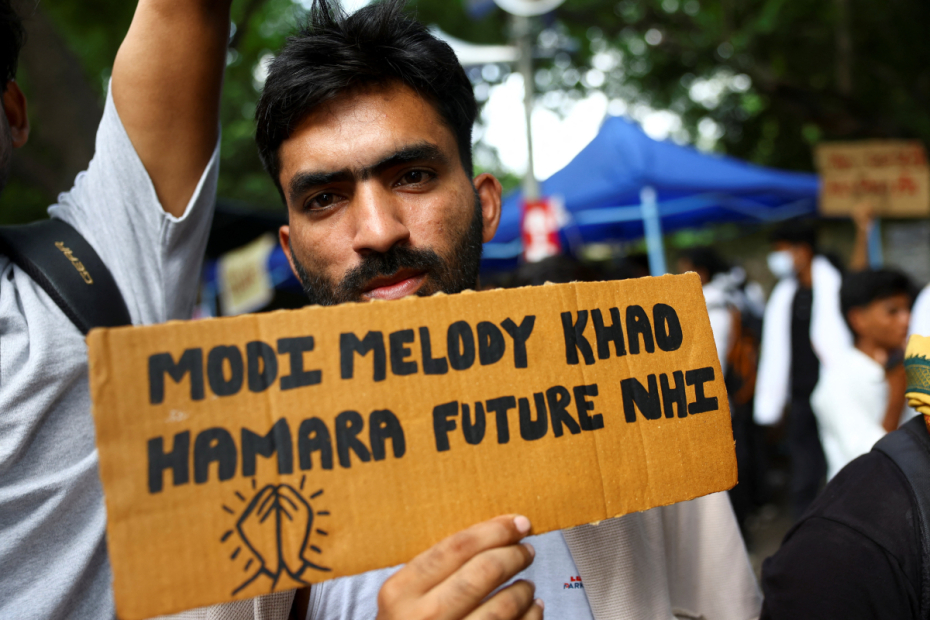
Thousands of protesters demanding the resignation of India's education minister briefly clashed with police in New Delhi late on Wednesday as demonstrations over alleged exam paper leaks entered their second month.
Police fired tear gas and used batons to disperse sections of the crowd after some protesters reportedly threw stones and plastic bottles, injuring several officers. Local media estimated that more than 10,000 people gathered at Jantar Mantar, a traditional protest site in central New Delhi, making it one of the largest demonstrations since the movement began.
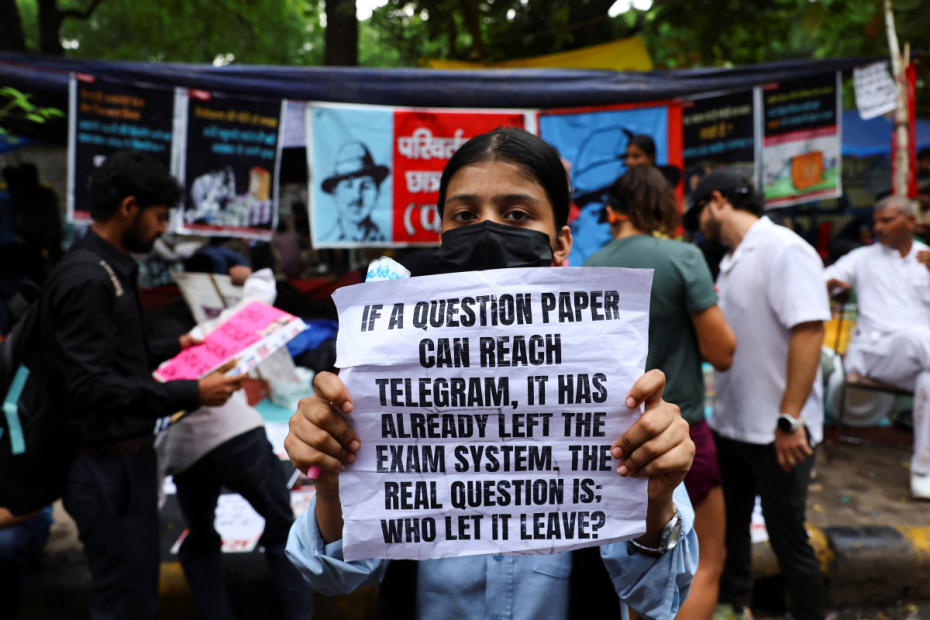
The protests were sparked by alleged exam paper leaks in May that affected around two million students, fuelling anger over the integrity of India's education system.
The movement, led by the self-styled Cockroach Janta Party (CJP), has grown rapidly from an online campaign into a nationwide protest, with organisers refusing to end demonstrations until Education Minister Dharmendra Pradhan resigns.
Political pressure grows
The unrest has also become a major political issue, with opposition parties backing the protesters' demands and disrupting Parliament's monsoon session.
Congress leader Rahul Gandhi joined demonstrations outside Parliament and Prime Minister Narendra Modi's residence, insisting that Pradhan's resignation was "not negotiable". Opposition leaders were due to meet on Thursday to decide their next strategy in Parliament.
The government has held one round of talks with CJP representatives and has pledged to consider their demands. It has also offered to debate the issue in Parliament and introduce reforms to India's examination system.
Security tightened in the capital
Authorities tightened security across New Delhi ahead of further protests. The Delhi Metro Rail Corporation announced the closure of 16 metro stations in and around central Delhi on Thursday, citing security concerns. It marked the second major shutdown this week.
Videos circulating on social media appeared to show protesters confronting police officers using tear gas and batons, although Reuters could not independently verify the footage.
The growing movement has exposed broader frustrations among India's youth, particularly over education, unemployment and governance, while giving opposition parties a renewed opportunity to challenge Modi's Bharatiya Janata Party, which has traditionally enjoyed strong support among younger voters.














What is your opinion on this topic?
Leave the first comment