Georgia has launched a joint working group with China on artificial intelligence, marking the first concrete outcome of a diplomatic upgrade agreed just weeks ago. The move places Tbilisi's growing technology ties with Beijing under renewed scrutiny as relations with the West remain strained.
What was announced
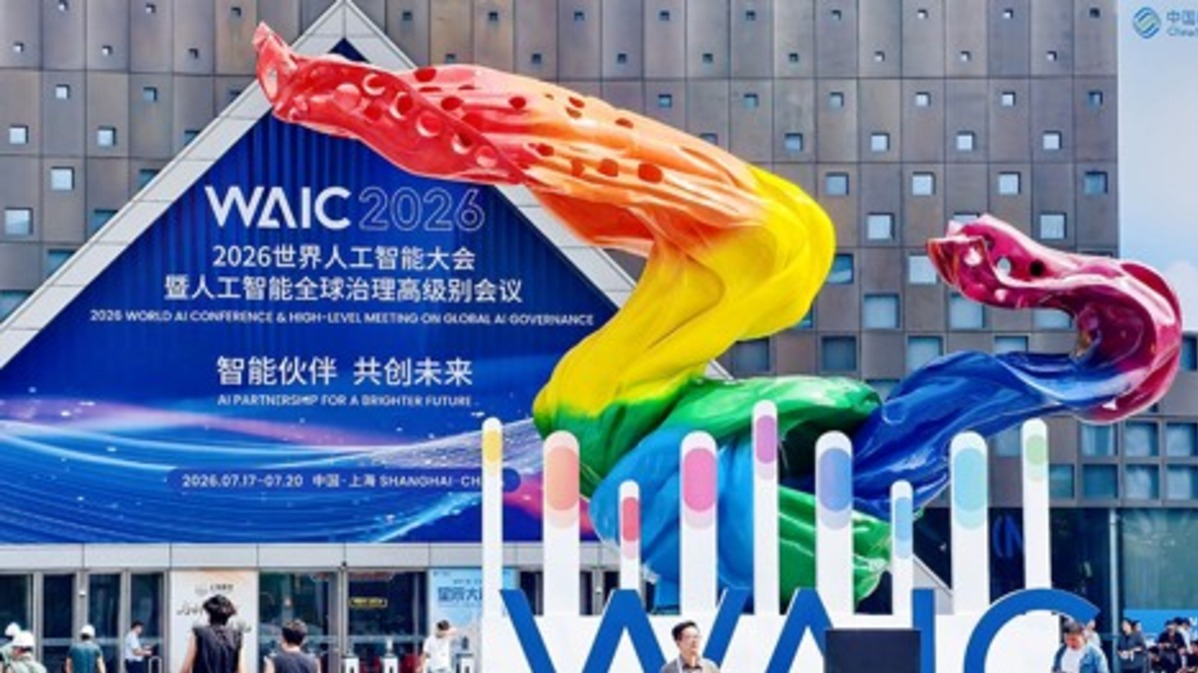
Speaking at a high-level AI governance summit in Shanghai, Georgia's Economy Minister, Mariam Kvrivishvili, confirmed that a joint working group had been established with China's National Development and Reform Commission. It follows a memorandum signed earlier this year between the two countries on AI cooperation.
Kvrivishvili said Georgia is also developing its first AI research centre at the Kutaisi Technology Hub and is drafting a national AI strategy. She said the aim is to bring together researchers, start-ups and international technology companies under one roof to develop practical AI applications.
Why now
The announcement does not stand alone. It comes six weeks after Georgia and China agreed to upgrade their relationship to a "comprehensive strategic partnership", a significant step up from the strategic partnership signed in 2023. Chinese President Xi Jinping and Georgian President Mikheil Kavelashvili made the announcement jointly in June, marking the 34th anniversary of diplomatic relations between the two countries.
Kvrivishvili linked the AI cooperation directly to the broader partnership, describing it as evidence that the upgraded relationship is already producing "concrete, tangible initiatives".
The Black Sea cable angle
Alongside the AI announcement, Kvrivishvili also highlighted Georgia's plans for a Black Sea submarine fibre-optic cable, alongside new large-scale data centres. She presented the project as part of a broader vision of Georgia's historic role as a bridge between Europe and Asia, now evolving into a digital gateway. The proposal is that improved connectivity and data infrastructure could position the country as a major digital hub, attracting investment and research from both sides of the continent.
What's still missing
There are still significant gaps in the plans. So far, no timeline, funding figures or specific deliverables have been announced for the new working group with China. At present, it is an agreement to cooperate rather than a fully developed programme.
That is worth considering alongside Georgia's existing AI cooperation with the EU, which has a longer-established track record. A Horizon Europe-funded project, GAIN, linked Georgian researchers at the Muskhelishvili Institute with Germany's DFKI and France's Inria between 2022 and 2025. This year, a follow-up project, FORGE-AI, was launched with more than €2 million in funding and 13 international partners.
In other words, Georgia already has an established, funded AI partnership with Europe. The cooperation with China, for now, remains at the planning stage.
What to watch next
The real test will be whether the Kutaisi research centre develops into an active hub with funded projects and tangible research, or remains at the announcement stage. The same applies to the joint working group with China: whether it delivers a concrete programme of cooperation or simply reflects the improving political relationship between Tbilisi and Beijing.
For now, Georgia is pursuing several strategies simultaneously: deepening ties with China, maintaining its EU research partnerships, and positioning itself as a digital gateway between Europe and Asia. Whether all three objectives can advance together, particularly while relations with the West remain strained, will be the key question to watch.

















What is your opinion on this topic?
Leave the first comment