Safer road crossings for crabs have helped Taiwan boost its population of the marine creatures by thousands by preventing them from being run over.
Between July and September each year, female crabs make a journey to the sea to release their eggs. But many get squished underneath vehicles as their migration route crosses roads.
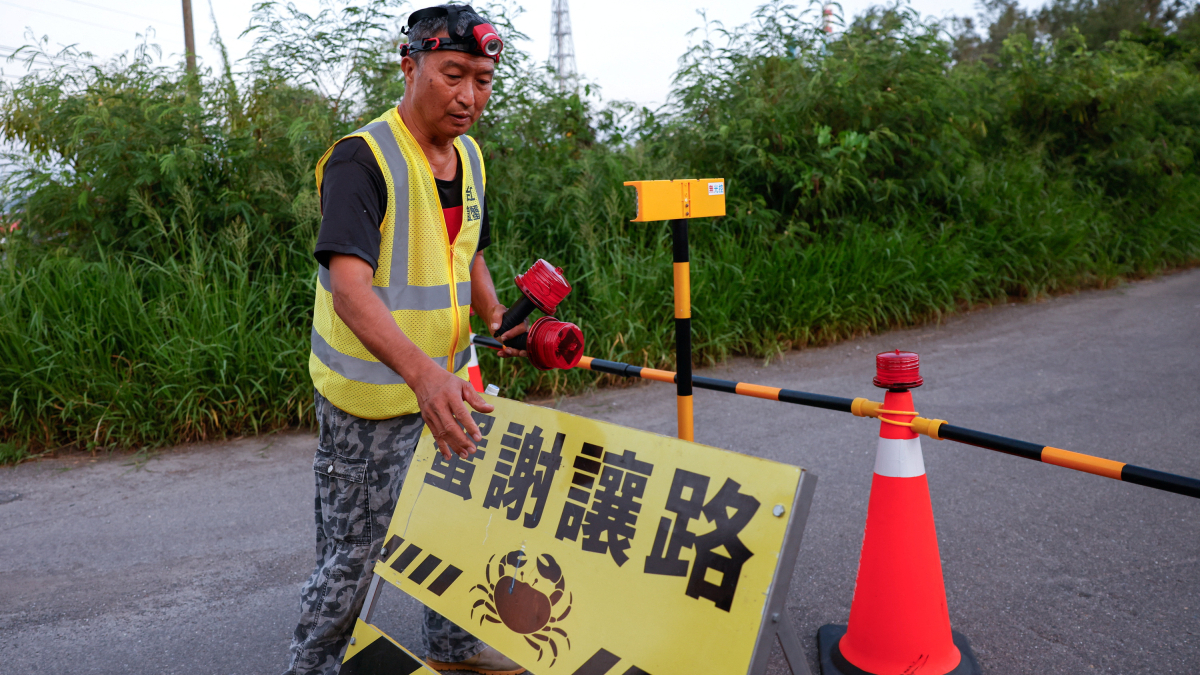
Taijiang National Park in the southern city of Tainan has introduced road blocks and bridges to help protect the crabs during breeding season. The crossings allow crabs to safely traverse roads and reach the sea without risking their lives.
Taijiang National Park Director Chen Jun-shan said the road closures and bamboo bridges had helped reduce roadkill and contributed to a rise in crab numbers from just over 5,000 before the measures were introduced, to more than 10,000 last year.
Chen addded that protecting the crabs also had positive environmental consequences.
"As for the mangrove land crab, it can return all of these nutrient sources back into the land, allowing the coastal forest to become more abundant. So if you protect the land crabs, the entire coastal forest belt can be protected,” Chen said.
While the environment got short shrift during Taiwan's rapid industrialisation from the 1960s to 1980s, it is now a priority for the government, with a network of protected areas and national parks across the island drawing visitors.
Taijiang National Park has the island’s largest population of mangrove land crabs.
It is also home to black-faced spoonbill birds, a species listed as "vulnerable" by the International Union for Conservation of Nature and Natural Resources, but which has bounced back from near extinction.





















What is your opinion on this topic?
Leave the first comment