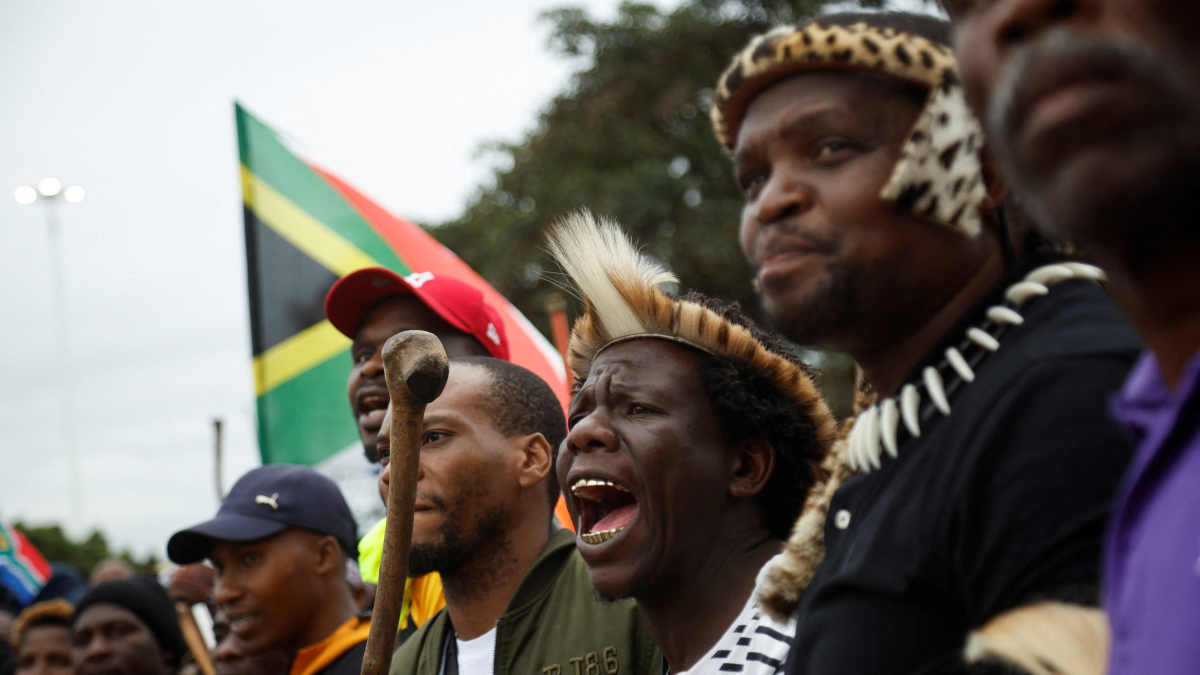
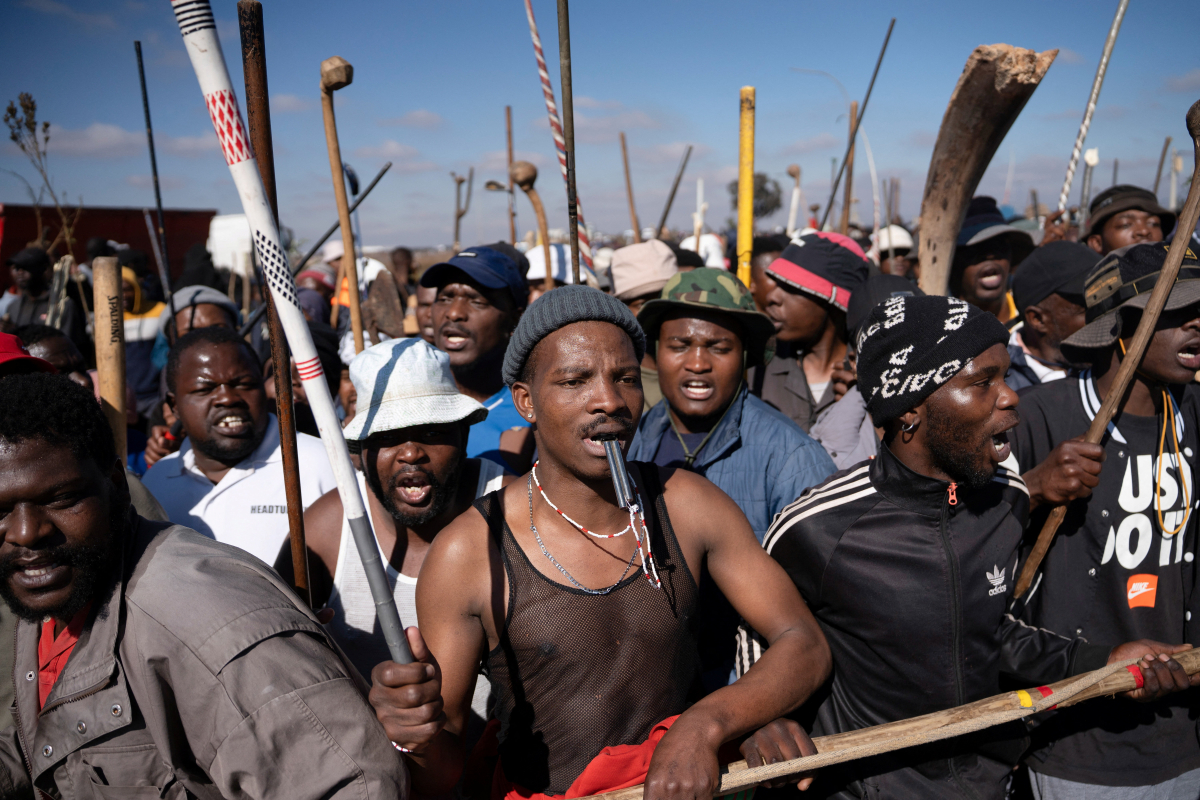
Workers stayed home, buses remained idle and many businesses closed across South Africa on Tuesday (30 June) as the country braced for planned anti-immigrant marches, with fears they could turn violent.
Migrants flee amid uncertainty
The demonstrations coincided with an unofficial deadline set by anti-immigrant groups for undocumented migrants to leave the country. Although the government has not endorsed the deadline, many foreign nationals interpreted it as a direct threat, prompting thousands to flee their communities or seek temporary shelter.
Police and military personnel were deployed in several cities, including Johannesburg and Durban, as authorities sought to prevent a repeat of previous outbreaks of xenophobic violence targeting immigrants and their property.
"The state has the duty and obligation to ensure that those that are demonstrating do so peacefully," Deputy National Commissioner for Policing Tebello Mosikili said.
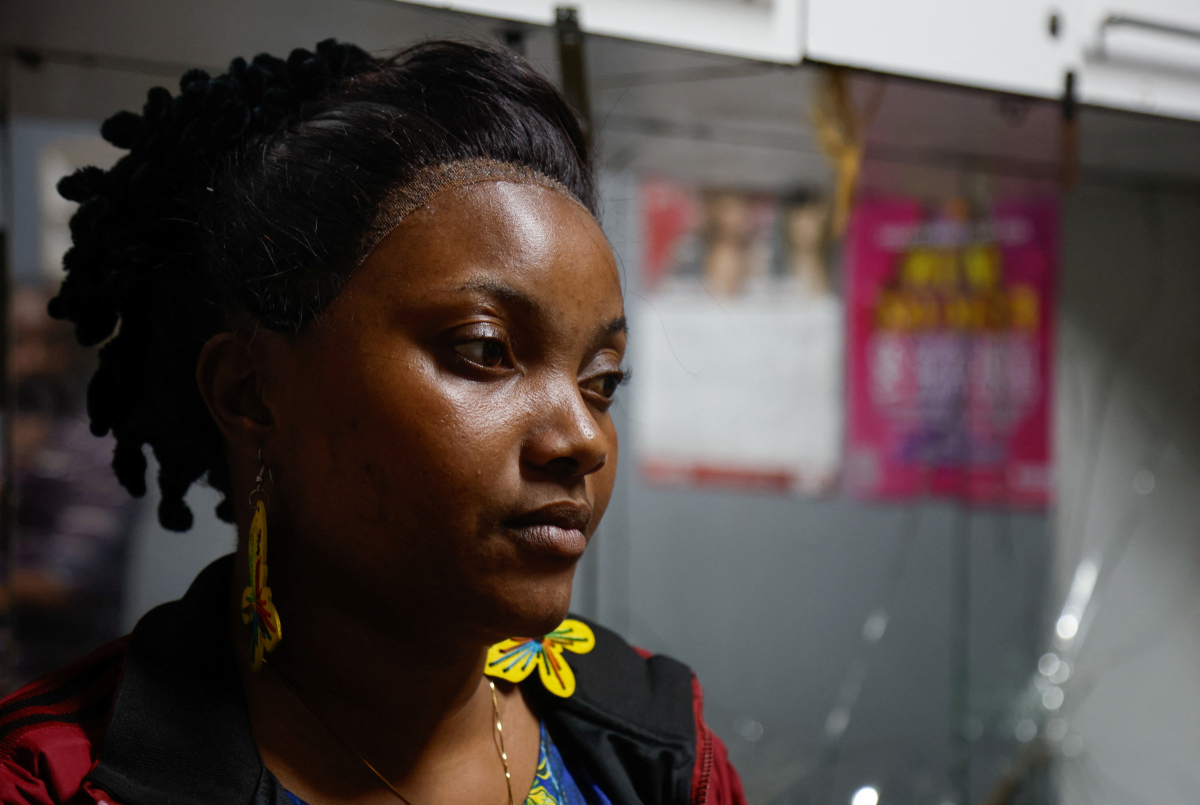
Across the country, many migrants were unwilling to take any chances.
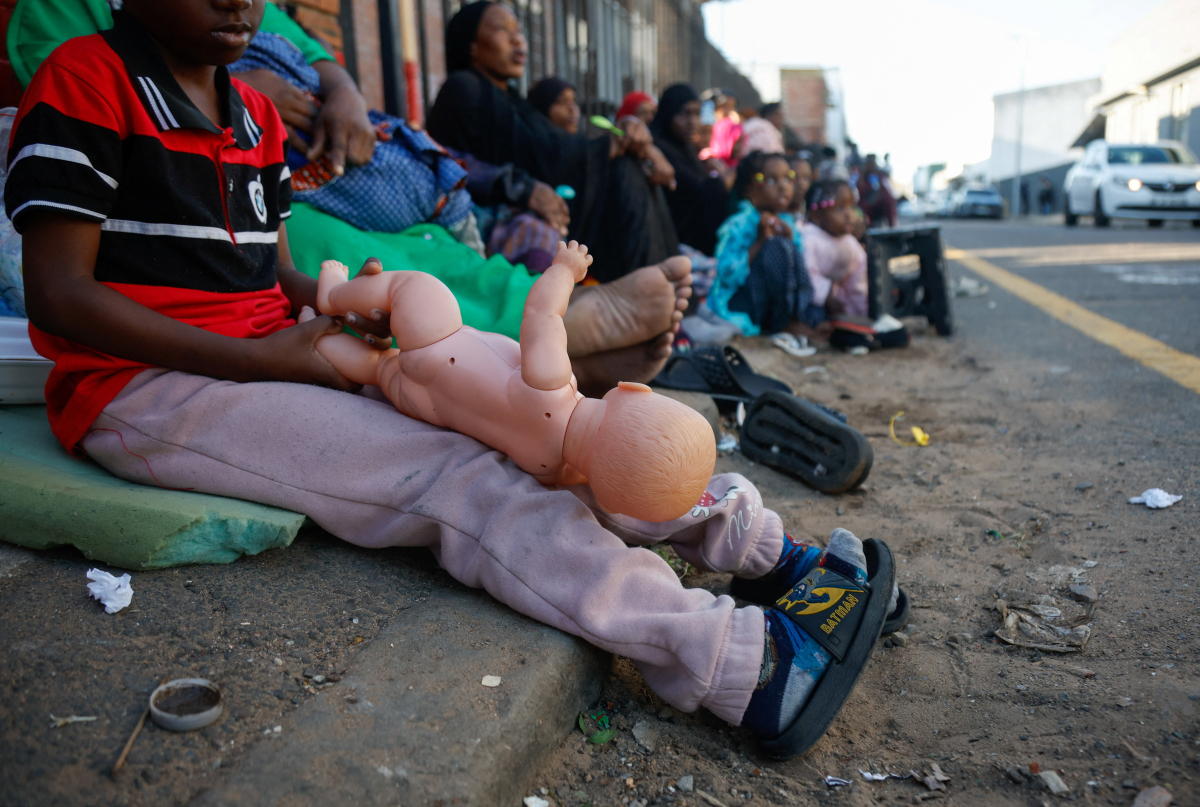
In Durban, hundreds of people gathered at temporary camps while waiting for transport out of South Africa. Aid organisations distributed food and clothing as families sheltered in open spaces, fearing attacks if they remained in their homes.
Among them was Malawian migrant John Allen, who said he had left behind his South African partner and their one-year-old son to escape growing hostility.
"The reason I would like to stay is I feel bad for my child. He's too young. When I'm gone who's going to support him?" he said.
Allen said he had witnessed mounting anti-migrant sentiment in recent weeks and decided that leaving was safer than staying.
"There's two options: I can lose my life or I can leave," he said.
Legal migrants also affected
Community leaders and rights groups say the fear has spread well beyond undocumented migrants.
In Durban, Congolese community leader Mabako Majole described seeing foreign nationals forced from their homes by landlords worried about potential vandalism.
"All these people, they were chased out by their landlords," he said while standing beside a group of migrants sleeping on the street.
"All these people are legal. They have documents."
Similar concerns were raised by aid groups, which noted that previous waves of xenophobic violence often made little distinction between documented and undocumented migrants.
Women and children were among those seeking refuge as buses transported people towards the country's northern border.
Long-standing tensions
Anti-immigrant sentiment has periodically flared in South Africa, where high unemployment, poverty and slow economic growth have fuelled resentment in some communities.
Migrants are often accused of taking jobs from local workers or contributing to crime, claims that are frequently disputed by researchers and advocacy groups.
The latest tensions have drawn criticism from civil society organisations and governments across the continent, which argue that South African authorities have failed to adequately protect vulnerable communities.
For many observers, the crisis has tarnished the image of post-apartheid South Africa as a defender of human rights and a champion of African solidarity.
Government walks a fine line
President Cyril Ramaphosa acknowledged public concerns over illegal immigration but warned against violence and intimidation.
"South Africans' ... deep concerns about illegal immigration ... are real and they deserve to be heard," he said.
“But the right to protest ... does not allow people to threaten or intimidate others, or to engage in acts of vandalism or violence.”
The remarks reflect the delicate position facing the government, which must balance public concerns over migration with its responsibility to protect everyone within its borders.
Families caught in the middle
For many migrants, the uncertainty extends beyond immediate safety concerns.
At a temporary camp in Durban, migrant workers packed their belongings and prepared to leave behind their livelihoods, homes and, in some cases, their families.
Amadou Awali, who has worked in South Africa since 2019, said he was leaving his two young sons behind because their mother lacked the resources to travel.
"I'm worried for the children," he said.
Like many others, he hopes to return once tensions ease.
For now, however, fear has become the dominant force driving decisions as thousands of migrants weigh the risks of staying against the uncertainty of starting over elsewhere.












What is your opinion on this topic?
Leave the first comment