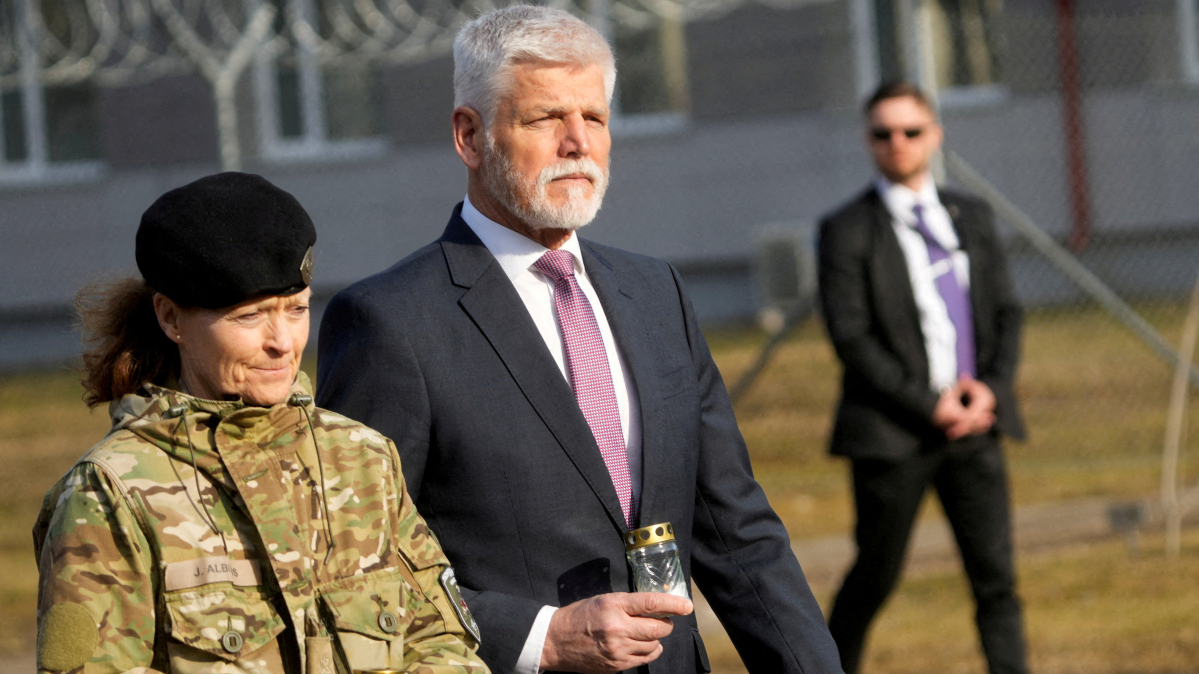
The Czech government has agreed, under pressure from the country's Constitutional Court, to allow President Petr Pavel to attend next week's NATO summit in Türkiye, but has insisted he will not lead the national delegation.
The decision lays bare a growing political rift between the presidency and the government over defence spending, Ukraine policy and who represents the country at key international forums.
The Constitutional Court last week issued an injunction ordering the government to permit Pavel's participation, pending further deliberations. On Monday, officials confirmed they would comply, allowing the president to attend the summit in Türkiye on 7–8 July.
However, the government maintained that leadership of the delegation would remain with Prime Minister Andrej Babiš, whose administration has taken a more cautious stance on defence commitments and military aid to Ukraine.
Presidents in the Czech political system do not set foreign policy but have traditionally led national delegations at NATO meetings since the country joined the alliance in 1999.
Rift over defence spending and Ukraine policy
The dispute reflects deeper divisions over defence priorities. Pavel, a former army general and former chair of NATO's Military Committee, has been a vocal advocate of increased military spending and continued support for Ukraine.
By contrast, the populist government led by billionaire and Donald Trump supporter Babiš has resisted increasing defence spending and has declined to commit to Ukraine-related funding.
"The best would be if he does not insist on taking part," Babiš told reporters, adding that Pavel could instead attend next year's summit.
He also argued that leading the delegation would allow him to explain Czech policy positions, including the country's failure to meet NATO's 2% defence spending target last year.
Summit comes amid wider NATO tensions
The dispute comes ahead of a NATO summit in Ankara, where 32 leaders are expected to gather on 7–8 July. Discussions are expected to focus on burden-sharing, defence spending commitments and wider alliance coordination.
The meeting also takes place against a backdrop of tensions involving U.S. criticism of allies over security responsibilities and strategic chokepoints such as the Strait of Hormuz.
Competing claims over representation
Pavel has insisted he should be allowed to participate fully in the summit, including attending the leaders' dinner and plenary sessions, arguing that tradition and his role as head of state justify his involvement.
"The government should follow the custom to date until the court makes a ruling," he said. "The president as head of state should have the opportunity to represent… as the head of the delegation."
The Czech Republic is expected to fall short again of NATO's 2% defence spending target this year after cuts of around US$1 billion, with no clear roadmap yet to reach the alliance's 3.5% target by 2035.
The outcome of the dispute leaves uncertainty over who will formally represent Prague at one of NATO's most closely watched summits in recent years.










What is your opinion on this topic?
Leave the first comment