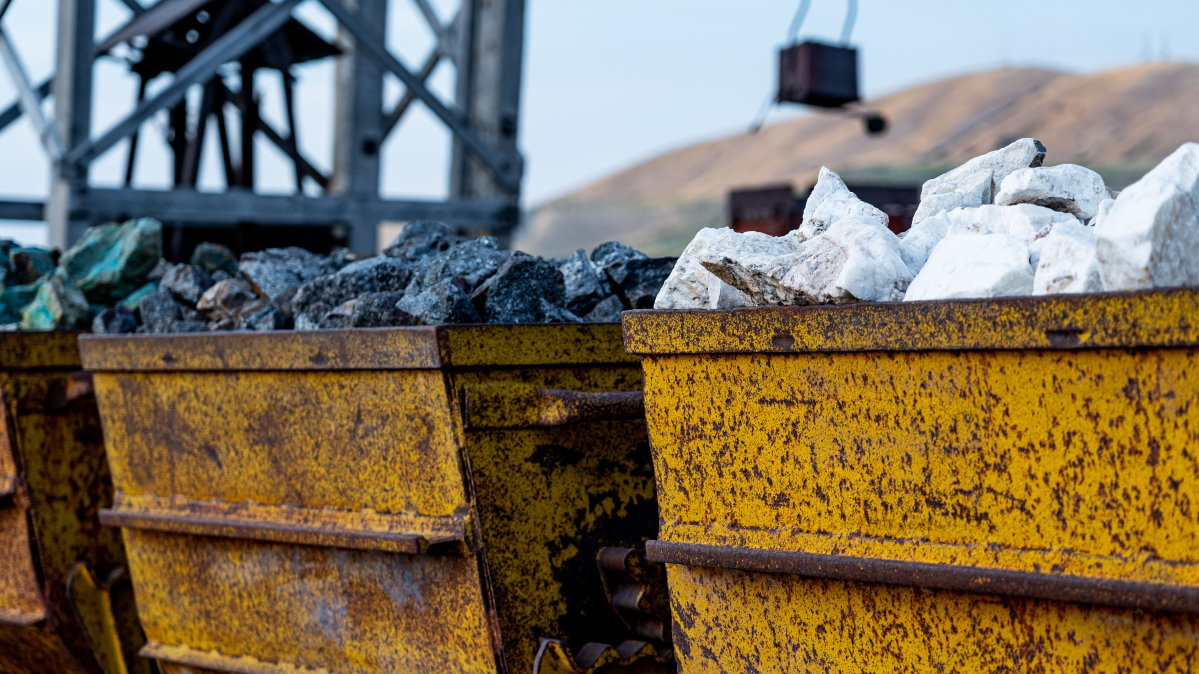
Britain will invest £50 million ($66 million) to expand domestic production of critical minerals, as part of efforts to reduce dependence on global supply chains and strengthen economic resilience, the government said on Monday.
The funding will support projects spanning extraction, processing and recycling of materials used in technologies such as smartphones, refrigerators and electric vehicle batteries.
The initiative comes as Western economies seek to secure supplies of critical minerals, amid concerns over the concentration of global production and processing capacity.
Industry minister Chris McDonald is expected to formally launch the programme during a visit to an industrial research hub in north-east England, where firms are developing technologies focused on metal recovery and advanced processing.
The package builds on more than £200 million already committed to the sector, according to the government.
Officials said the new funding will be divided into three main areas: £20 million for a rare earth magnet hub, £25 million for an accelerator programme to scale up projects, and up to £5 million for a platform aimed at aggregating industry demand and attracting private investment.
Dependence on China
The move reflects growing concern over reliance on concentrated supply chains, particularly China’s dominant position in the critical minerals sector.
China accounts for around 70% of global rare earth mining and roughly 90% of processing capacity, according to industry estimates widely cited by governments and international agencies.
Critical minerals are considered essential for modern manufacturing and national security, with demand rising sharply due to the expansion of electric vehicles, renewable energy systems and advanced electronics.
International partnerships
Britain has already taken steps to strengthen domestic capacity, including the launch of its first commercial rare earth magnet facility in 25 years, operated by Mkango Resources’ HyProMag unit in Birmingham.
The plant uses recycled materials to produce magnets for electric motors and other applications.
The government has also pursued international partnerships with allies including the United States and South Korea, focusing on collaboration in supply chains, processing technology and investment in critical minerals infrastructure.
Officials said the latest funding is intended to accelerate domestic capability while encouraging private sector investment in a strategically important industry.
Read more:





















What is your opinion on this topic?
Leave the first comment