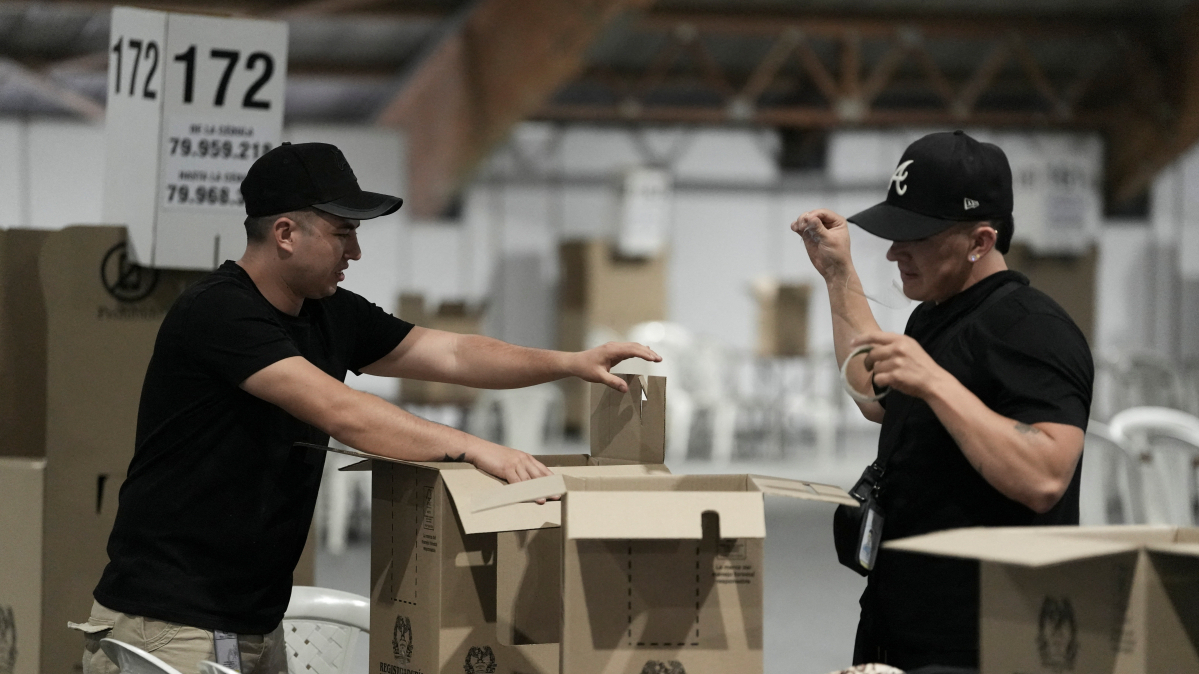
More than 41 million Colombians headed to the polls on Sunday to decide whether the country will continue the left-wing policies of President Gustavo Petro or elect conservative outsider Abelardo De La Espriella in a closely watched presidential runoff.
The second-round vote follows a first round in May that produced no outright winner. Voters must now choose between leftist Senator Iván Cepeda and De La Espriella, who has campaigned on promises to crack down on crime and revive the economy.
Two sharply contrasting visions
Cepeda, 63, has pledged to continue Petro's agenda, including social welfare programmes, labour reforms backed by trade unions, peace talks with armed groups and a moratorium on new oil exploration projects.
De La Espriella, 47, has proposed a markedly different course, promising to end negotiations with armed groups, launch a broad military offensive against criminal organisations, reduce taxes and expand Colombia's oil and gas sector.
While criticising Petro's economic policies, De La Espriella has pledged to maintain popular social measures, including the government's 23% increase in the minimum wage.
Security and economy dominate campaign
The election campaign has been largely shaped by concerns over rising violence and economic challenges.
Critics argue that Petro's peace negotiations have failed to curb the influence of armed groups, which have expanded their operations in several regions. Drug trafficking networks have also continued to grow, contributing to increases in murders and extortion, particularly along Colombia's Caribbean coast.
De La Espriella has blamed Petro's administration for these problems and portrayed Cepeda as too close to groups involved in the conflict. Cepeda has rejected those claims, saying they are unsupported by evidence.
Part of a wider regional trend
The Colombian election comes amid a broader shift towards conservative governments across Latin America.
Recent presidential elections in countries including Chile, Ecuador and Costa Rica have produced right-wing leaders, while Bolivia ended two decades of leftist rule with the election of President Rodrigo Paz last year.
In Peru, conservative candidate Keiko Fujimori appears poised to win the presidency after several previous attempts.
Analysts say concerns about crime, inflation and economic stagnation have driven much of the political change across the region.
Trump backs De La Espriella
The race has also attracted international attention after U.S. President Donald Trump publicly endorsed De La Espriella.
Trump, who has frequently clashed with Petro, described the election as important for Colombia's future and its relationship with the United States.
Winner faces major challenges
Whoever emerges victorious will inherit significant challenges, including high public debt, persistent security threats and a divided Congress that could make ambitious reforms difficult to pass.
Polling stations opened at 8 a.m. local time and initial results are expected a few hours after voting closes, with analysts predicting a closely contested race.

















What is your opinion on this topic?
Leave the first comment