U.S. Vice President JD Vance arrived in Switzerland on Sunday for peace talks with Iran, as Tehran’s renewed claim that it had blocked the Strait of Hormuz threatened to overshadow efforts to advance a tentative deal to end the war.
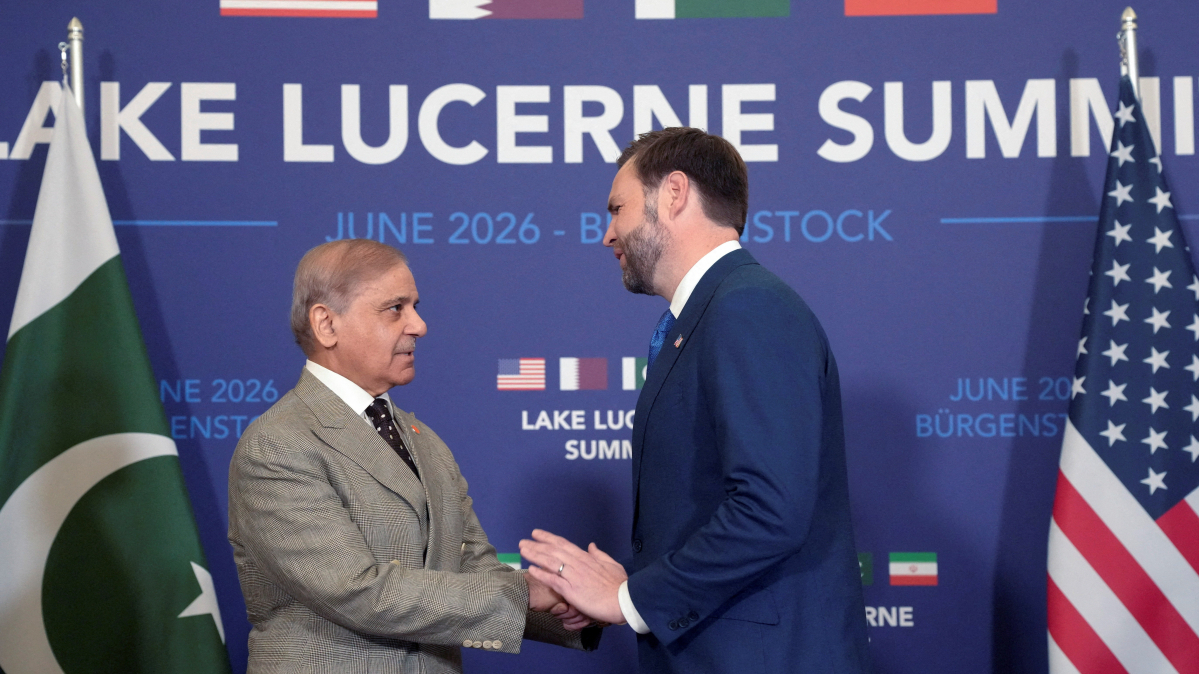
The talks are taking place at the Buergenstock resort near Lake Lucerne and involve the United States, Iran and mediators Qatar and Pakistan.
A memorandum of understanding agreed last week calls for the Strait of Hormuz to be reopened and for all hostilities to stop, including in Lebanon, where Israel launched an invasion in March.
However, tensions rose on Saturday after Iran’s Islamic Revolutionary Guard Corps said the Strait of Hormuz had been closed in response to Israeli strikes in Lebanon. The U.S. military disputed the claim, saying commercial vessels continued to move through the waterway.
Vance arrives for talks
Vance and second lady Usha Vance arrived at Emmen Air Base in Switzerland at 5:59 a.m. local time, according to a vice presidential spokesperson.
Speaking before leaving the United States, Vance said negotiators were likely to hold a “couple days of talks”.
“I think we’re going to hopefully make progress on the nuclear issue, make progress on the Lebanon ceasefire issue,” he told reporters at Joint Base Andrews in Maryland.
Iran’s Foreign Ministry spokesperson Esmail Baghaei said Sunday’s talks would last only one day. He said the discussions would focus on implementing the memorandum, rather than the wider issues expected in the next stage of negotiations, because Washington had failed to guarantee a ceasefire in Lebanon.
Strait of Hormuz dispute
U.S. Central Command said 55 merchant ships passed through the strait on Saturday, carrying more than 17 million barrels of oil to global markets. It said U.S. forces would ensure commercial traffic continued.
The Strait of Hormuz is one of the world’s most important routes for oil and gas shipments, carrying around a fifth of global oil supplies before the U.S. and Israel launched attacks on February 28.
However, Iran’s Fars news agency cited a military source on Sunday as saying no new permits were being issued for ships to cross the strait until further notice.
Trump said he agreed to last week’s memorandum in order to prevent a global depression caused by high oil prices if the strait remained shut.
Oil prices tumbled after the agreement was announced, reaching levels not seen since the war began. However, a renewed Iranian blockade could push prices higher when markets reopen on Monday.
Iran accuses U.S. over Lebanon ceasefire
The IRGC warned ships would be at risk if they approached the strait, accusing Israel of violating ceasefire commitments in Lebanon.
The memorandum foresees 60 days of talks on issues including curbs on Iran’s nuclear programme in return for the lifting of international sanctions. Iran is also expected to receive initial economic benefits, including sanctions waivers and the unfreezing of blocked assets.
Vance is leading the U.S. delegation, while Iran’s team is headed by parliament speaker Mohammad Baqer Qalibaf. The two previously met more than two months ago in the only known face-to-face talks so far.
The Iranian delegation also includes Foreign Minister Abbas Araghchi, as well as senior security, central bank and oil officials, Iranian media reported.
The U.S. team includes envoys Steve Witkoff and Jared Kushner. Pakistan’s Prime Minister Shehbaz Sharif and army chief Field Marshal Syed Asim Munir also arrived in Switzerland to participate in the talks.
Lebanon fighting continues
The Lebanon ceasefire also appeared fragile, with Israel and the Iran-backed group Hezbollah accusing each other of attacks.
Lebanese authorities said Israeli strikes killed 20 people on Saturday, hours after the truce took effect.
Reuters journalists in southern Lebanon saw rescuers carrying wounded at the sites of Israeli attacks, which had reduced parts of towns and villages to rubble.
Lebanon’s army said on Sunday that specialised units were still working to dismantle unexploded Israeli bombs weighing 1,000 and 2,000 pounds in southern towns. It urged residents to delay returning to border villages and follow instructions from soldiers because of ongoing Israeli attacks.
Israel says it is not a party to the U.S.-Iran deal and will keep its forces in the Lebanese territory it occupies.
War goals under scrutiny
Vance told Fox News he was confident the ceasefire would hold and said he had seen no evidence that the Strait of Hormuz had been closed.
After Trump and Israeli Prime Minister Benjamin Netanyahu launched the war in February, they said their aims were to destroy Iran’s nuclear programme, halt its ability to threaten neighbours with missiles and proxy forces, and make it possible for Iranians to topple the government.
None of those objectives has been achieved, although U.S. officials say they inflicted severe damage on Iran’s military and still expect a strong agreement that would prevent Tehran from obtaining a nuclear weapon.
A poll by Israel’s Hebrew University, provided to Reuters, showed about 92% of Israelis believe Iran benefited more than Israel from the joint Israeli-U.S. military campaign, while just 8% said Israel had emerged victorious.
Almost 90% of Israelis said the war’s goals had not been met, while fewer than 30% said they believed Netanyahu’s claims of major achievements.
The negotiations are expected to test whether the tentative agreement can survive renewed tensions over the Strait of Hormuz and continued fighting in Lebanon.
Read more:















What is your opinion on this topic?
Leave the first comment