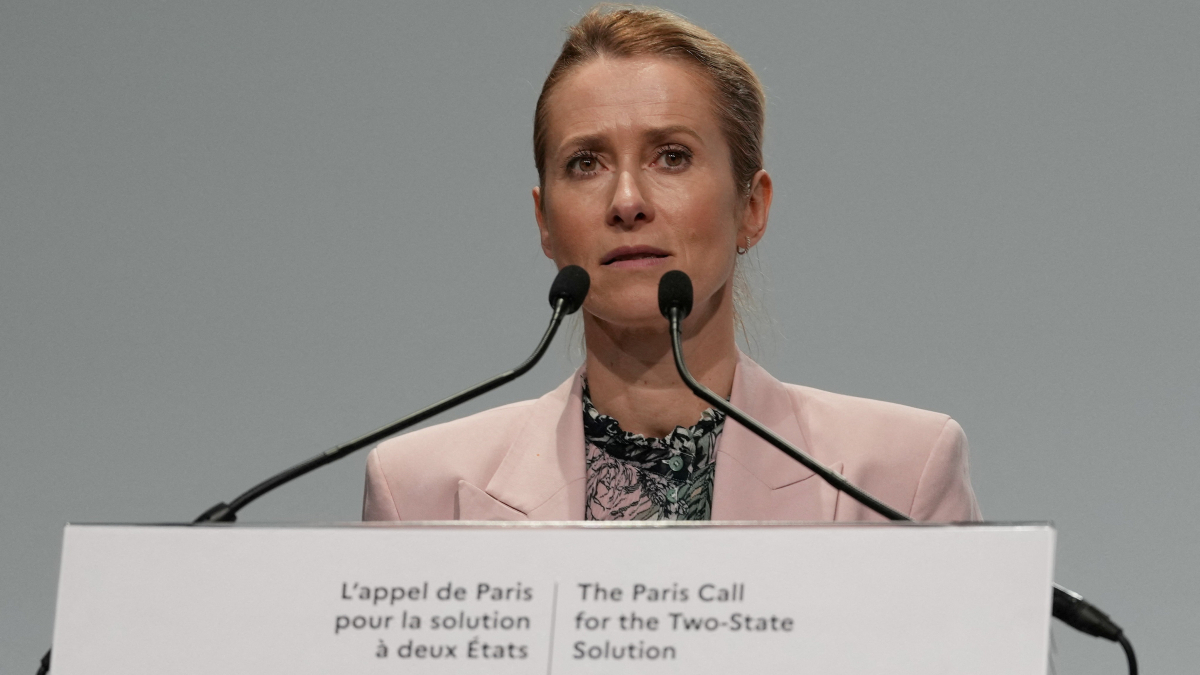
Israeli Foreign Minister Gideon Saar has said he is severing “all contact” with European Union foreign policy chief Kaja Kallas, following remarks attributed to her that reportedly compared Israel’s policies toward Palestinians to apartheid-era South Africa.
The diplomatic fallout highlights growing tensions between Israel and the EU amid ongoing disagreements over the war in Gaza and settlement expansion in the occupied West Bank.
Saar said Kallas had “compared Israel to the racist apartheid regime” during a visit to Mexico last month, according to reports he cited from European media outlets. He demanded a retraction of the comments, saying contact would remain frozen until she withdrew them.
The remarks in question were reported by Euractiv and cited unnamed officials as saying Kallas had drawn parallels between Israel’s treatment of Palestinians in the West Bank and Gaza and South Africa’s former system of apartheid, which enforced racial segregation.
Kallas responds, calls for continued dialogue
Kaja Kallas did not directly address the specific allegation but responded by stressing the importance of maintaining diplomatic engagement.
She said she valued EU–Israel relations and remained open to continued “respectful and constructive” dialogue, adding that diplomacy is essential even amid disagreements.
Kallas also reiterated the EU position that a two-state solution remains the only viable path to lasting peace in the Middle East.
EU–Israel tensions over settlements and Gaza war
The dispute comes against a backdrop of long-standing European criticism of Israeli settlement expansion in the occupied West Bank, which the EU considers illegal under international law and an obstacle to peace efforts.
In May, the EU imposed sanctions on individuals and entities it said were involved in serious human rights abuses against Palestinians in the West Bank. Israel rejected the measures at the time.
While the EU has also affirmed Israel’s right to self-defence during the Gaza conflict, member states remain divided, with some strongly critical of Israeli military actions and others maintaining closer political and security ties.
Broader diplomatic strain within EU–Israel relations
Saar accused Kallas of “acting obsessively and with blatant unfairness toward the State of Israel,” signalling further deterioration in relations between Israeli officials and parts of the EU foreign policy apparatus.
The episode underscores the fragility of EU unity on Middle East policy and the widening diplomatic gap between Israel and European institutions over the conduct of the war, settlement activity, and the future framework for peace.













What is your opinion on this topic?
Leave the first comment