The United Kingdom is set to introduce a sweeping ban on social media access for children under 16 following a landmark government announcement this month.
Slated to come into force in spring 2027 under powers granted by the Children’s Wellbeing and Schools Act 2026, the "Australia Plus" model aims to tackle the growing youth mental health crisis.
However, the policy has sparked intense debate over enforcement, data privacy and the structural design of the modern internet. For Ross Thorpe, chief executive of Rooverse, a social media platform designed exclusively for adults and operating a blanket ban on artificial intelligence (AI)-generated uploads, the government's focus may be overlooking a much larger shift in online communication.
"The 16-year ban does not go far enough," argues Thorpe. "It does not address addictive features or the colossal rise of AI content."
What social media is being banned in the UK?
The proposed regulations target any "user-to-user" platform whose primary purpose is to facilitate social interaction and content sharing through algorithmic recommendations.
The restrictions will require technology companies to block access completely for users under 16 or face multi-million-pound penalties. Prime Minister Keir Starmer has clarified that enforcement action will be directed at technology firms rather than children or parents.
The regulations will not apply to standard messaging services such as WhatsApp and Signal, nor will they affect online marketplaces, music streaming platforms or clearly educational services.
Does the UK social media ban include YouTube?
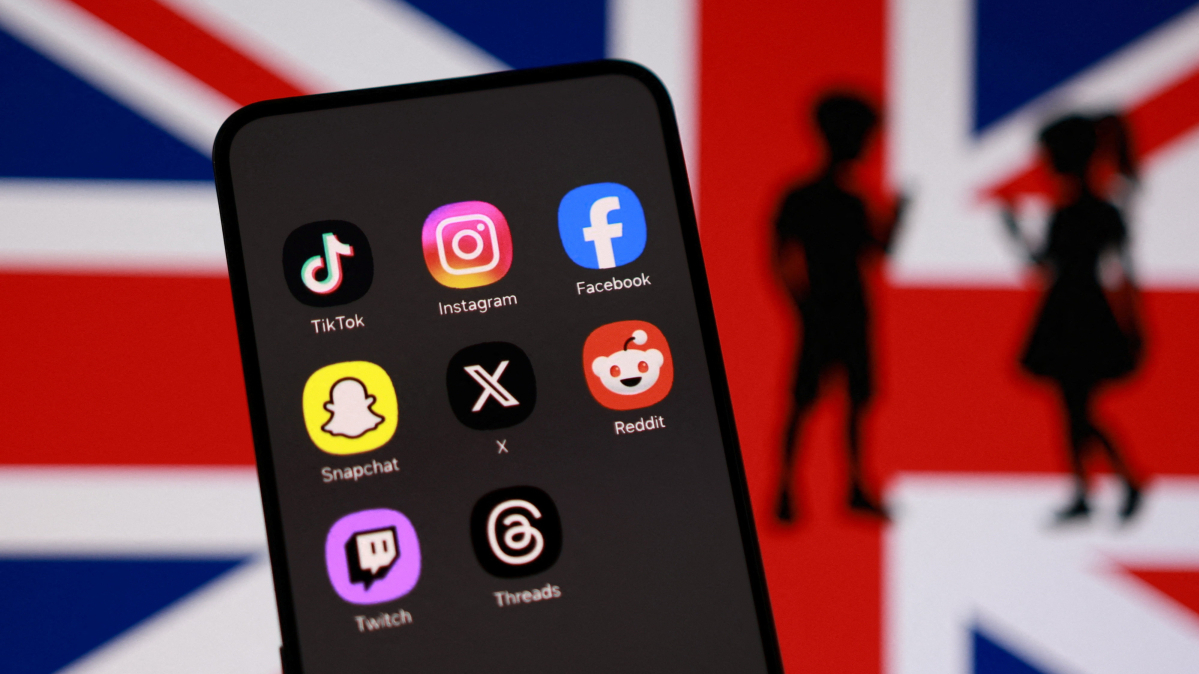
Yes. Despite its widespread use for education and entertainment, YouTube is explicitly included in the ban alongside TikTok, Snapchat, Instagram, Facebook and X, formerly known as Twitter.
The only exceptions within that ecosystem are YouTube Kids and other curated platforms such as Lego Play and Google Classroom.
The decision has attracted criticism from parts of the technology sector. Critics argue that a complete ban could remove an important outlet for teenage creativity and informal learning, potentially pushing young people towards unmonitored and anonymous areas of the internet.
However, the policy enjoys strong public support. A government consultation conducted between March and May 2026 received more than 116,000 responses, with nine in 10 parents backing a full social media ban for under-16s.
What platforms and features are affected?
Beyond the major social media platforms, the government's approach extends significantly further than previous international attempts by restricting specific features across the wider digital landscape.
The measures will affect interactive platforms such as Roblox and Discord, where high-risk functions including livestreaming and communication with unknown users will be disabled entirely for under-16s.
The policy also targets emerging technologies by imposing a strict 18-plus age restriction on AI chatbots designed to simulate romantic or sexual relationships.
For older teenagers aged 16 and 17, features such as livestreaming and communication with strangers will be disabled by default in an effort to avoid a "cliff-edge" effect when they become eligible for full access.
Thorpe believes the failure to address the underlying technology represents a major weakness in the proposals. According to Thorpe, 71% of images uploaded to social media each day are AI-generated, while more than half of all text blocks exceeding 100 words are produced by AI.
"Many platforms also see up to 45% of their user bases taken up by bots capable of conducting malicious activity," he says.
When does the social media ban start in UK?
The first set of regulations is expected to be laid before Parliament before the end of the year, with full implementation anticipated in spring 2027.
The success of the policy will depend heavily on age-verification technologies, including facial age estimation systems and digital identification tools.
That reliance on large-scale verification has raised significant privacy concerns, as millions of adults may also be required to prove their age to retain access to online accounts.
Thorpe, whose platform partners with Lonestar Data Holdings to store encrypted data backups in space, says robust safeguards will be essential.
"Data protection needs to be safely guarded with clear usage guidelines," he says.
Institutional organisations such as the NSPCC (National Society for the Prevention of Cruelty to Children) have welcomed the framework, describing it as a "watershed moment" because it requires technology companies to change their infrastructure rather than placing responsibility on families.
According to NSPCC data, an estimated 2.5 million children in the UK currently bypass basic, unverified age checks to access social media while under the age of 13.
While critics warn the ban could isolate vulnerable young people, including LGBTQ+ and disabled children living in remote communities, Thorpe believes the legislation is a flawed but necessary step.
"Enforcement will be difficult," he admits, "but this alone is not a reason to take no action. The answer lies in a nuanced middle, paired with physical outreach programmes in the real world."




















What is your opinion on this topic?
Leave the first comment