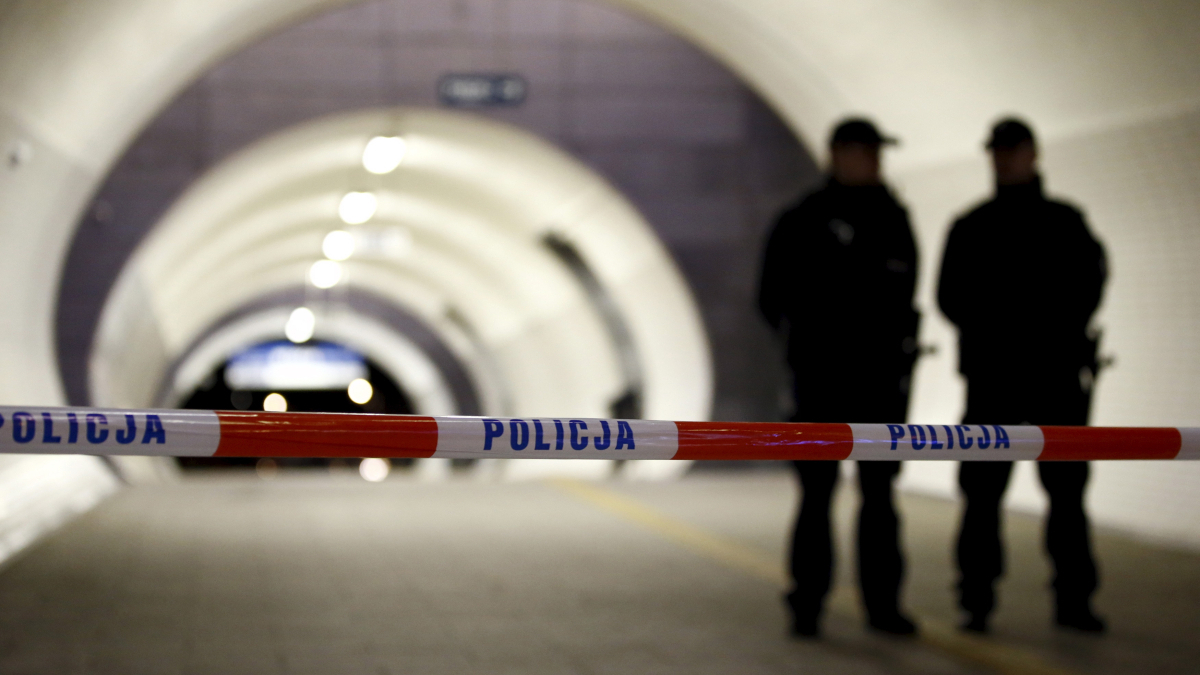
Polish police have launched an investigation after videos circulating online showed men in military-style uniforms patrolling Warsaw Central railway station and questioning people they believed to be foreigners.
Prime Minister Donald Tusk warned on Wednesday that anyone pretending to be a government official would face the full force of the law.
“Anyone who impersonates a public official and, for example, checks the IDs of foreigners will be detained and held legally accountable,” Tusk said in a statement released by his office.
Authorities launch investigation
Karolina Gawęcka, a spokesperson for Poland’s Interior Ministry, said officers were gathering evidence that would be forwarded to the Prosecutor’s Office in due course.
“There is and will be no tolerance…. Such behaviors are unacceptable in a state governed by the rule of law,” she said.
Polish anti-racism organisation the Never Again Association told AnewZ it was aware of reports of appearance-based harassment by far-right groups at Warsaw Central railway station and in areas near the Polish border.
“We are concerned about the appearance of uniformed far-right gangs which try to harass people based on their appearance or skin [tone].
“We strongly believe the majority of Polish people are completely against this kind of discriminatory aggressive behaviour and we call upon the Polish authorities to react swiftly in defence of human rights and [the] dignity of all people.”
Videos shared online
Several videos showing men in military-style uniforms approaching people who appeared to be foreigners have been posted in recent days on the Facebook profiles of a group called "Bronimy Polskiej Granicy" ("We Defend the Polish Border").
Polish public broadcaster TVP reported that the group appeared to have links to the country’s far right.
Migration tensions
The incidents come amid heightened tensions over migration in Poland following the implementation of the European Union’s Pact on Migration and Asylum, which entered into force on 12 June.
Disinformation circulating on social media claimed that owners of homes larger than 60 square metres (645 square feet) could be required to house migrants. Poland’s Interior Ministry strongly rejected the allegations.
"Neither local governments nor state services will direct migrants to private apartments or houses," the ministry said in a statement.
The EU pact introduces new rules for managing migration across the bloc, including a mechanism under which member states facing significant migration pressure can relocate asylum seekers.
Warsaw remains sceptical of certain elements of the system and insists it will not be compelled to accept relocated migrants under any mechanism it considers contrary to Polish national interests.
Tusk’s government has also repeatedly argued that Poland’s role in hosting millions of Ukrainians displaced by the Russia-Ukraine war should be taken into account when implementing European migration policy.










What is your opinion on this topic?
Leave the first comment