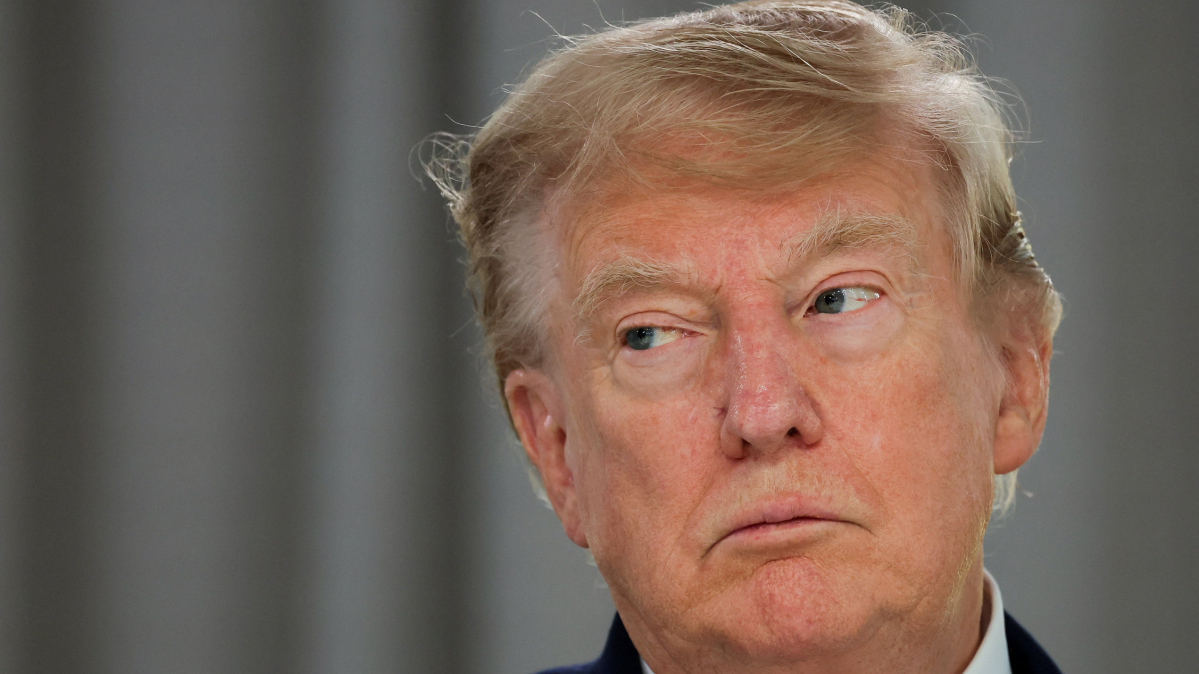
U.S. President Donald Trump has warned that a preliminary agreement with Iran remains fragile, saying Washington could resume military action if Tehran fails to meet its commitments.
Deal still lacks key elements
Speaking on the sidelines of the G7 summit in France, Trump made clear that the agreement is not final and could quickly unravel if he is dissatisfied with its implementation.
“It’s a memorandum of understanding. And if I don’t like it, we’ll go back to shooting at them, dropping bombs on their head,” he said. “If I don’t like it, if they don’t behave, we’ll go right back to dropping bombs right smack in the middle of their head.”
Trump acknowledged that the current framework does not include immediate sanctions relief for Iran, one of Tehran’s key demands, indicating that major issues remain unresolved as negotiations continue.
Despite this, he praised the agreement negotiated by his administration, describing it as strong even though details have not been made public.
“That’s a very strong deal. Nobody knows what it is, but it’s very strong, and most people seem to be very happy,” he said.
Focus on markets and economic impact
Trump pointed to the positive market reaction as evidence of confidence in the agreement, arguing that investors had responded favourably to the prospect of reduced tensions.
“There’s nothing so smart as the market, and the market loves it beyond anything that I’ve actually seen,” he said.
He warned that failure to secure a deal could have significant global economic consequences, adding: “The alternative would be a worldwide depression.”
Oil prices under pressure
Energy markets appeared to reflect expectations of improved stability, with oil prices hovering near a three-month low.
Trump suggested prices could fall further if the agreement holds and global supply routes fully reopen.
“I think oil prices might get lower than where they were before the war,” he said.
While the agreement has eased immediate tensions, Trump’s remarks underline the fragile nature of the current truce. With key issues still unresolved and negotiations ongoing, the risk of renewed escalation remains.
The coming weeks are expected to be critical in determining whether the interim framework can develop into a lasting agreement or collapse under pressure from outstanding disputes.










What is your opinion on this topic?
Leave the first comment