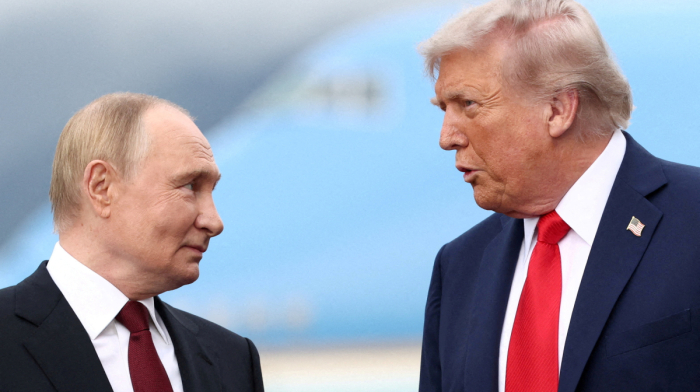
U.S. President Donald Trump surprised NATO allies by announcing plans to deploy an additional 5,000 American troops to Poland, just hours before Secretary of State Marco Rubio was due to meet alliance ministers in Sweden on Friday amid growing divisions over the Iran war.
In a post on Truth Social, Trump said the move was linked to his relationship with Poland’s conservative nationalist president, Karol Nawrocki.
“Following the successful election of President Karol Nawrocki, whom I proudly endorsed, and because of our strong relationship, I am pleased to announce that the United States will send an additional 5,000 troops to Poland,” Trump wrote.
Polish President Karol Nawrocki welcomed the decision, writing on X that “good alliances are those based on cooperation, mutual respect, and a commitment to our shared security.”
Concerns over Trump’s NATO stance
The announcement marked a sharp shift after weeks of criticism from Trump directed at NATO members over what he described as insufficient support for the U.S.-Israeli military campaign. He has previously suggested he may consider withdrawing from the alliance and has questioned Washington’s obligations under NATO’s collective defence commitments.
Ahead of the NATO foreign ministers’ meeting in Helsingborg, Rubio said Trump was frustrated with allies that had refused to allow the U.S. to use military bases on their territory during the conflict with Iran, specifically criticising Spain.
“You have countries like Spain denying the U.S. use of these bases, so why are they in NATO? That is a fair question,” Rubio told reporters in Miami, while adding that several other NATO members had provided support.
“The President's views of, frankly, disappointment at some of our NATO allies and their response to our operations in the Middle East are well documented,” Rubio said on Friday at a gathering of NATO foreign ministers in the Swedish town of Helsingborg.
NATO officials have maintained that the United States did not formally request alliance participation in the Iran conflict. However, many member states have continued to permit the use of their airspace and military facilities by U.S. forces.
“That will have to be addressed. That won't be solved or addressed today. That's something for the leaders’ level to discuss,” Rubio told reporters, adding that any alliance “has to be good for everyone who's involved.”
European allies seek to reassure Washington
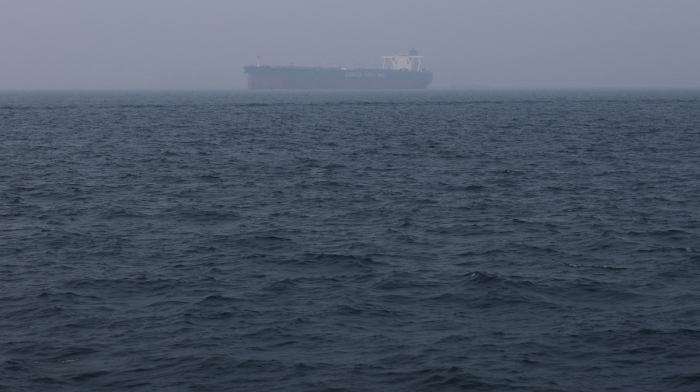
European governments are expected to use the Helsingborg gathering to demonstrate their willingness to contribute more actively to maritime security in the Strait of Hormuz once conditions allow. Iran has restricted shipping activity in the strategic waterway during the war.
European unease over Trump’s commitment to NATO has also intensified following earlier plans to withdraw 5,000 American troops from Europe, announced before Thursday’s decision to reinforce Poland.
It remains unclear where the additional troops destined for Poland will be redeployed from.
Confusion over U.S. military plans in Europe
Meanwhile, Washington’s allies have also expressed concern over conflicting messages surrounding U.S. troop movements. American officials initially indicated that forces would be withdrawn from Germany, before later saying they would delay the deployment of a brigade to Poland.
The United States has also reportedly abandoned plans to station long-range Tomahawk missiles in Germany. In addition, Reuters reported that Washington intends to inform NATO allies it will reduce the range of military capabilities it would provide to the alliance during a crisis, according to three sources familiar with the discussions.
NATO Supreme Allied Commander Europe, U.S. Air Force General Alexus Grynkewich, attempted to reassure European partners this week, saying any future troop reductions would take place gradually over several years, allowing allies time to strengthen their own defence capabilities.
Rubio said the pledge of extra troops demonstrated that “the United States continues to have global commitments that it needs to meet in terms of our force deployment,” but cautioned that deployments would continue to be re-examined.
“What is important is that it happens in a structured manner,” Norway’s Espen Barth Eide said. He was echoed by his Dutch counterpart, Tom Berendsen.
“The move confirms that Polish-American ties are very strong, and Poland is a model ally,” Defence Minister Władysław Kosiniak-Kamysz wrote on X.












What is your opinion on this topic?
Leave the first comment