Malaysia's Maritime Enforcement Agency has launched a search and rescue operation for 14 people missing at sea after a wooden boat, strongly believed to be illegally transporting undocumented Indonesian migrants, capsized and sank off the country's western coast on Monday morning.
The alarm was initially raised in the early hours of Monday (11 May) when a local commercial fisherman alerted maritime authorities after making the grim discovery of several victims floating in the choppy waters off Pangkor island, a popular tourist destination in the Strait of Malacca.
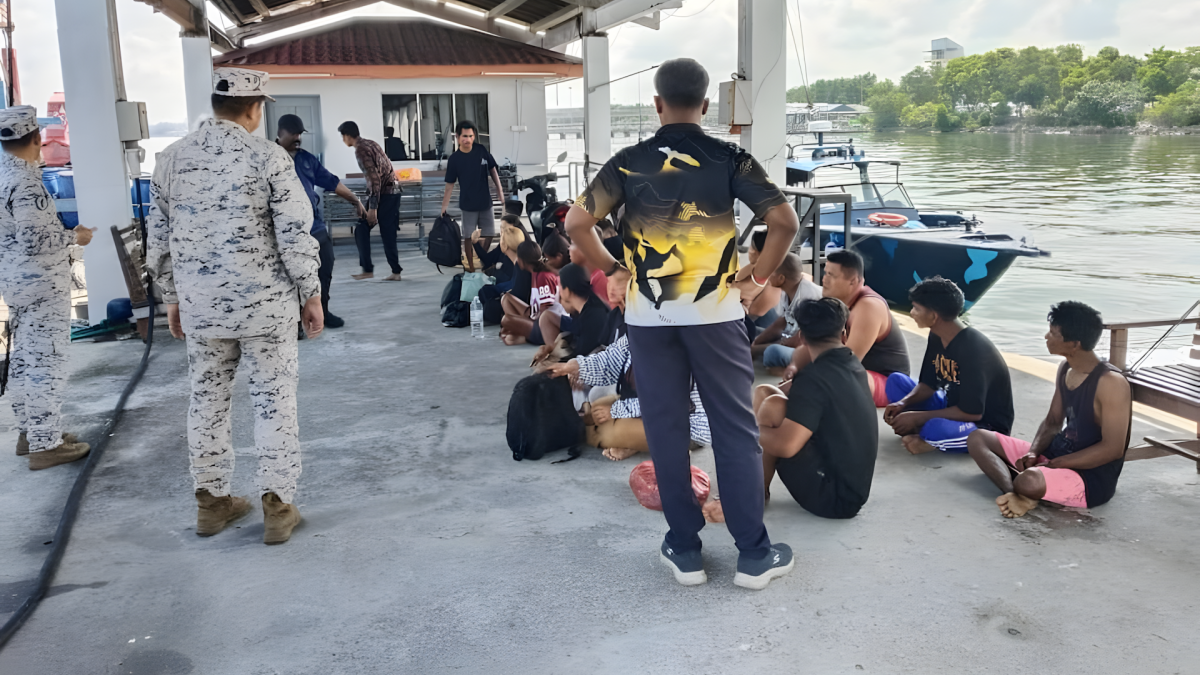
Mohamad Shukri Khotob, the Maritime Director for the state of Perak, confirmed the details of the ongoing emergency response in a formal statement. According to Mohamad Shukri, the crew of a local fishing vessel acted swiftly, successfully rescuing 23 Indonesian nationals from the water. The group of survivors, which notably included seven women, were subsequently escorted by authorities to a secure marine police jetty to undergo medical assessment, documentation processing, and further interrogations regarding the smuggling operation.
Perilous, days-long journey
Initial investigations by Malaysian authorities have pieced together the timeline of the voyage. Interrogations revealed that the sunken boat, with a total of 37 people, had departed under the cover of darkness from Kisaran, a town in the North Sumatra province of Indonesia, on the 9th of May.
The passengers had reportedly paid smugglers to facilitate their illicit entry into Malaysia, with the intention of dispersing to several destinations across the peninsula, including the capital city of Kuala Lumpur and the heavily industrialised Penang island in the northwest.
"As of now... the remaining victims have yet to be identified and search operations are continuing," Mohamad Shukri stated, noting that multiple maritime assets, including patrol boats and aerial surveillance, have been deployed to scour the projected drift patterns for the 14 individuals still unaccounted for.
Reality of Southeast Asia's shadow economy
Tragically, maritime accidents of this nature are common in the narrow waterways separating the Indonesian archipelago from the Malaysian peninsula. These incidents almost exclusively involve severely overloaded, poorly maintained wooden boats ferrying desperate labourers seeking to escape economic hardship at home for the promise of informal, low-wage work in Malaysia's sprawling agricultural plantations, bustling construction sites, and manufacturing factories.
Malaysia, one of Southeast Asia's wealthier and more developed economies, relies heavily on this constant influx of cheap foreign labour, much of which operates within the unregulated shadow economy.
An estimated 100,000 to 200,000 Indonesians make the perilous journey each year, often recruited by trafficking gangs and subject to exploitation when they arrive, migrant activists have said. They add that migrants are charged exorbitant fees for the crossing, only to be loaded onto unseaworthy vessels with insufficient safety equipment.


















What is your opinion on this topic?
Leave the first comment