U.S. President Donald Trump said on Sunday that three Polish nationals and two Moldovan citizens had been released from detention in Belarus and Russia, highlighting what he described as growing diplomatic cooperation with Minsk.
Posting on his Truth Social platform, Trump credited his special envoy, John Coale, with securing the releases and thanked Belarusian President Aleksandr Lukashenko for his “cooperation and friendship”.
Trump also referenced the release of Polish‑Belarusian journalist and activist Andrzej Poczobut, who had been imprisoned in Belarus. Polish Prime Minister Donald Tusk announced Poczobut’s release on 28 April, saying it was part of a broader prisoner exchange.
Lukashenko, a close ally of Russian President Vladimir Putin, has freed hundreds of detainees over the past two years, a process that has accelerated during Trump’s second term. In parallel, the United States has begun rolling back sanctions imposed on Belarus.
U.S.-brokered ceasefire under strain
Meanwhile, a U.S.-mediated ceasefire between Russia and Ukraine appeared to be fraying on its second day, with both sides accusing one another of repeated violations.
The three‑day pause in fighting, announced by Trump on Friday 8 May, was intended as a confidence‑building step in Washington’s renewed push for peace. It follows months of shuttle diplomacy that have so far failed to end the war, now in its fifth year.
Ukrainian officials said three people were killed in Russian drone strikes near front‑line areas, while more than 200 clashes were recorded since early Saturday. President Volodymyr Zelenskyy said Russia had avoided large‑scale missile and aerial attacks but continued ground assaults in areas where its forces are advancing.
“In other words, the Russian army is not observing any silence on the front and is not even particularly trying to,” Zelenskyy said in his evening address, adding that Ukrainian forces were holding their positions and responding to attacks.
Russia’s Defence Ministry accused Ukraine of breaching the ceasefire, claiming it had shot down 57 Ukrainian drones over the past day and had “responded in kind” on the battlefield.
Zelenskyy said he expected the United States to guarantee a long‑discussed exchange of 1,000 prisoners of war from each side, which he said was part of the ceasefire understanding.
Earlier ceasefire announcements by both Moscow and Kyiv this week were quickly followed by mutual accusations of violations.
Civilian casualties mount despite pause
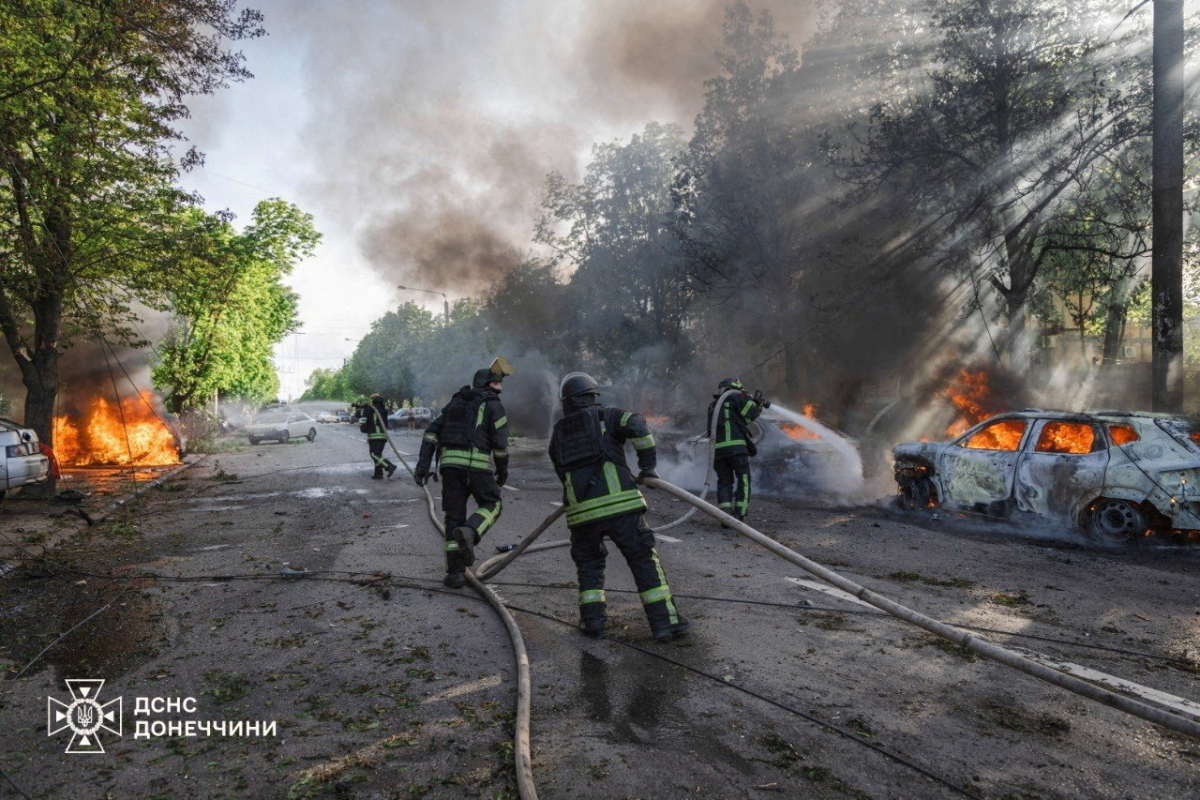
Casualties among civilians continued to be reported despite the reduction in long‑range attacks.
Regional officials said one person was killed in each of Ukraine’s Zaporizhzhia, Dnipropetrovsk and Kherson regions as a result of Russian drone strikes. In the northeastern Kharkiv region, Governor Oleh Syniehubov said eight people, including two children, were wounded in attacks on the regional capital and nearby settlements.
In the Kherson region, seven people, including a child, were injured by drone or artillery fire since early Saturday 9 May, according to Regional Governor Oleksandr Prokudin.
Ukraine’s State Emergencies Service said a Russian drone struck one of its rescue vehicles in the Dnipropetrovsk region, wounding a 23‑year‑old driver.
Ukraine’s air force said Russia launched 27 long‑range drones overnight, fewer than usual, all of which were shot down.
The Ukrainian General Staff reported nearly 210 clashes along the 1,200‑kilometre front line since early Saturday. Reuters was unable to independently verify battlefield reports.
Peace talks stalled amid territorial disputes
Diplomatic efforts remain deadlocked as Russian forces push to seize the remaining Ukrainian‑held areas of the eastern Donetsk region, territory Moscow says Kyiv must cede as a precondition for ending the war.
Talks have also stalled over the future of the Russian‑occupied Zaporizhzhia nuclear power plant, Europe’s largest.
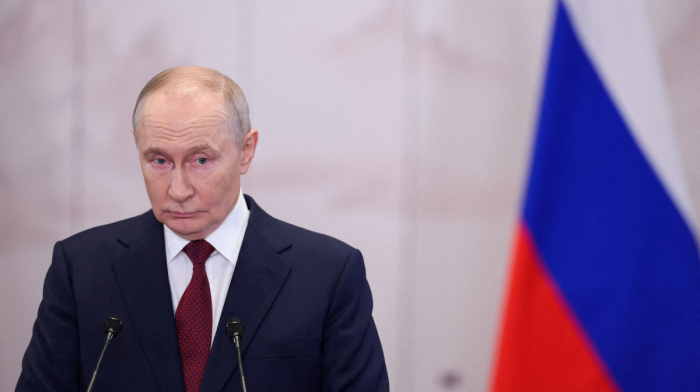
Mixed signals emerged from Moscow over the weekend. Kremlin spokesman Dmitry Peskov said peace was “a very long way” off, while President Vladimir Putin suggested the conflict was nearing its end.
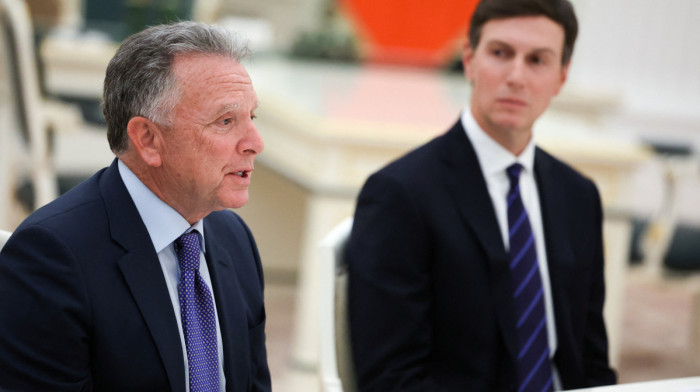
Kremlin adviser Yuri Ushakov said U.S. envoy Steve Witkoff and presidential adviser Jared Kushner would visit Moscow “soon enough” to continue discussions. Kyiv’s chief negotiator, Rustem Umerov, said earlier that he met Witkoff and Kushner in Miami to discuss humanitarian issues and coordinate future steps towards peace.
Germany and the European Union pushed back against Putin's suggestion that former German Chancellor Gerhard Schröder could help mediate talks with Brussels. EU Foreign Policy Chief Kaja Kallas rejected the idea on Monday, saying it would be unwise to allow Russia to appoint a European negotiator.
“If we give the right to Russia to appoint a negotiator on our behalf, that would not be very wise,” Kallas said, adding that Schröder’s past lobbying for Russian state companies created a clear conflict of interest.
"He would be sitting on both sides of the table," Kallas said.










What is your opinion on this topic?
Leave the first comment