A powerful 7.5 magnitude earthquake has struck off Japan’s north-eastern coast, triggering urgent tsunami warnings with waves of up to 3 metres expected, prompting residents to seek immediate safety.
The quake struck at 4:52pm (07:52 GMT) on Monday, 20 April. According to the Japan Meteorological Agency, it originated in the Pacific Ocean at a depth of around 10 kilometres.
In the hour following the earthquake, tsunami waves as high as 80cm had been detected.
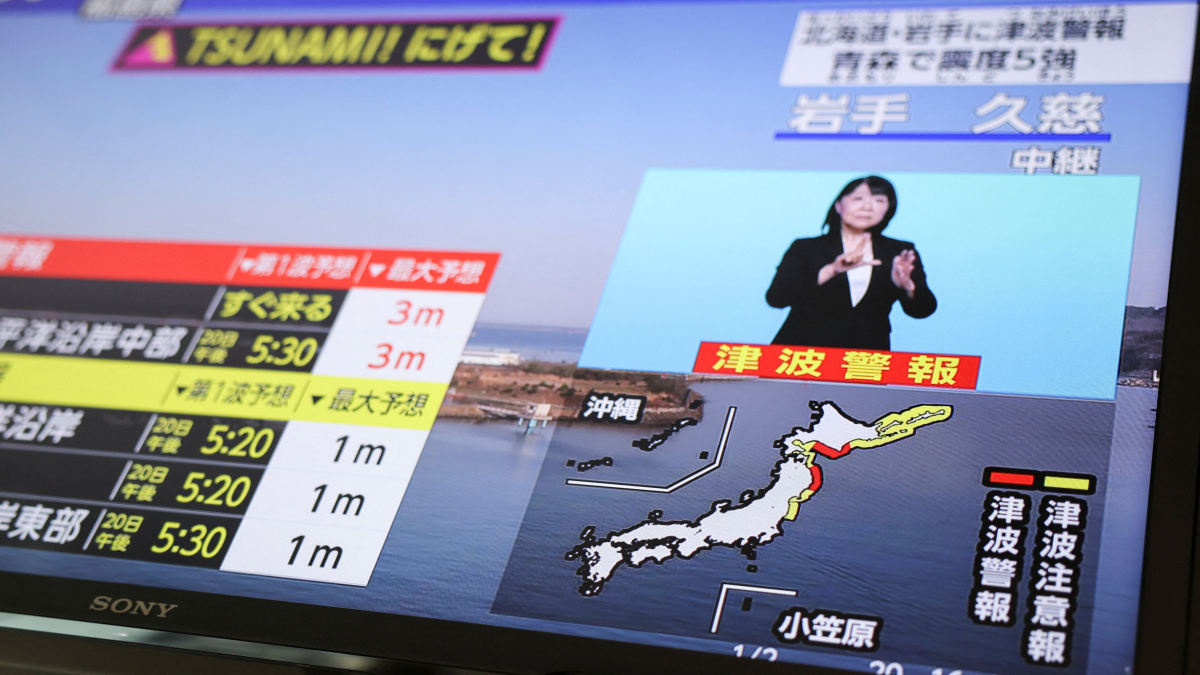
The biggest waves were forecast to hit Iwate and Aomori prefectures at the top of Japan's main Honshu island, and the northern island of Hokkaido, authorities said.
Residents in these areas were urged to move quickly to higher ground and stay away from coastlines and rivers.
There were no immediate reports of casualties or major damage, Japan's top government spokesperson Minoru Kihara told a news conference as night fell in the capital Tokyo.
However, emergency services remain on alert as officials continue to monitor the situation and assess the impact.
Urgent evacuation messages broadcast
Several port towns including Otsuchi and Kamaishi, both hard-hit by a massive earthquake and tsunami in 2011, issued evacuation orders for thousands of residents, according to public broadcaster NHK.
Presenters delivered urgent warnings. “Tsunami! Evacuate!” flashed across screens in English as well as Japanese. Viewers were urged not to delay or return home to collect belongings.
Prime Minister Sanae Takaichi said the government had set up an emergency task force and urged citizens in the affected areas to evacuate to safety.
"Possible damage and casualties are now being looked into," Takaichi told reporters at her offices in Tokyo.
Big aftershocks may occur in the following days and weeks, an official from Japan's Meteorological Agency (JMA) said at a separate televised press conference.
A 3-metre tsunami could cause damage to low-lying areas, flooding buildings, and anybody exposed would be caught in its currents, according to JMA.
The earthquake registered an “upper 5” on Japan’s seismic intensity scale. At this level, it becomes difficult for people to move without holding on to something, and older walls and structures may collapse.
Temors felt in Tokyo
Shaking was felt across a wide area, including in Tokyo, where buildings swayed for several minutes. Office workers and residents reported a slow but persistent motion, with some stepping outside as a precaution.
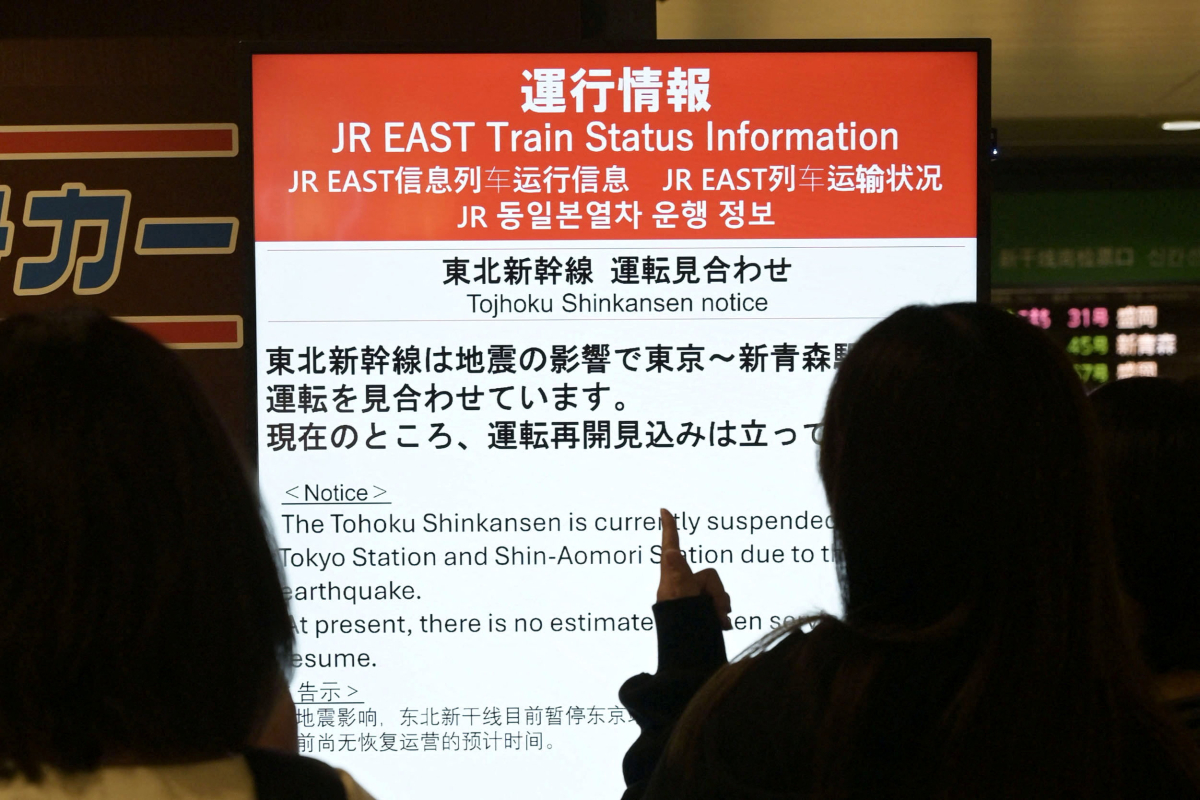
Bullet train services in Aomori were halted due to the tremors, Kyodo news agency reported.
Japan is one of the most earthquake-prone countries in the world. Memories of the 2011 disaster, when a massive quake and tsunami caused widespread devastation, remain fresh for many.
There are no nuclear power plants currently in operation in the affected areas and Hokkaido Electric Power Co 9509.T and Tohoku Electric Power Co 9506.T said there were no abnormalities reported at their idled facilities there.
Authorities said further updates would follow as more information becomes available.
This is a developing story.



















What is your opinion on this topic?
Leave the first comment