A technical fault in the helium system of NASA’s next-generation Moon rocket was announced on Saturday, ruling out the planned March launch window for the Artemis II mission.
Engineers detected an interruption in helium flow to the upper stage of the Space Launch System rocket during routine safety checks.
The helium system is essential for launch operations because it purges engine lines and helps maintain pressure inside the liquid hydrogen and liquid oxygen tanks that power the spacecraft.
The anomaly emerged overnight after a 50-hour fuelling test involving about 730,000 gallons of propellant. Initial monitoring during the test showed no irregularities, but the fault was discovered later during repressurisation procedures.
Officials had previously targeted 6 March as the earliest possible launch date following a successful countdown rehearsal. However, NASA Administrator Jared Isaacman said the helium interruption would "almost assuredly" remove the March launch opportunity.
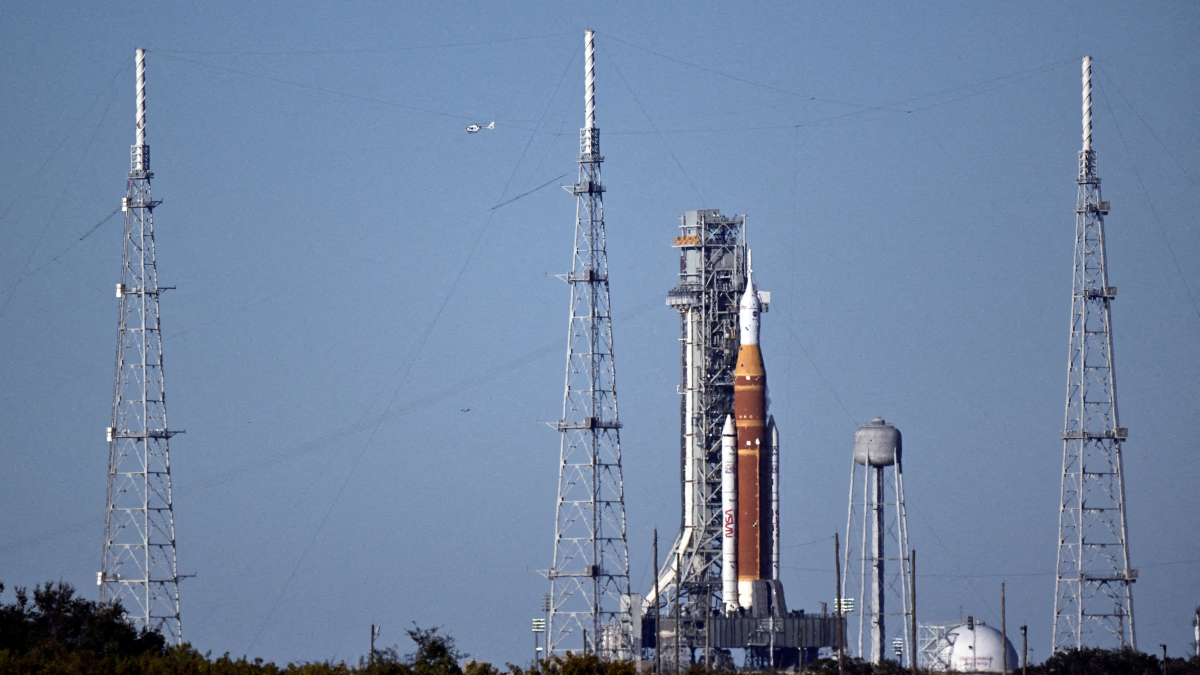
Following the discovery, the 98-metre Space Launch System rocket and the Orion crew capsule will be rolled back from the launchpad at Kennedy Space Center in Florida to the Vehicle Assembly Building for detailed inspection and repair work.
Technicians will examine the suspected components inside the building because direct access is not possible on the launchpad.
Isaacman said the fault could be linked to several possible causes, including a filter malfunction, an umbilical interface problem or a failed check valve. He noted that a similar failure pattern was recorded during preparations for the Artemis I test flight, although corrective measures had previously been applied.
The spacecraft is currently being kept in a safe configuration using ground-based purge systems rather than relying on the onboard helium supply while engineers investigate the issue.
The Artemis II mission is planned as a roughly 10-day crewed fly-by journey that will send three American astronauts and one Canadian astronaut around the Moon without landing on its surface.
The project is part of the broader Artemis programme, which aims to restore human presence near and on the Moon later this decade. NASA has said a lunar landing under the programme could be attempted by 2028, although officials describe the timeline as ambitious.
The space agency has not confirmed the next launch date, but the earliest feasible launch opportunities are expected in early April, depending on repair progress and technical assessments.




















What is your opinion on this topic?
Leave the first comment