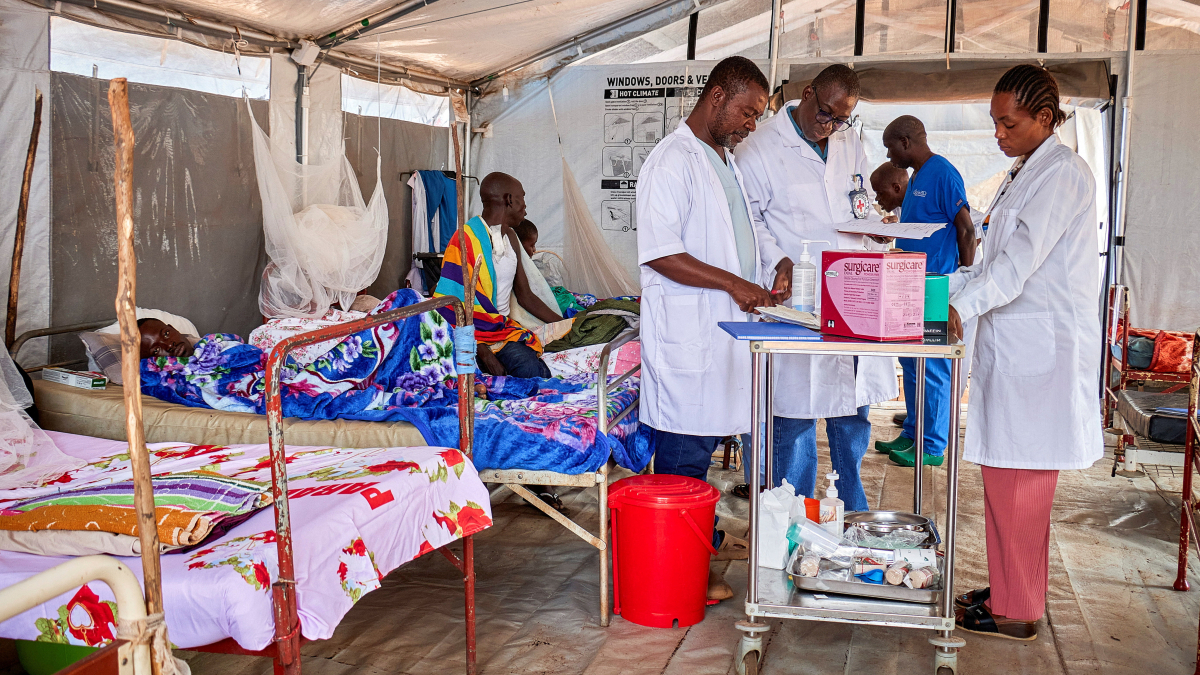
Escalating clashes in South Kivu’s highlands are sending a rising flow of wounded to Fizi’s small general hospital, where staff warn they are running out of space and supplies as the conflict expands across remote areas.
Nurses at Fizi’s general hospital rushed a soldier into surgery after he arrived slumped on a motorbike, shot in both legs during clashes in the mountains north of town.
The fighting, largely out of view of urban centres and international mediators, is drawing in more forces and complicating wider stabilisation efforts in eastern DR Congo.
The AFC/M23 rebel coalition invoked the recent battles as justification for a drone strike on Kisangani airport, calling it retaliation for “government aerial attacks” on South Kivu villages.
Congo’s army has not responded to the allegation or commented on the strike.
Hospital pushed far beyond capacity
The hospital, supported by the International Committee of the Red Cross, was treating 115 wounded by the end of January despite having just 25 beds.
“Most of our patients have injuries in their upper or lower limbs,” surgeon Richard Lwandja said.
“They often arrive with wounds that are already infected because of limited facilities on the frontline.”
Casualties continue to grow as medical staff struggle with shortages.
Red Cross nurse Robert Zoubda said, “Roads are often impassable and supplies run out. If this continues, we’ll have to install more tents.”
Rebels push south after capturing key cities
AFC/M23 made a rapid advance early last year and seized Bukavu in February 2025, later moving south to briefly take Uvira in December before withdrawing under U.S. pressure following the Congo-Rwanda accord signed in June.
The United Nations and Western powers say Rwanda backs the rebels and even exercises influence over their command, a claim Rwanda denies.
The newest fighting is centred on the highlands around Minembwe, where the army has launched an operation against AFC/M23 and the Twirwaneho, a local ally formed by members of the Banyamulenge community.
Strategic terrain and widening risk
“The highlands around Uvira are highly strategic: whoever controls them has access to major towns in the lowlands,” said Regan Miviri from the Ebuteli research institute.
“And because the area is so remote, the fighting there draws less attention and less diplomatic pressure.”
He said the government’s priority is preventing the conflict from spreading towards Tanganyika and Katanga, where many of Congo’s most important mining centres are located.
Diplomacy struggles to keep pace
The battles intensified just as Congo and AFC/M23 agreed in Doha to activate a Qatari-mediated ceasefire monitoring mechanism.
A U.N. team is due to deploy to Uvira in the coming days, though it remains unclear whether this will slow the escalating violence.












What is your opinion on this topic?
Leave the first comment