Azerbaijan’s Foreign Ministry confirms casualties in deadly Sea of Azov drone attacks
Azerbaijan's Foreign Ministry has confirmed the number of casualties its citizens suffered as a result of the 5 June drone attacks on the cargo ships ...
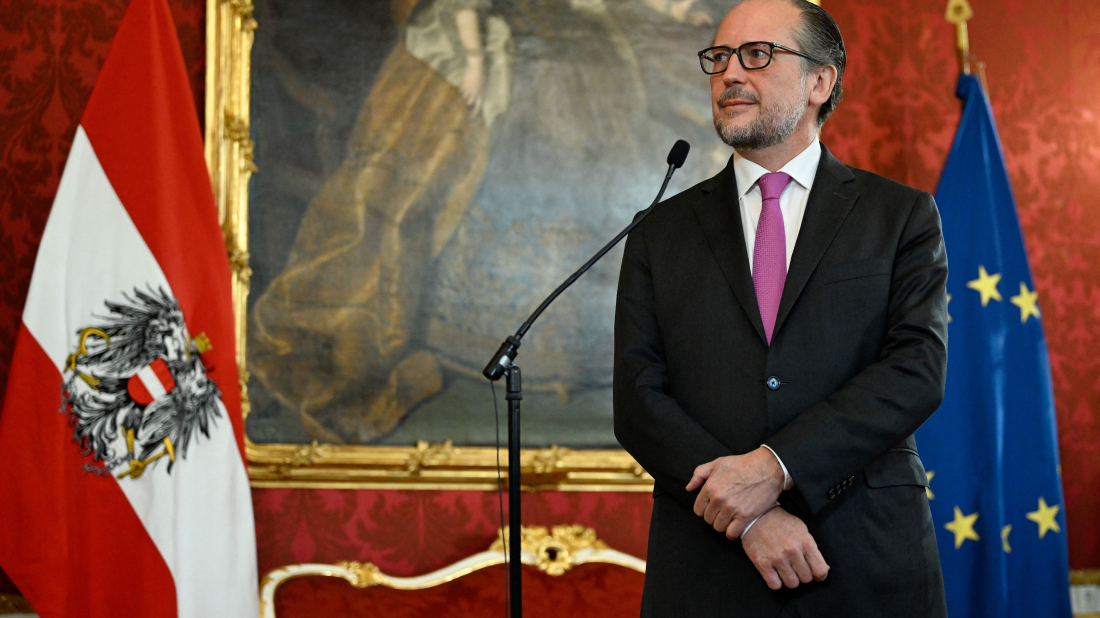
Alexander Schallenberg has been sworn in as Austria’s caretaker chancellor, succeeding Karl Nehammer after his unsuccessful bid to form a centrist coalition, as the far-right Freedom Party prepares for coalition talks with the conservative ÖVP.
Alexander Schallenberg, Austria's foreign minister, was sworn in as caretaker chancellor on Friday following the resignation of Karl Nehammer, leader of the conservative People’s Party (ÖVP). Nehammer stepped down last weekend after his efforts to form a centrist coalition government failed, leaving the political landscape open to change.
The current ÖVP-led government has been operating in a caretaker capacity since parliamentary elections in September. These elections saw the far-right Freedom Party (FPÖ) emerge as the largest party, securing a mandate to form the next government.
The FPÖ is set to begin coalition negotiations with the ÖVP, marking a significant step toward establishing a new government. Schallenberg’s interim leadership will guide Austria through this transitional period until a stable coalition is formed.
This political shift reflects Austria’s evolving electoral landscape, with the FPÖ’s victory signalling a rise in support for far-right policies. The coming weeks are expected to shape the country's political direction, as coalition talks determine the composition and priorities of the next administration.

Armenian authorities arrested six candidates from the pro-Russian Strong Armenia bloc on Saturday, one day before voters were due to take part in parliamentary elections.
Armenia heads to the polls on 7 June in a key parliamentary vote seen as a test of its democratic reforms and future political direction. Prime Minister Nikol Pashinyan is seeking re-election amid domestic polarisation, security challenges and regional diplomatic tensions.
More than 6,000 people gathered outside a vote-counting centre in Seoul on Friday night, demanding this week’s local elections be repeated after ballot shortages left some voters unable to cast their ballots.
Azerbaijan's Foreign Ministry has confirmed the number of casualties its citizens suffered as a result of the 5 June drone attacks on the cargo ships Natra and Zircon in the Sea of Azov. In a statement, it said four Azerbaijani citizens were killed and four others were injured.
The U.S. said it struck Iranian radar sites on Qeshm Island and in Goruk after intercepting four drones, while Iran's Revolutionary Guards said they launches retaliatory strikes on four tankers in the Strait of Hormuz and targeted U.S. bases in the Gulf.
At least a dozen people were wounded, two critically, on Saturday (6 June) in Toledo, Ohio, as two shooters traded gunfire, police said.
Start your day informed with the AnewZ Morning Brief. Here are the top stories for the 7 June, covering the latest developments you need to know.
Iraqi Prime Minister Ali Falih al‑Zaidi will pay an official visit to the United States, bringing with him a delegation of business leaders, private‑sector representatives and banking officials, in an effort to boost investment and deepen economic ties with Washington.
People across Gaza are facing a worsening humanitarian crisis, with millions struggling to access food, clean water, shelter and medical care as the conflict continues.
Ukrainian Deputy Prime Minister Oleksiy Kuleba said Russian forces attacked two civilian search and rescue vessels operating in Ukrainian waters on Saturday, leaving several people injured.
You can download the AnewZ application from Play Store and the App Store.
What is your opinion on this topic?
Leave the first comment