UK officers criticised after dying teen handcuffed at stabbing scene
British police are facing a national backlash over their handling of the fatal stabbing of 18-year-old student Henry Nowak, who was handcuffed while d...
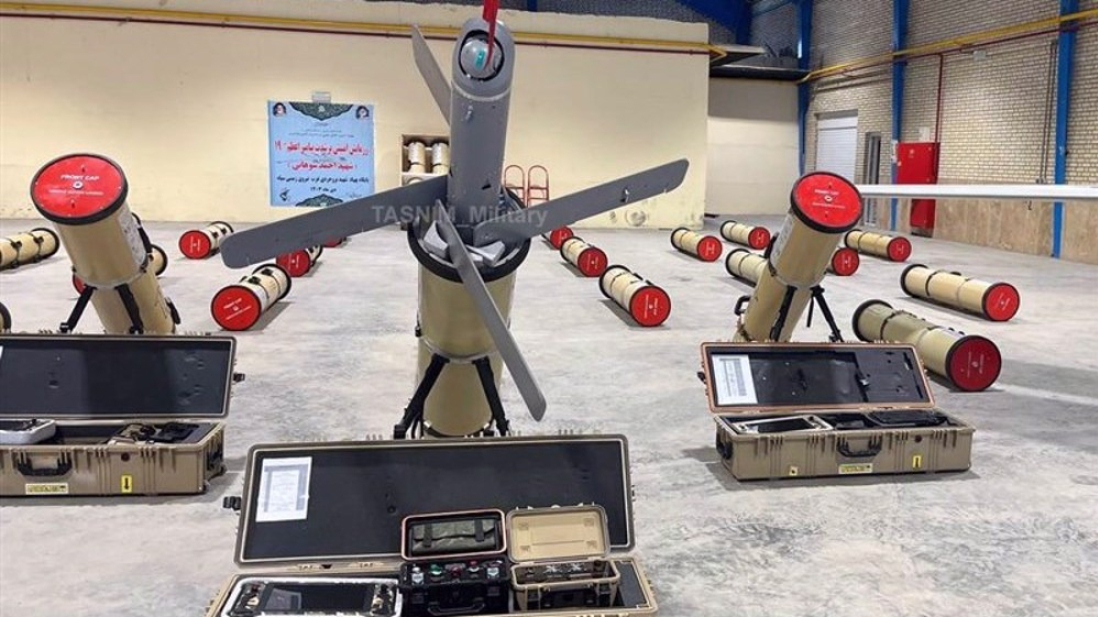
Iran's Islamic Revolution Guards Corps (IRGC) has showcased advanced military capabilities during its “Great Prophet 19” drills, unveiling a new loitering munition, the "Rezvan" drone, and the “358 missile defence system” designed to protect strategic facilities like the Natanz nuclear plant.
Iran's Islamic Revolution Guards Corps (IRGC) has unveiled its latest loitering munition and missile defence system during the ongoing “Great Prophet 19” military drills which many believe is aimed to show off Iran's ability to respond to and defend against an attack from outside the country.
On Thursday, the Iranian Army announced that it will be equipped with 1,000 new drones which were designed and manufactured jointly by the IRGC and the Ministry of Defence.
The drone, called “Rezvan”, with a range of 20 kilometers and an endurance of 20 minutes, is designed for rapid deployment and targeted attacks, particularly in complex terrain, according to Iranian media report referring to the IRGC.
"Our drones carried out several rounds of firing and drone operations, and in our scenario, we successfully destroyed hypothetical enemies and terrorists attacking Iranian bases," said Mohammad Pakpour, the commander of the IRGC Ground Forces, on the sidelines of the exercise in the Azgeleh region in the western Kermanshah province.
Two days ago, the so-called “358 missile defence system” was unveiled during the air-defence exercise, codenamed Eqtedar (Authority) 1403 that was arranged in the air perimeter of the Natanz nuclear plant.
IRGC Commander Major General Hossein Salami said various real-world scenarios were designed and implemented during a large-scale military exercise to protect the strategic nuclear facility located in Iran’s central province of Isfahan.
“We tried to perform what we could expect from the enemies in case of in real war conditions,” he stated and added that “quite valuable achievements” were gained.

Okinawa lost transport links and suffered widespread power outages on Monday (1 June) as Severe Tropical Storm Jangmi brought destructive winds and heavy rain to Japan's south-western islands.
Competing narratives continue to shape perceptions of the war in Ukraine, with Russian leadership suggesting a possible end phase while Ukrainian officials warn of renewed large-scale attacks and ongoing escalation risks.
U.S. Secretary of State Marco Rubio has held talks with Lebanese President and Israeli Prime Minister on efforts to ease tensions between Israel and Lebanon. According to a U.S. official, Washington has proposed a plan aimed at achieving a gradual de-escalation of hostilities.
When Armenians vote on 7 June, they will be voting in an election shaped by months of political change and a rapidly deepening relationship with the European Union. The result may not only determine who governs Armenia but also the future direction of the country's geopolitical alignment.
Unsealed records from the U.S. Department of Justice have renewed scrutiny of lawyer Robert Amsterdam after documents revealed communications between his law firm and Jeffrey Epstein's office. The disclosures have drawn attention because of Amsterdam's prominent role in Armenia.
British police are facing a national backlash over their handling of the fatal stabbing of 18-year-old student Henry Nowak, who was handcuffed while dying from stab wounds after his attacker falsely claimed to be the victim of a racist assault.
China is sending doctors, medical teams and emergency supplies to help combat a growing Ebola outbreak in Central Africa, joining an international effort to contain the disease before it spreads further.
Iran’s Revolutionary Guards (IRGC) said they struck a cargo ship owned by the “American-Zionist enemy” with a cruise missile after an Iranian freighter was attacked in the Sea of Oman.
Dutch police have launched an investigation into the use of force against a pregnant woman at an asylum seekers' centre in Zeist after videos of the incident circulated widely on social media.
Hungarian Prime Minister Péter Magyar said on Monday that his government would begin legal proceedings to remove President Tamás Sulyok if he continues to reject calls to resign.
You can download the AnewZ application from Play Store and the App Store.
What is your opinion on this topic?
Leave the first comment